


Revolutionize Pet Care with Smart Pet Feeders
- The Evolution of Pet Feeding: From Manual to Smart Solutions
- Understanding Smart Pet Feeders: Core Features and Benefits
- Feeding Plan of a Automatic Dog and Cat Feeder
- How Smart Feeders Work: Technology Behind the Scenes
- Scenario Applications: When Smart Feeders Make Sense
- Common Misconceptions About Smart Pet Feeders
- Limitations and Considerations Before Purchasing
- Key Takeaways
The Evolution of Pet Feeding: From Manual to Smart Solutions
Gone are the days when pet owners relied solely on measuring cups and handwritten feeding schedules. The smart pet feeder represents a fundamental shift in how we care for our animal companions—a shift driven by technology, changing lifestyles, and deeper insights into pet health. For years, the basic feeding bowl dominated homes worldwide. Then came gravity feeders and simple timers. Now, artificial intelligence and smartphone connectivity have transformed feeding from a manual chore into a programmable, data-informed process.
According to market analysis, the automatic and smart pet feeder market is experiencing significant growth, projected to increase by USD 323.38 million from 2024 to 2029. This surge isn't happening by accident. Pet owners increasingly work longer hours, travel more frequently, and demand solutions that fit modern schedules without compromising their pets' wellbeing.
The transition mirrors broader smart home adoption—just as thermostats learned our temperature preferences and refrigerators began tracking expiration dates, pet feeders evolved to understand feeding patterns, portion requirements, and behavioral cues. What started as basic programmable dispensers has matured into sophisticated devices offering voice interaction, HD cameras, and integration with comprehensive pet care ecosystems.
This transformation addresses real challenges: inconsistent meal timing, portion control issues, and the anxiety many owners feel when away from home. The question is no longer whether technology belongs in pet care, but how to choose the right system for your household's unique needs.
Understanding Smart Pet Feeders: Core Features and Benefits
At their foundation, smart pet feeders represent a convergence of convenience and precision feeding technology. Unlike traditional automatic pet feeder models that simply dispense food on a timer, modern smart feeders connect to your home Wi-Fi network, transforming meal management into an interactive, and data-driven experience. The core functionality centers on portion control—most devices allow customization from 1-20 portions per meal, with each portion typically measuring around 8 grams. This granular control helps address a critical health concern: the Automatic & Smart Pet Feeder Market is projected to reach $392.9 million by 2032, driven largely by rising pet obesity rates and the need for precise dietary management.
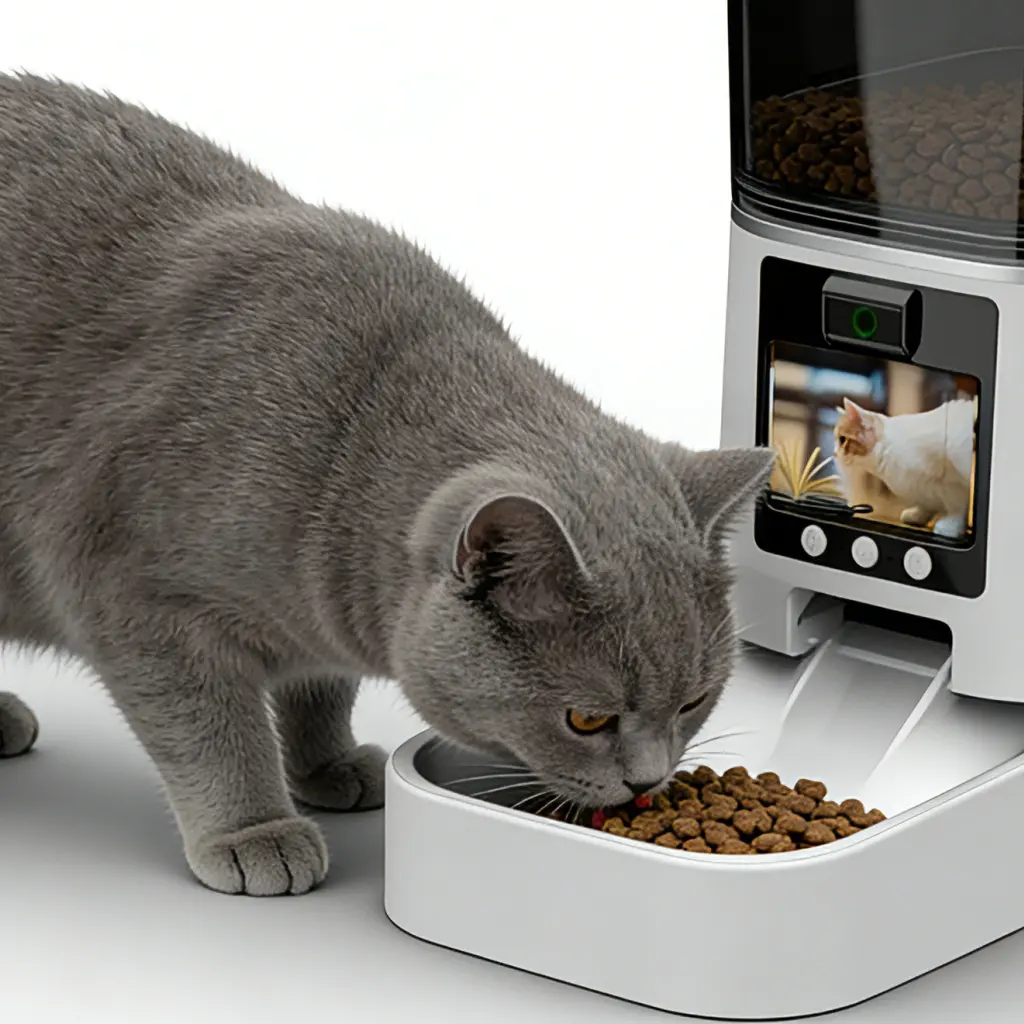
Beyond scheduled feeding, these devices integrate real-time monitoring capabilities that traditional feeders lack entirely. Food level sensors alert you before supplies run low, while built-in cameras (in premium models) let you observe your pet's eating patterns remotely. Some feeders even support voice recording features that play personalized messages at mealtime, maintaining the emotional connection between owner and pet despite physical distance. The practical benefits extend to multi-pet households, where consistent meal timing and portion separation become significantly more manageable through app-controlled scheduling.
Key Features to Look For: From Portion Control to Voice Recording
When evaluating smart feeding solutions, certain features separate basic automation from truly intelligent pet care. The most critical capability remains precise portion control—the ability to dispense exact measurements ranging from 1/8 cup to multiple cups per feeding. According to market analysis, portion accuracy within 5 grams has become the industry standard, addressing the growing concern over pet obesity.
An app controlled pet feeder should offer more than simple scheduling. Look for real-time food level monitoring that sends low-supply alerts, preventing unexpected meal gaps. What typically happens when pets miss scheduled feedings? Behavioral disruptions and potential health issues emerge rapidly. However, not all connectivity equals reliability—WiFi stability varies significantly, making dual-frequency band support (2.4GHz and 5GHz) increasingly important.
Voice recording capabilities add a psychological dimension beyond nutrition. A 10-15 second pre-recorded message creates mealtime association and reduces separation anxiety, particularly valuable for pets transitioning to automated feeding. On the other hand, camera integration remains a premium feature—approximately 23% of smart pet feeders currently incorporate visual monitoring, though adoption continues growing as pet owners seek comprehensive oversight of their animals' feeding behaviors.
Feeding Plan of a Automatic Dog and Cat Feeder
The Smart Feed represents a significant evolution in automated pet nutrition management. As a WiFi pet feeder, it eliminates the guesswork from portion control by allowing pet owners to program precise meal sizes down to the eighth of a cup. This precision matters considerably—research indicates that obesity affects approximately 56% of dogs and 60% of cats in developed markets, making accurate feeding crucial for long-term pet health.
The second-generation design incorporates smartphone integration that transforms basic feeding automation into a comprehensive nutrition monitoring system. Pet owners can schedule up to twelve meals daily, adjust portions in real-time, and receive notifications when food levels run low. The device accommodates various kibble sizes, from small breed formulas to larger chunks, with an internal hopper capacity that typically supports several days of feeding without refilling.
What distinguishes this technology from earlier automatic feeders is the voice recording capability. Pets respond positively to familiar voices during mealtime, and the Smart Feed allows owners to record a personalized message that plays during each dispensing cycle. This feature proves particularly valuable for pets experiencing separation anxiety, providing auditory comfort alongside their scheduled nutrition.
The integration with home automation systems represents another practical advantage. Through connectivity with voice assistants and smart home platforms, feeding schedules can adjust dynamically based on household routines. However, consistent WiFi connectivity remains essential—interrupted connections can disrupt scheduled feedings, making backup manual operation an important consideration for any automated feeding system.
How Smart Feeders Work: Technology Behind the Scenes
Understanding the technology powering these devices reveals why they've become essential for modern pet care. At their core, smart feeders integrate three fundamental systems: WiFi connectivity for remote control, precision dispensing mechanisms for accurate portions, and mobile applications that serve as the command center for all functions.
The WiFi module enables real-time communication between your smartphone and the feeder, allowing schedule adjustments from anywhere. A smart pet feeder with camera adds visual verification through integrated camera systems, transmitting live video feeds directly to your phone so you can monitor mealtime behavior remotely.
Dispensing accuracy relies on weight sensors and motorized augers that measure portions down to the gram. According to Future Market Insights, these precision mechanisms reduce food waste by up to 30% compared to traditional gravity feeders. The sensors continuously monitor food levels, triggering alerts when supplies run low.
The mobile application layer processes all this data through cloud-based servers, creating a seamless user experience. Voice assistant integration adds another convenience layer, allowing verbal commands to trigger feedings or check food levels. Battery backup systems ensure scheduled feedings continue even during power outages—a critical reliability feature that distinguishes quality models from basic alternatives.
Scenario Applications: When Smart Feeders Make Sense
Smart feeders aren't universal solutions—they excel in specific situations where traditional feeding methods fall short. Understanding these scenarios helps pet owners make informed decisions about whether the technology investment aligns with their lifestyle.
Work schedules represent the most common application. Pet owners working long hours or irregular shifts benefit from automated feeding that maintains consistent meal times. This consistency proves particularly valuable for pets with medical conditions requiring precise feeding schedules, such as diabetic cats needing food coordinated with insulin administration.
Travel and overnight absences create another practical use case. Weekend trips or business travel no longer require boarding arrangements or neighbor assistance for basic feeding needs. The remote monitoring capabilities provide peace of mind while away, allowing owners to verify their pet has eaten.
Multiple-pet households with different dietary requirements represent a growing application area. Smart feeders equipped with pet recognition technology can dispense distinct portions for each animal, preventing food theft and managing weight control programs effectively. What typically happens is that larger or more aggressive pets dominate feeding time—technology addresses this imbalance.
Weight management programs benefit from the precision portion control these devices offer. Veterinarians increasingly recommend automated feeders as part of obesity treatment protocols, where accurate measurement prevents the common problem of overfeeding through estimation.
However, not every situation justifies smart feeder adoption. Single-pet households where owners maintain regular schedules may find traditional bowls sufficient. This transition naturally leads to examining common misunderstandings about these devices.
Common Misconceptions About Smart Pet Feeders
Despite growing adoption, several persistent myths surround smart pet feeders that deserve clarification. The most common misconception positions these devices as complete replacements for human interaction during feeding time. In practice, smart feeders automate meal dispensing, not the emotional connection pets derive from their owners' presence during meals. They excel at maintaining schedules and portion consistency, not replacing the bond-building moments of shared feeding routines.
Another widespread belief suggests that all WiFi pet feeders require complex technical knowledge to operate. Modern designs prioritize intuitive interfaces that mirror familiar smartphone app experiences. Most users successfully configure scheduling and portions within ten minutes of unboxing, without technical support.
The "set and forget" myth similarly misleads pet owners into thinking zero maintenance follows initial setup. Reality involves regular cleaning of dispensing mechanisms, replenishing food supplies, and verifying WiFi connectivity—tasks that typically require five to ten minutes weekly but remain essential for reliable operation.
Finally, many assume these devices suit every pet and situation equally. Certain animals—particularly those with special dietary needs, anxiety around mechanical sounds, or tendencies toward food guarding—may require gradual acclimation or prove incompatible altogether. Understanding these limitations proves essential before committing to a smart feeding solution, particularly when considering factors beyond basic automation convenience.
Limitations and Considerations Before Purchasing
While smart feeders solve numerous feeding challenges, they're not without constraints that deserve careful evaluation. The most fundamental limitation is power dependency—these devices become non-functional during outages unless equipped with battery backup. Most models require constant WiFi connectivity, meaning network disruptions can prevent remote access and scheduled feedings, though stored schedules typically continue operating.
Physical limitations matter significantly. Kibble size compatibility varies by model, with mechanisms designed for standard dry food often struggling with irregular shapes or wet food. According to market analysis, devices with rotating dispensers perform poorly with food particles smaller than 0.2 inches or larger than 0.6 inches in diameter.
Technical complexity introduces another consideration layer. App compatibility requires specific operating systems—older smartphones may not support newer applications. Some owners find the learning curve steep, particularly when configuring portion weights versus volume measurements or troubleshooting connectivity issues.
Maintenance requirements exceed traditional bowls. Dispensing mechanisms need regular cleaning to prevent food buildup that causes jamming. What typically happens is residual oils from kibble accumulate in feed chutes, requiring weekly disassembly for thorough cleaning—a factor rarely emphasized in marketing materials.
Cost represents an ongoing consideration. Beyond initial investment, some advanced features require subscription services for cloud storage of feeding records or premium app functionality, adding $3-10 monthly to ownership expenses.
Key Takeaways
Smart pet feeders represent more than technological novelty—they're practical solutions addressing real feeding challenges faced by modern pet owners. These devices excel at maintaining consistent meal schedules, preventing overfeeding through precise portion control, and providing remote monitoring capabilities that bring peace of mind to busy households.
The market trajectory tells a compelling story: with a projected compound annual growth rate between 8-10% through 2032, adoption continues accelerating as prices normalize and features mature. However, success depends on matching device capabilities to your specific situation—budget, pet temperament, technical comfort level, and lifestyle demands all factor into the equation.
Before purchasing, establish clear priorities: Are you solving scheduling conflicts, managing weight issues, or simply seeking convenience? Understanding your primary need guides feature selection and prevents overpaying for unnecessary capabilities. Remember that smart feeders complement rather than replace the human element of pet care—monitoring food quality, observing eating behaviors, and maintaining the feeding area remain your responsibility.
The technology works best when approached pragmatically: start with core features, ensure reliable WiFi coverage, and have backup plans for connectivity failures. For pet owners willing to embrace these considerations, smart feeders deliver genuine value in building healthier, more consistent feeding routines.