


How To Choose A Reliable Smart Pet Feeder Manufacturer For Amazon Sellers
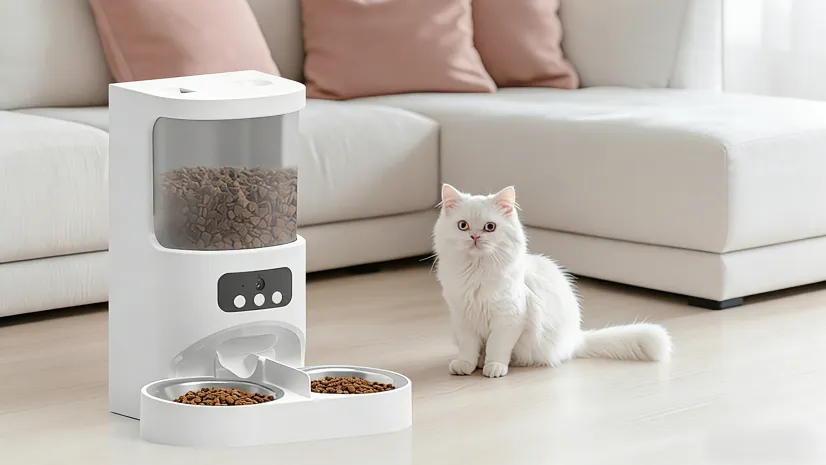
Trying to choose a reliable smart pet feeder manufacturer for Amazon can get expensive fast. One weak motor, one buggy smartphone app, or one missing compliance file can turn a promising SKU into returns, refunds, and bad reviews.
We reviewed 54 brands, compared 13 decision points, and spent 750 hours studying what separates a smart pet feeder that earns repeat orders from one that creates support tickets.
That gap usually comes down to the factory.
The U.S. pet market is still large enough to reward the right launch. In APPA's 2025 State of the Industry report, 2024 U.S. pet spending reached $152 billion, and APPA's latest survey says 94 million U.S. households own a pet. That is why sellers who pick the right supplier can still win with portion control, multi-pet households, microchip-enabled feeders, refrigerated wet-food models, and strong mobile apps.
So if you want fewer headaches and better margins, you are in the right place. I am going to walk you through the exact checks that matter most, step by step.
- Key Takeaways
- Define Your Business Needs and Goals Before You Choose a Smart Pet Feeder Manufacturer
- Explore Smart Pet Feeding Supplies
- How Can You Verify a Manufacturer’s Reputation?
- Key Factors to Assess Product Quality
- Customization Options Available from Manufacturers
- Technology Integration in Smart Pet Feeders
- Ensuring Compliance with Safety and Regulatory Standards
- Understanding Pricing and Minimum Order Quantities
- What After-Sales Support Should You Expect?
- Shipping and Logistics Considerations
- Why Request Samples and Conduct Product Testing?
- Building a Long-Term Partnership with Manufacturers
- Contact Us
- Conclusion
- FAQs
Key Takeaways
- Start with the end buyer, then choose the feeder type. A microchip-enabled unit like SureFeed solves food stealing, while a hopper feeder like Petlibro Granary solves scheduled dry feeding.
- For Amazon U.S. sellers, ask for FCC radio paperwork, electrical safety evidence, food-contact material documentation, and battery transport records before you ask about price.
- Test samples against real claims: 2.4G or 5G Wi-Fi stability, portion accuracy, jam resistance with your actual kibble size, and wet-food cooling that truly holds for the promised window.
- Make after-sales support part of the quote. A spare-parts list, written warranty terms, and Amazon return handling will protect your review score far more than a tiny unit-price discount.
Define Your Business Needs and Goals Before You Choose a Smart Pet Feeder Manufacturer
Start with the buyer, not the hardware. Amazon shoppers do not search for a feeder because it has an RFID board or a nicer PCB, they search because they need portion control, a pet feeder for special diets, or a way to stop one cat from stealing another cat's food.
That is why your first job is to map the problem to the product. If your listing promises secure feeding, you need true access control such as microchip-enabled feeders, not just a timer and a lid lock.
Who is your target audience and which pets do they have?
For Amazon premium sellers and B2B buyers serving U.S. and European pet brands, the biggest split is usually this: dry-food convenience buyers versus controlled-access buyers. Those are two very different customers, and they need two very different products.
APPA's latest survey says 94 million U.S. households own a pet. That scale gives you room to segment hard instead of trying to sell one device to everybody.
- Single-cat convenience buyers: They usually want automatic cat feeders with easy scheduling, low-food alerts, and simple app control.
- Multi-pet households: They care about access control, meal logs, and stopping food stealing.
- Prescription-diet households: They need reliable identity recognition, sealed bowls, and fewer false openings.
- Dog owners: They often prioritize hopper size, stronger motors, and larger kibble tolerance over microchip access.
If you sell into multi-pet households, be careful with wording on Amazon. SureFeed stores up to 32 pet identities and reads implanted microchips, while Petlibro One RFID uses a dedicated collar tag and does not read implanted microchips. Those are not interchangeable claims, and mixing them up will create returns fast.
Pick a maker that solves one clear feeding problem really well, then build the listing around that promise.
What key features should your smart pet feeder include?
The right feature set depends on the feeding job. A dry hopper, a controlled-access bowl, and a refrigerated wet-food feeder solve three separate problems, so your supplier should prove the one you actually plan to sell.
| Feature | What to verify | Why it matters for Amazon sellers |
|---|---|---|
| Microchip or RFID access | Check whether the unit reads implanted microchips, collar tags, or both. SureFeed reads implanted chips and stores up to 32 pets, while Petlibro One RFID uses one dedicated collar tag. | This decides whether you can honestly market the feeder for prescription diets and multi-pet households. |
| Portion control | Petlibro Granary supports 1 to 50 portions, about 20 ml or 10 g per portion. | You need a measurable serving claim for A+ content, packaging, and customer support. |
| Kibble compatibility | Petlibro lists a 2 to 15 mm kibble range for Granary models. | If your buyer uses larger kibble, jams will show up in reviews almost immediately. |
| Wet-food cooling | Petlibro Polar claims up to 72 hours of wet-food freshness and 12 hours of backup schedule protection during outages. | This lets you sell a clear use case instead of vague "freshness" language. |
| App and Wi-Fi | Check whether the unit supports 2.4G only, or both 2.4G and 5G. PETKIT YumShare Solo uses 2.4G Wi-Fi, while Petlibro Granary supports both. | This cuts setup failures and helps your support team answer pairing questions quickly. |
Also ask for a sample before you approve tooling. Run your own tests with cat food and dog food from the brands your target buyers actually use, because a feeder that works with small kibble can still fail badly with chunkier formulas.
Explore Smart Pet Feeding Supplies
Before you choose a factory, study the products that already shape buyer expectations. The best comparison is not factory against factory, it is your future SKU against the products shoppers already know by name.
As of spring 2026, official stores and major editorial roundups place smart pet feeders in a few clear pricing bands. That makes it easier to see which feature upgrades buyers will actually pay for.
Watch a quick category overview
Smart pet feeding supplies
| Model | Typical U.S. price band | Best use case | What to notice before you source a similar SKU |
|---|---|---|---|
| SureFeed Microchip Pet Feeder | About $209 | Multi-pet households and prescription diets | Reads implanted microchips, stores up to 32 pets, supports wet or dry food, and includes a 400 ml bowl. |
| Petlibro Granary Wi-Fi feeder | About $90 | Automatic dry feeding with app control | 5L hopper, 2.4G and 5G Wi-Fi, 1 to 10 meals, 1 to 50 portions, dry food only. |
| Petlibro One RFID cat feeder | About $150 | Access control with logs and app support | Good for cats in shared homes, but it uses a dedicated collar tag rather than the pet's implanted microchip. |
| PETKIT YumShare Solo with Camera | About $90 to $140 | Monitoring and remote feeding | 3L capacity, 1080p camera, 140 degree lens, 2.4G Wi-Fi, 1 to 10 meals a day, and app alerts. |
| PetSafe Eatwell 5-Meal Pet Feeder | About $60 | Simple tray feeding for wet food, treats, or medication | No app burden, fewer connectivity complaints, and a clear value position for practical buyers. |
This is where many suppliers miss the mark. They offer one generic smart pet feeder shell, then try to push it into every use case. Strong Amazon sellers do the opposite, they choose a clear lane, then match the feeder style, parts, and packaging to that lane.
How Can You Verify a Manufacturer’s Reputation?
A smooth sales pitch is easy to fake. What you need is proof that the factory can ship on time, handle defects, and support you after the first container lands.
The fastest way to do that is to cross-check public reviews, test documentation, and direct references from current Amazon sellers. If one of those three falls apart, keep moving.
See a supplier review walkthrough
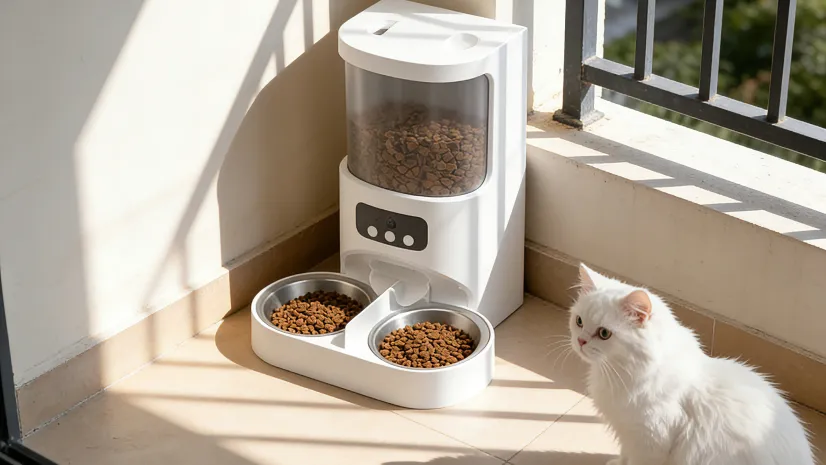
Where to find and how to evaluate customer reviews?
Use reviews like an audit trail, not a popularity contest. Five-star averages help, but complaint patterns help more.
- Scan Amazon reviews for phrases tied to actual failure points: jam, disconnect, motor, collar tag, voice recorder, and app won’t pair.
- Check editorial testing from Consumer Reports and other hands-on reviewers, because they often catch problems that happy early buyers miss.
- Use Helium 10 or Jungle Scout to see whether review volume spikes right after launches, then drops when defects surface.
- Search Reddit and owner communities for setup pain, weird firmware behavior, and the parts buyers struggle to replace.
One useful example: Consumer Reports recently described the Petlibro One RFID Smart Feeder as accurate on food measurements and schedules, but also noted that adult or small-dog-sized kibble clogged the chute. That is exactly the kind of detail you want to reproduce in sample testing before you place a bulk order.
A second example comes from hands-on editorial reviews of older Petlibro feeders, where the lid was called out as a weak point if the unit gets knocked over. That tells you to run a tip-over test, not just a normal dispense test, especially if you want to sell to active cats or dogs.
How to confirm industry certifications and standards?
For Amazon U.S. sales, your factory should be able to send documentation quickly, clearly, and with matching model numbers. If the test report says one SKU and the carton label says another, treat that as a red flag.
| Document to request | Why it matters | What to verify |
|---|---|---|
| FCC paperwork for Wi-Fi or Bluetooth models | Wireless devices sold in the U.S. need proper radio authorization. | Ask for the FCC ID, the grant, test lab name, and photos that match your exact feeder shell and radio module. |
| Electrical safety evidence | Power adapters and charging parts create fire and failure risk. | Ask whether the adapter is listed by an OSHA-recognized NRTL such as UL or ETL, and make sure the part number on the report matches the adapter in the box. |
| Food-contact material records | Bowls, lids, and food paths touch pet food every day. | Request declarations for food-contact plastics, coatings, and stainless steel components, plus a bill of materials for all food-contact parts. |
| UN38.3 battery test summary | Lithium battery models can be delayed or rejected in transit without it. | Make sure the summary covers the exact battery pack shipped with the feeder, not a similar pack from a different build. |
| Battery safety and labeling records | Small accessories can trigger extra safety rules. | If any collar tag or accessory uses a button or coin cell battery, ask how the design meets Reese's Law requirements for secure access and warnings. |
| Factory quality records | ISO paperwork alone does not prove a good feeder, but it does show process maturity. | Ask for incoming inspection records, final QC checklist, and a sample serial trace sheet. |
If a supplier sends only logos and no reports, that is not compliance. It is decoration.
Key Factors to Assess Product Quality
Good product quality is the result of material choices, smart engineering, and boring, repeatable testing. You want a factory that can explain all three without guessing.
What materials are used in making smart pet feeders?
Start with the food path. Stainless steel bowls and smooth food-contact surfaces are easier to clean and easier to defend in a listing than rough plastic parts that trap oils and odors.
That is why many better automatic pet feeders use stainless steel bowls or removable trays. Petlibro also highlights BPA-free tray materials on its Polar wet-food feeder, which is the kind of detail buyers notice when they are comparing hygiene and cleaning time.
- Stainless steel bowls: Better for hygiene, easier to clean, and a stronger premium signal.
- Food-grade plastics: Fine for hopper walls and lids, but ask what resin is used and whether it appears in the food path.
- Gaskets and seals: Important for wet food, odor control, and freshness claims.
- Motor and gearbox housing: Important for noise, wear, and jam resistance.
If your buyer cares about pet health, avoid vague wording like "safe plastic." Ask for the actual material callout and the food-contact paperwork behind it.
How durable and reliable are the feeders?
Durability is where a lot of look-alike feeders separate. The shell may look the same in a photo, but the motor torque, lid lock, sensor placement, and backup power design can be very different.
SureFeed is a useful benchmark here because its feeder stores up to 32 pet IDs, runs for about six months on four C batteries, and carries a three-year warranty. That combination tells you the brand expects long service life, which is exactly the standard you should demand from a private-label supplier.
For connected hopper models, use kibble size as a durability test. Petlibro Granary lists 2 to 15 mm kibble compatibility, and the moment you go above that range, the chance of jamming rises sharply.
If your sample works only with tiny, uniform kibble, it is not ready for Amazon scale.
What testing and quality assurance processes are involved?
A real QA plan is specific. It does not stop at "100% tested."
- Dispense accuracy test: Run at least 100 cycles at your most important portion sizes, then weigh the output against your listing claim.
- Jam test: Use the largest kibble size you expect customers to feed, not the smallest size that makes the feeder look good.
- Power-failure test: Unplug the feeder mid-schedule and confirm battery backup actually preserves the feeding plan.
- App stress test: Pair, unpair, reset, reconnect, and trigger manual feeds from both iOS and Android devices over several days.
- Cleaning test: Time how long it takes to disassemble, wash, dry, and reassemble the food-contact parts.
- Transport test: Drop the boxed sample and inspect the hopper, adapter, and bowl fit before approving final packaging.
If you want to sell a wet-food model such as the petlibro polar wet food feeder, add temperature logging to the protocol. If you want to sell an RFID unit such as the petlibro one rfid cat feeder or a surefeed microchip cat feeder alternative, add repeated access tests with the collar or implanted chip from multiple approach angles.


Customization Options Available from Manufacturers
Customization is where margin gets built, but it is also where delays start. The smartest move is to customize the parts buyers see, use, and complain about most.
Customized processingCustomized processing should cover more than adding a logo. For Amazon sellers, it should also cover packaging compliance, user guides, app branding, barcode placement, and the exact accessories that go in the carton.
How can you customize branding and logo placement?
Keep branding practical. The hopper, front panel, lid, and retail box are usually the best places to add your identity without hurting cleanability or tool cost.
- Ask for silkscreen, UV print, laser engraving, and molded-logo options side by side.
- Send vector artwork and Pantone codes early, so the factory does not guess your colors.
- Request a pre-production proof with close-up photos of the logo on the finished texture, not just flat artwork on a white background.
- Test logo abrasion on samples after cleaning, because glossy marks can fade fast on daily-use parts.
In Amazon's U.S. inbound update for January 1, 2026, prep and item labeling services ended for FBA shipments. That means your manufacturer or prep partner now needs to get unit labels, carton labels, inserts, and packaging prep right before inventory enters the Amazon network.
What custom features and specifications can be requested?
This is the point where you separate a generic automatic feeder from a real brand product. Ask for features that support a listing claim, a buyer segment, or a support-saving advantage.
| Custom option | Best for | Why it is worth requesting |
|---|---|---|
| Dual bowls or splitters | Two-cat homes and small dogs | Makes the feeder easier to position for shared households and gift buyers. |
| Slow-feed mode | Fast eaters and portion control | Helps support weight management and calmer feeding behavior in the listing story. |
| Custom voice prompts | Premium and giftable SKUs | Adds a human touch without changing the core tool set. |
| RFID or microchip access | Multi-pet households | Lets you charge more because it solves a higher-value problem. |
| App skin and onboarding flow | Brand-first sellers | Reduces the "generic Tuya clone" feel and improves trust. |
| Retail-ready packaging | Amazon FBA and wholesale | Prevents relabeling, carton rework, and inbound delays. |
Be careful with highly custom firmware, because that can change lead times more than color or packaging changes do. A new shell color might add days, while new app logic or a new sensor can add weeks.
Technology Integration in Smart Pet Feeders
Technology should lower support tickets, not create them. A feeder with five smart features is still a bad product if the app drops offline every time the router changes channels.
What IoT features should you expect?
For most Amazon-ready smart pet feeders, the must-have stack is simple: stable wireless pairing, scheduled feeding, manual feed from the app, low-food alerts, and firmware updates that do not break the device.
Then you can choose your upgrade layer. Petlibro Granary gives you dual-band 2.4G and 5G Wi-Fi, while PETKIT YumShare Solo adds a 1080p camera, 140 degree lens, and remaining-food analysis. Pawsync takes a different route and uses an integrated bowl scale to account for leftover food before the next meal is dispensed.
- 2.4G only: Common and simple, but more pairing friction for buyers who do not know how to split their router bands.
- 2.4G and 5G: Easier setup story and a cleaner premium pitch.
- Camera monitoring: Great for reassurance, but it raises privacy, support, and firmware complexity.
- Weight sensing: Excellent for portion control claims because it ties feeding to actual bowl conditions.
- OTA updates: Valuable only if the vendor can show a stable release process and rollback plan.
How compatible are feeders with mobile apps?
App compatibility should be tested like a core product feature, because that is what it is. If the feeder needs a smartphone app to schedule or edit meals, app failure becomes product failure.
Petlibro Granary and PETKIT YumShare Solo both support remote feeding and phone alerts, but their network requirements are different. PETKIT YumShare Solo uses 2.4G Wi-Fi, while Petlibro Granary supports both 2.4G and 5G, which can make onboarding easier for less technical buyers.
Before you approve a manufacturer, ask for this app checklist:
- Which app controls the feeder, and is it the same app used across the brand's other devices?
- Can the feeder still run scheduled meals if Wi-Fi drops?
- How long does a reconnection take after router reset or power loss?
- How often are firmware updates pushed, and what was fixed in the last two releases?
- Are iOS and Android setup steps identical, or does one platform need extra permissions?
Good app compatibility saves you money twice, first in fewer returns, then again in fewer support emails.
Are there advanced AI or machine learning capabilities?
Right now, the most useful "AI" features in this category are practical ones. PETKIT uses camera-based remaining-food control and activity video records. Pawsync uses bowl-weight tracking to log what a pet actually ate. Those features solve real buyer problems.
What you should be careful with is vague AI marketing. If a supplier claims machine learning, ask what input data is used, where it is stored, how often it updates, and what exactly changes in the feeding logic.
For Amazon listings, simple wins. Buyers trust clear benefits like meal logs, low-food alerts, and measured leftovers more than fuzzy claims about intelligence.
Ensuring Compliance with Safety and Regulatory Standards
Compliance is not the glamorous part of sourcing, but it is where you protect the listing, the shipment, and the customer. For Amazon U.S. sellers, this section matters as much as the sample itself.
What safety certifications should manufacturers have?
At minimum, a smart feeder with wireless functions should have clean FCC paperwork for the radio hardware. If it ships with a wall adapter, you also want recognized electrical safety evidence for that power supply.
Manufacturers should also be ready to show CE, FCC, and RoHS marks where relevant, but for Amazon U.S. sales, do not stop there. Ask for the underlying reports, the exact SKU mapping, and the adapter documentation.
If the feeder or any add-on ships with a lithium battery, ask for the UN38.3 test summary before you talk freight. If a collar tag or accessory uses a button or coin cell, ask how the battery compartment and warning labels address Reese's Law requirements.
For food-contact parts, ask what touches the food, what it is made from, and which documents support that material choice. This is one area where a vague answer should end the conversation.
Which regional and international standards apply?
| U.S. requirement area | What your supplier should provide | Why it matters | What you should ask next |
|---|---|---|---|
| Wireless radio compliance | FCC ID, grant, and matching test records | Required for Wi-Fi or Bluetooth functions sold in the U.S. | Does the FCC file match this exact feeder shell and radio module? |
| Electrical safety | UL or ETL style evidence for the adapter or charger | Reduces fire risk and supports retailer confidence | Is the adapter in the carton the same one listed in the report? |
| Food-contact surfaces | Material declarations for bowls, trays, seals, and food paths | Supports hygiene claims and lower complaint rates | Which parts actually touch food, and what resin or steel grade is used? |
| Battery transport | UN38.3 summary and shipping paperwork | Prevents air-freight holds and customs problems | Is the report for the installed battery pack, not a similar battery? |
| Consumer warnings | Label copy, manual warnings, and battery access details | Important if the product includes coin-cell accessories | How are warnings shown on the product, packaging, and instructions? |
| Privacy and app data | Privacy policy, data flow summary, and user-rights process | Important for smart feeders that collect user and pet data | Can California buyers request access or deletion, and where is data stored? |
If you plan to sell outside the United States later, treat that as a second compliance workstream. Do not assume a U.S.-ready SKU is automatically ready everywhere else.
Understanding Pricing and Minimum Order Quantities
Price is easy to compare. Margin is not. The real question is whether the feature set, defect risk, packaging work, and support burden still leave room for profit after Amazon fees and returns.
How competitive are the prices?
Retail pricing gives you a useful market map. Simple tray and timer models often sit around the $60 range, connected dry-food feeders around $90 to $150, RFID selective feeders around $150, and true microchip selective feeders around $200 or more.
That spread tells you something important: buyers will pay more for a feeder that solves a hard problem, especially food stealing, medical diets, or refrigerated wet food. So if your supplier is building a premium SKU, the product has to earn that premium with clear proof, not just a nicer product photo.
- Budget lane: Timed tray feeders and basic automatic dog feeders.
- Mid-range lane: Wi-Fi hopper feeders with portion control and mobile apps.
- Premium lane: RFID, microchip, camera, scale, or refrigerated models.
Use those lanes when you negotiate. If a factory quotes premium pricing for a product with basic timer logic and no compliance depth, you are paying for air.
Are flexible order quantities available for startups?
Startups and test-launch sellers should push for pilot quantities first. A small first run is worth more than a "great" unit price on inventory you cannot move.
Typical supplier norms for this category still land in familiar bands: standard samples often take 7 to 15 days, custom prototype work can take 15 to 30 days, and mass production usually falls in the 30 to 60 day range once samples are approved. New firmware or tooling can push that higher.
| Negotiation point | Why it matters | Good sign |
|---|---|---|
| Low pilot MOQ | Lets you test listings without tying up too much cash | The factory offers small first runs before full-scale production |
| Sample fee credit | Reduces development cost | Sample fees are credited against a bulk order |
| Color or accessory split | Supports multiple Amazon variations | The MOQ can be split across colors or bundles |
| Packaging flexibility | Helps with FBA and retail launch tests | The supplier supports pilot packaging before committing to large print runs |
What After-Sales Support Should You Expect?
After-sales support is where a factory proves whether it wants a one-time order or a real partnership. For Amazon sellers, it also tells you how painful the first defect wave will be.
What warranty and repair services are offered?
Written warranty terms tell you a lot about confidence and maturity. SureFeed lists a three-year warranty on its microchip feeder, Petlibro lists 24-month coverage on products such as the One RFID feeder and Polar wet-food feeder, and PETKIT's U.S. warranty policy lists one year on products bought through its official site.
That means a supplier offering only a vague 12-month promise on a premium smart pet feeder is already below the bar set by established brands. For Amazon U.S. sellers, 24 months is a much healthier target if the SKU is app-connected or priced as a premium model.
- Ask for a written warranty matrix by part: motor, PCB, adapter, battery, bowl, lid, and accessories.
- Confirm whether spare bowls, lids, hoppers, adapters, and collar tags can be purchased separately.
- Ask how firmware-related defects are handled, because app bugs should not become customer-paid returns.
- Get a dead-on-arrival process in writing before the first shipment leaves the factory.
How accessible is customer support?
Support should be easy to reach and easy to escalate. In-app chat is nice, but it is not enough if your account manager disappears during a return spike.
Look for a factory or brand partner that can support email, live chat, and real troubleshooting steps with logs, serial numbers, and replacement part options. PETKIT's U.S. support setup, for example, includes customer-service phone coverage plus email, which is a stronger benchmark than an anonymous message form alone.
Ask these questions before you sign:
- What is the normal first-response time?
- Who handles firmware bugs, the factory or the app vendor?
- Can they provide failure analysis on returned units?
- Do they keep spare parts in the United States?
- Will they support Amazon FBA return cases with evidence and replacements?
Shipping and Logistics Considerations
Shipping sounds simple until the first carton gets held for labeling, the battery paperwork is missing, or Amazon flags the shipment for bad prep. This is why logistics should be planned at the same time as product development.
Do manufacturers provide global shipping?
Most established factories can arrange air and sea freight, but the better question is whether they can ship your feeder in a way that matches Amazon's inbound rules. Since Amazon ended U.S. FBA prep and item labeling services on January 1, 2026, the seller must prep and label products before they enter the U.S. fulfillment network.
That changes the role of the manufacturer. You now want a factory or prep partner that can handle unit labels, carton labels, packaging protection, barcode placement, and pallet photos before the goods move.
- For air freight: Best for samples, urgent restocks, and premium launches.
- For sea freight: Best for lower landed cost on bulk orders, but only if the packaging survives the trip.
- For battery models: Ask for the UN38.3 summary before booking space.
- For Amazon FBA: Ask for packed-carton photos, box dimension sheets, and the barcode location approval before dispatch.
What are typical lead times and delivery schedules?
| Stage | Typical timeframe | What can slow it down | What you should ask for |
|---|---|---|---|
| Standard sample | 7 to 15 days | Color changes, app pairing requests, accessory swaps | Video of the exact sample powering on and dispensing |
| Custom prototype | 15 to 30 days | New molds, firmware changes, packaging mockups | Prototype checklist with open issues clearly marked |
| Mass production | 30 to 60 days | Motor sourcing, PCB supply, custom packaging, holiday congestion | Weekly production updates and final inspection date |
| International air freight to the U.S. | 3 to 10 days | Battery paperwork, customs inspection, peak seasons | Commercial invoice, packing list, and battery records |
| International sea freight to the U.S. | 25 to 40 days | Port congestion, customs holds, inland delivery | Booking confirmation, carton specs, and destination delivery plan |
| Amazon prep and intake | Variable | Bad labeling, missing box-content data, weak packaging | Proof that packed units already meet your FBA shipment plan |
One more Amazon detail matters here: box content information is now a mandatory workflow step in Amazon's inbound process. If your prep partner cannot produce accurate packing data, you risk receiving defects and manual-processing headaches later.
Why Request Samples and Conduct Product Testing?
Samples are where marketing claims meet real life. A factory may tell you the feeder is stable, quiet, accurate, and app-ready, but the sample is where you find out if any of that survives your actual use case.
How to evaluate functionality and performance?
Build a test plan around the claim you want to make on Amazon. If the listing will promise portion control, you need a scale. If it will promise wet-food freshness, you need temperature logging. If it will promise smart app control, you need a week of pairing and alert tests.
- Run 100 dispense cycles and record the output weight at small, medium, and large portion settings.
- Use the biggest kibble you expect buyers to use, especially for automatic dog feeders and mixed cat food formulas.
- For refrigerated feeders, log bowl temperature across the full claimed freshness window.
- Trigger power loss and reconnect events to see whether the schedule survives.
- Test app alerts for low food, jam detection, and manual feed response time.
- Shake, tip, and move the feeder to see whether food spills, the lid shifts, or parts loosen.
For the petlibro granary wifi 2.4g & 5g automatic cat & dog feeder, test both network bands and the full 2 to 15 mm kibble range.
For the surefeed microchip cat feeder category, test chip reading speed, false openings, and how well the unit prevents side access by other pets.
For the petkit yumshare solo with camera, check night vision, alert timing, and whether the camera adds enough value to justify the extra support load.
How to ensure compatibility with your needs?
Do not stop at "the sample works." Make the sample prove it fits your listing, your buyer, and your operations.
- Match the feed type: Dry-only feeders are fine, but do not let a supplier imply wet-food support unless the model was built for it.
- Match the feeding logic: Count meals per day, portion size, and whether each feeding can be customized independently.
- Match the access method: Microchip, RFID collar, or open hopper are separate claims and should be treated that way.
- Match the app burden: If the product cannot be used well without an app, your support team needs to be ready for that reality.
- Match the packaging: Weigh the final box, measure carton dimensions, and check label placement before you approve production.
- Match the warranty promise: If the supplier says 24 months, ask what parts fail most and how replacements are shipped.
The best samples do not just prove quality. They prove fit.
Building a Long-Term Partnership with Manufacturers
A manufacturer becomes a long-term partner when it can help you launch, improve, and recover, not just quote a price. That matters even more in smart products, where hardware, firmware, packaging, and customer support all touch the same review score.
What experience do manufacturers have with Amazon sellers?
Look for factories that understand Amazon's rhythm: fast sample rounds, clear carton specs, barcodes done upstream, and tight communication when something breaks. A supplier with real Amazon experience should be able to talk about listing photos, inserts, FBA prep, return patterns, and common review triggers without sounding lost.
Ask for proof, not stories. Request example SKUs, past Amazon packaging work, and a sample failure report that shows how they handled a defect batch.
How reliable is their communication and business process?
Great communication looks ordinary. Replies are fast, files match the SKU, and nobody changes a part without telling you.
| What to check | Strong sign | Weak sign |
|---|---|---|
| Response speed | Replies in one business day with clear next steps | Short answers, missing files, and repeated follow-ups |
| Technical clarity | Can explain app flow, parts, and test limits in plain English | Uses generic phrases like "high quality" with no proof |
| Change control | Version numbers and approvals are documented | Parts change without notice |
| Problem handling | Shares root-cause analysis and corrective action | Only offers discounts and apologies |
| Ownership | Names an account manager and technical contact | No single person owns the project |
Contact Us
If you are ready to move from research to action, the next smart step is a direct factory conversation. Use the Contact Us page to ask for sample availability, MOQ options, warranty terms, compliance files, and packaging support.
That first message should be specific. Ask for the exact feeder style you want, the market you plan to sell in, the certifications you need, and whether the supplier can support Amazon prep and labeling from the start.
Good partners answer those questions clearly. Great partners answer them before you have to ask twice.
Conclusion
Pick a smart pet feeder manufacturer that fits your Amazon strategy, not just your first quote. Test the sample, verify the paperwork, and make sure the feature set matches the buyer problem you plan to solve.
Then confirm MOQ, labeling, shipping, spare parts, and warranty before you place the order. If the factory can support all of that with clear communication, you are much closer to a feeder line that grows instead of creating headaches.
FAQs
1. How do Amazon sellers find a reliable smart pet feeder manufacturer?
Think of it like dating, clear specs are your profile. Write product specs and sample requests. Check communication, production capacity, quality control, safety compliance, and ask for references and factory photos.
2. What checks should I run on manufacturer quality and compliance?
Ask for samples and test them in real use. Inspect assembly, parts, and packaging for wear and fit. Review quality control reports and safety certificates, or hire a third party to audit the factory.
3. What about pricing, MOQ, lead time, and shipping?
Negotiate price with a clear scope, but watch low bids that cut corners. Confirm MOQ, lead time, shipping options, OEM or private label costs, and Amazon FBA packing rules.
4. Should I worry about after-sales support and warranty?
Yes, ask about warranty terms, spare parts, and software update policies for connectivity features. Good communication and fast parts service save your seller rating when a customer calls in a panic.