

GPSR for Pet Products: What EU Importers Need from Their Manufacturer
- Why GPSR Has Changed the Way EU Importers Evaluate Pet Product Manufacturers
- What EU Importers Should Ask for Before Placing an Order
- Basic manufacturer identity and product traceability information
- Risk assessment, test support, and technical product information
- Labeling, warnings, manuals, and packaging information for the EU market
- Communication support and responsible coordination
- Online listing information support for e-commerce and marketplace sellers
- MOQ Matters: Can the Manufacturer Support Compliance Validation at Small Order Volumes?
- How Customization Flexibility Affects GPSR Readiness
- Lead Time and Development Cost: The Hidden Questions Buyers Often Miss
- Brand Control: What Should Stay in the Buyer’s Hands?
- Quality Stability Is Part of Compliance Stability
- After-Sales Risk and Corrective Action: Can the Manufacturer Respond Fast Enough?
- Supply Chain Stability: The Capability Behind Repeat Orders
- A Practical Supplier Checklist for EU Importers
- FAQ
- Conclusion
EU importers sourcing pet products are no longer evaluating manufacturers on price, design, and lead time alone. Today, compliance readiness has become part of supplier selection, especially for buyers selling into a more tightly regulated and more transparent market environment.
For importers, this means sourcing is no longer just about getting a product made. It is also about choosing a manufacturing partner that can support traceability, product information consistency, packaging accuracy, labeling control, and a stable response process if problems arise after launch.
This is especially important in the pet products category. Many projects involve private label packaging, customized manuals, market-specific accessories, low-MOQ trial orders, or repeated updates across SKUs. In these situations, supplier risk often appears not because the product itself looks obviously problematic, but because product information, packaging content, warnings, instructions, or shipment details are not aligned properly.
That is why importers should now evaluate pet product manufacturers from a broader perspective. A strong supplier should not only be able to offer OEM or ODM capability, flexible order quantities, and competitive pricing. It should also be able to support version control, document coordination, stable production quality, and faster issue handling when needed.
In short, a GPSR-ready manufacturer should reduce importer risk, not add more of it. This article explains what EU importers should expect from a manufacturer, what questions should be asked before placing an order, and why compliance support is now closely connected with MOQ flexibility, customization control, lead time, quality stability, after-sales response, and long-term supply continuity.
Why GPSR Has Changed the Way EU Importers Evaluate Pet Product Manufacturers
Why this is no longer just a documentation issue
Many buyers still treat compliance as something to review after product development is complete. In practice, that approach creates avoidable risk. Today, compliance affects not only the final paperwork, but also how the product is described, labeled, packed, documented, and supported after sale.
For importers, this means the manufacturer needs to be involved earlier and more systematically. If the supplier cannot provide clear product information, align packaging with the final SKU, keep manuals accurate, or maintain batch records, the importer may face problems long before any customer complaint appears. Even a small mismatch between the product, the box, the manual, and the online listing can become an expensive operational issue.
That is why EU buyers increasingly look for manufacturers that can coordinate compliance-related details during development and production, not only after the goods are finished.
Why importers now need supplier-side compliance readiness, not just low pricing
Low pricing still matters, but it is no longer enough for serious B2B buyers. A lower unit cost loses value quickly if the manufacturer cannot support stable labeling, version control, or timely updates when revisions are needed.
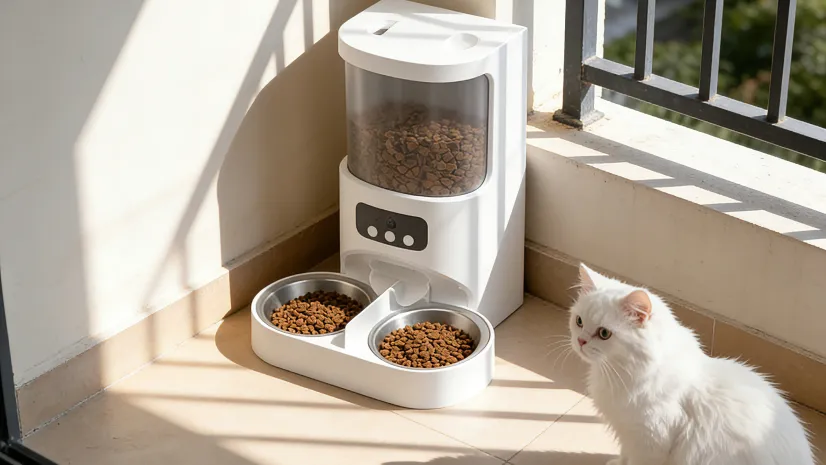
For example, a buyer may want to launch a private label pet feeder with a custom logo, market-specific packaging, a localized manual, and revised inserts for a target EU channel. If the supplier handles these elements loosely, the importer may end up with inconsistent materials across shipments. That creates risk not only for compliance, but also for brand reputation and after-sales operations.
Supplier-side compliance readiness should therefore be evaluated together with MOQ flexibility, project execution, communication speed, and repeat-order stability.
Why manufacturer selection directly affects recall risk, listing risk, and after-sales risk
A manufacturer’s role does not end when the goods leave the factory. If there is a complaint, product warning, listing issue, packaging inconsistency, or post-sale problem, the importer must respond quickly. That response becomes much harder when the manufacturer cannot retrieve records, confirm product versions, support corrective action, or explain what changed between batches.
For importers, the real sourcing question is no longer only, “Can this factory make the product?” It is also, “Can this factory support us if a problem appears later?”
A reliable pet product manufacturer should be able to provide structured product information, maintain traceability, support document alignment, and assist with issue investigation when needed. This is particularly important for private label buyers, because the importer’s brand is what the market sees first.
What EU Importers Should Ask for Before Placing an Order

Basic manufacturer identity and product traceability information
Before placing an order, importers should confirm whether the manufacturer can provide clear and consistent information for both the supplier and the product. This includes product naming, SKU identification, packaging version control, and batch-level traceability.
If multiple variants are involved, such as different colors, plug types, accessories, bowl configurations, or feature combinations, the supplier should be able to distinguish them clearly across production, labeling, and shipment records.
This becomes especially important for private label projects. Once branding, packaging, manuals, or accessories change, traceability becomes harder if the factory does not have disciplined internal control.
Risk assessment, test support, and technical product information
Importers should also ask what product-related technical information the manufacturer can support before bulk production begins. The goal is not to request every document on day one, but to confirm that the supplier has a workable process for preparing and updating relevant product information.
If materials, features, chargers, batteries, accessories, or packaging details change during development, the buyer should know whether the supplier can reflect those changes in a controlled and traceable way.
Many sourcing problems do not come from obvious defects. They come from gaps between the actual shipped product and the version the importer believed was final.
Labeling, warnings, manuals, and packaging information for the EU market
For many pet product projects, packaging and instruction control is where supplier risk becomes visible. EU buyers should ask whether the manufacturer can support customized labels, warnings, manuals, carton marks, and inserts in a controlled way.
The most important question is not whether the supplier can print a custom box. It is whether the supplier can keep the final packaging, product labeling, and instruction materials aligned with the actual product version being shipped.
A stronger manufacturer will have a clearer process for artwork confirmation, version locking, packaging sample approval, and production release.
Communication support and responsible coordination
Importers should also assess whether the supplier has the communication discipline needed to support ongoing project coordination. A factory that responds slowly, updates files informally, or cannot keep confirmed versions organized creates unnecessary confusion, especially when several SKUs or teams are involved.
A good manufacturer should not only have product capability. It should also have enough communication stability and document discipline to support importer workflows efficiently.
Online listing information support for e-commerce and marketplace sellers
Many EU buyers sell through online channels first. That means the product information shown on the listing page must remain aligned with the physical product, packaging, and instruction materials delivered to the customer.
For this reason, importers should ask whether the supplier can help maintain consistency between product features, included accessories, warnings, power configurations, feeding settings, and final packaging details.
For smart pet products, this is especially important because listing accuracy directly affects reviews, return rates, customer expectations, and platform risk.
MOQ Matters: Can the Manufacturer Support Compliance Validation at Small Order Volumes?
For many EU importers, MOQ is not only a purchasing issue. It is also a compliance and risk-control issue. When launching a new pet product, buyers often need to test more than just market demand. They also need to verify packaging accuracy, manual consistency, labeling execution, product-market fit, and the supplier’s ability to follow approved specifications.
A flexible MOQ creates real operational value because it allows importers to validate the full product package before scaling up. Instead of committing to a large volume too early, the buyer can first confirm whether the product version, packaging details, inserts, and shipment coordination are aligned with the intended market.
For Amazon sellers, independent pet brands, and regional distributors, the first low-MOQ order is often more than a sales test. It is also a supplier capability test.
Why low MOQ helps importers test compliance and market fit before scaling
Scaling too early can be expensive. A product may look commercially attractive, but issues often appear only after the first shipment reaches the market. These issues may include unclear instructions, packaging inconsistencies, accessory mismatches, or listing details that no longer match the delivered goods.
A low MOQ gives the importer room to test both sales performance and execution reliability while limiting exposure.
How small-batch orders reduce risk for new private label launches
Private label projects usually involve more moving parts than standard wholesale orders. Once a buyer adds a custom logo, custom packaging, language changes, revised inserts, or market-specific configurations, execution risk increases.
Small-batch orders help buyers test whether the manufacturer can manage these customized elements consistently before larger commitments are made.
What to ask about sample approval, pilot runs, and document readiness before mass production
Before confirming a PO, importers should ask how the factory handles the transition from sample to mass production. A sample alone does not guarantee consistency in the bulk order.
Buyers should know whether the approved sample version, packaging files, manual text, accessory list, and product configuration will all be controlled properly once production begins.
How Customization Flexibility Affects GPSR Readiness
Customization is one of the main reasons buyers choose OEM or private label sourcing. However, from an EU importer’s perspective, customization should not be judged only by how many options a supplier offers. It should also be judged by how well those changes are controlled.
A manufacturer may say it can customize logos, packaging, manuals, colors, accessories, app interfaces, or product functions. The real question is whether it can manage those changes without creating inconsistencies between the product, the packaging, the instructions, and the final market presentation.
Custom logo, packaging, manuals, and labels without losing control
In private label sourcing, logo printing is often the easy part. The harder part is controlling everything around the branded product, including packaging text, user instructions, inserts, warnings, shipping labels, and SKU identification.
Importers should evaluate whether the supplier has a reliable process for confirming and locking these materials before production starts.
App, feature, and accessory customization: what changes may require extra validation
In smart pet products, customization often goes beyond packaging. Buyers may request different accessories, plug types, bowl options, app settings, feature combinations, or camera modules.
Each change creates a new possibility for mismatch. A revised accessory list may require packaging updates. A feature adjustment may affect the instruction manual. A power-related change may alter included components. If the supplier treats these changes as isolated production details, importers may end up facing avoidable downstream problems.
How to keep brand control while avoiding document mismatches across SKUs
Brand control becomes harder when multiple SKUs are involved. Different channels, countries, or retailers may require different configurations. Without disciplined SKU management, even a capable factory can make preventable mistakes.
Importers should therefore work with manufacturers that can support structured SKU distinction, version tracking, and repeat-order consistency.
Lead Time and Development Cost: The Hidden Questions Buyers Often Miss
When buyers evaluate a manufacturer, lead time and development cost are usually discussed early. However, many sourcing conversations focus only on production speed or visible setup fees. That is too narrow.
In practice, lead time and development cost are also affected by packaging approval, manual alignment, label changes, accessory confirmation, and document turnaround speed. A product may be ready in terms of hardware, but still not ready in terms of market-facing materials.
How compliance-related updates can affect production lead time
Even small revisions can affect delivery schedules when the factory does not have a clear approval process. A revised warning statement, carton mark, insert, or feature description may sound minor, but if these updates are not synchronized properly, production may be delayed or rushed.
A stronger manufacturer will define approval checkpoints earlier and help lock final files before mass production begins.
What development costs may arise from packaging, labeling, or instruction changes
Many buyers focus on visible costs such as packaging setup or printing. But hidden costs can appear when process control is weak. These may include manual rework, artwork revisions, labeling changes, relabeling, shipment delays, and additional internal coordination time.
A transparent supplier should help the buyer understand which costs are one-time, which are recurring, and which may change when the product version changes.
Why importers should confirm document turnaround time before confirming the PO
One of the most overlooked sourcing questions is how quickly the factory can update and confirm supporting materials. A buyer may know the production lead time, but still have no clear answer on how fast the supplier can revise packaging files, confirm manual changes, or validate updated accessory lists.
Document response speed affects the whole project timeline. Slow confirmation delays not only production, but also listing preparation, internal review, and final launch planning.
Brand Control: What Should Stay in the Buyer’s Hands?
For EU importers, brand control is not only a marketing issue. It is also a sourcing and risk-management issue. Buyers need to be clear about which parts of the product and product information must remain under their control.
Problems often do not begin with hardware. They begin when the buyer loses control of product claims, packaging language, manual content, accessory descriptions, or version consistency across channels.
Who controls the final label copy, manual content, and product claims
Before production begins, importers should clarify who is responsible for final approval of product-facing information. This includes label wording, warnings, user instructions, packaging copy, and product claims.
A stronger manufacturing partner will understand that the importer should retain control of the final market-facing version.
Why approved artwork and version control matter for repeat orders
Many factories can support a first custom order. The bigger question is whether they can repeat it accurately. Repeat-order stability depends on how approved files, packaging versions, and product configurations are managed internally.
A repeat order should not feel like restarting the project from zero.
How to avoid inconsistency between product, packaging, listing, and instructions
A product listing, product page, packaging box, and instruction manual all need to reflect the same essential information. If the manufacturer updates one part without aligning the others, the importer faces avoidable friction.
That is why structured communication and formal approval checkpoints matter so much.

Quality Stability Is Part of Compliance Stability
Many buyers separate quality control from compliance, but in practice the two are closely connected. A product that performs inconsistently across batches creates more than customer dissatisfaction. It also creates complaint-handling difficulties, listing risk, and growing after-sales pressure.
For EU importers, quality stability matters because the actual delivered product must remain consistent with the approved version.
Why repeated quality deviations can become after-sales and compliance problems
A one-time defect may be manageable. Repeated deviation is much more serious. If similar issues appear across several batches, the importer may face rising complaints, returns, channel pressure, and loss of customer trust.
For smart pet products, consistency in performance, assembly, power behavior, and accessory inclusion is especially important.
How batch consistency supports traceability and complaint handling
When issues arise, batch traceability becomes critical. Importers need to know whether the problem is limited to one batch, one component version, one accessory set, or one production period.
A manufacturer with stronger batch management makes issue handling more precise and less disruptive.
What importers should ask about QC checkpoints, incoming materials, and production records
Importers should ask how the factory controls incoming materials, in-process inspection, assembly checks, packaging verification, and final shipment review.
The goal is not to turn every buyer into an auditor. The goal is to understand whether the factory has enough internal discipline to keep product execution stable over time.
After-Sales Risk and Corrective Action: Can the Manufacturer Respond Fast Enough?
For EU importers, the real test of a supplier often comes after shipment, not before it. A manufacturer may look efficient during quotation and sampling, but if issues appear later and the supplier responds slowly or vaguely, the importer carries the full burden.
That is why after-sales support should be evaluated before the order is placed.
What happens when there is a complaint, product issue, or marketplace warning
Once a problem surfaces in the market, time becomes critical. The importer may need to verify the affected version, compare batches, retrieve records, review packaging or manual content, and decide what corrective steps are needed.
If the supplier cannot provide clear answers quickly, the importer’s response becomes slower and less effective.
Why response speed matters for importers, distributors, and private label brands
Importers and private label brands operate closest to the market. Their name appears on the listing, on the package, and in the customer communication. That means any issue reaches them first.
A responsive supplier helps the importer limit damage, protect customer relationships, and resolve confusion faster.
What a reliable manufacturer should support
A reliable manufacturer should be ready to assist with:
- issue investigation
- version or batch confirmation
- replacement planning
- packaging or labeling correction
- corrective updates for future orders
- process improvement after the problem is identified
A supplier that can support these areas is far more valuable than one that competes only on initial price.
Supply Chain Stability: The Capability Behind Repeat Orders
For many buyers, supply chain stability is discussed mainly in terms of lead time and stock continuity. In practice, it also affects documentation consistency, version control, repeat-order accuracy, and communication quality over time.
A stable supplier helps the importer operate more predictably. That predictability matters in any compliance-sensitive market.
Why stable suppliers are easier to manage
When a factory has stable internal systems, repeat orders become easier to control. Approved files are easier to retrieve, packaging versions are easier to confirm, and product specifications are less likely to drift.
This reduces workload on the buyer’s side and lowers the risk of preventable mistakes.
How documentation discipline and communication reduce sourcing risk
A stable supply chain depends on more than production capacity. It also depends on disciplined documentation, organized coordination, and clear version tracking.
A manufacturer with better internal systems makes it easier for buyers to manage repeated launches, multiple SKUs, and multi-market projects.
Why long-term supply stability matters more than short-term unit price
A lower price on one order may look attractive, but long-term sourcing costs are shaped by many other factors: rework, delays, replacements, inconsistent execution, slow communication, and repeated corrections.
That is why serious B2B buyers often prioritize operating reliability over short-term price advantage.
A Practical Supplier Checklist for EU Importers
Choosing a pet product manufacturer should involve more than comparing quotations and reviewing samples. Buyers should use a structured checklist before moving from development to bulk orders.
Checklist before sampling
- Can the supplier clearly identify product versions, SKU differences, and configuration options?
- Can the supplier support low-MOQ testing or pilot cooperation?
- What level of customization is available for logo, packaging, manuals, accessories, or features?
- Can the factory explain how approved versions are managed internally?
- Can the supplier provide structured product information during the sample stage?
- How quickly does the factory respond to clarification requests or file changes?
Questions before bulk production
- Has the final product version been clearly confirmed for mass production?
- Are packaging files, labels, manuals, inserts, and accessory lists locked and traceable?
- Can the factory distinguish current versions from older files?
- What are the approval checkpoints before production begins?
- How does the supplier manage batch records and packaging verification?
- How is quality consistency controlled across repeat orders?
- What is the realistic lead time once all details are approved?
- Which costs are one-time setup costs, and which may recur later?
Before listing products online in the EU
- Does the final shipped product match the claims, specifications, and accessories shown online?
- Are packaging content, instructions, and listing details aligned with the delivered version?
- Have warnings, usage notes, and key product details been checked for consistency?
- If multiple SKUs or plug types exist, are they clearly separated and identified?
- Can the supplier support quick clarification if a marketplace or distributor asks for more information?
- If product details change later, how will updates be communicated and controlled?
A simple supplier evaluation framework
Importers can group supplier review into six areas:
- Compliance support
- MOQ flexibility
- Customization control
- Lead time and execution
- Quality consistency
- After-sales and supply stability
A supplier that performs well across these six areas is usually far more valuable than one that competes on unit price alone.
FAQ
Q1: Does GPSR matter when sourcing pet products for the EU market?
A: Yes. For EU importers, product safety and product information readiness are now more closely connected to supplier selection. Buyers need to assess whether the manufacturer can support traceability, documentation coordination, packaging control, and post-sale issue handling.
Q2: What should an EU importer ask a pet product manufacturer for before ordering?
A: Importers should ask about product traceability, packaging and manual control, labeling consistency, quality management, approval workflows, batch records, and the supplier’s ability to respond if problems arise later.
Q3: Why is low MOQ important in a compliance-sensitive sourcing project?
A: Low MOQ allows buyers to test not only market demand, but also packaging accuracy, manual consistency, supplier coordination, and repeat-order readiness before scaling.
Q4: Can customization increase sourcing risk?
A: Yes. Customization can improve brand control, but it also creates more chances for mismatch between the product, packaging, instructions, and listing content if version control is weak.
Q5: Why does lead time depend on more than production speed?
A: Because file confirmation, packaging approval, instruction updates, and document turnaround speed can all affect how quickly a project moves from development to shipment.
Q6: What makes a manufacturer more reliable for EU importers?
A: A reliable supplier combines product capability with communication discipline, stable quality, structured approvals, repeat-order consistency, and stronger after-sales response.
Q7:Why is quality stability part of compliance stability?
A: Because the actual delivered product must remain consistent with the approved version. If quality changes across batches, the importer may face complaints, traceability problems, and increased after-sales risk.
Q8: What should a manufacturer support after shipment?
A: A good manufacturer should support issue investigation, batch confirmation, replacement planning, packaging or labeling correction, and corrective action for future orders.
Looking for a pet product manufacturer that can support low-MOQ orders, private label customization, and compliance-focused coordination for the EU market?
Conclusion
For EU importers sourcing pet products, manufacturer evaluation is no longer only about what a factory can produce. It is also about how reliably that factory can support the importer before, during, and after the order process.
A supplier may offer attractive pricing and flexible product options, but those strengths are not enough if the factory cannot support traceability, packaging control, version consistency, stable quality, and timely corrective action when issues arise.
That is why a strong pet product manufacturer should offer more than production capacity. It should also support low-MOQ validation, controlled customization, predictable lead times, manageable development costs, clear communication, and stable repeat-order execution.
For importers building long-term business in the EU, the goal is not only to find a factory that can deliver goods. The goal is to find a manufacturing partner that can reduce total sourcing risk while supporting sustainable brand growth.