


What Can Be Customized on a Private Label Smart Pet Feeder?
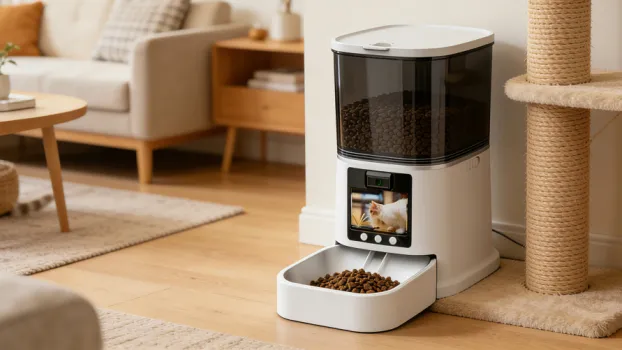
Private label smart pet feeders have become a practical product category for pet brands, Amazon sellers, distributors, and retailers that want to build a differentiated product line without starting product development from zero. In B2B sourcing, however, customization means much more than simply adding a logo to an existing model.
For overseas buyers, the real question is not only what can be customized, but also how customization affects MOQ, lead time, development cost, quality stability, and repeat-order reliability. This is especially important for businesses that want to begin with small trial orders, test the market, and then scale into larger wholesale or OEM programs.
The good news is that many private label smart pet feeder projects can start with flexible, lower-risk customization options. Buyers can often begin with logo, packaging, and manual customization, then gradually move toward deeper OEM or ODM cooperation as the business grows.
In this guide, we explain what can usually be customized on a private label smart pet feeder, which options are more suitable for small-batch buyers, what typically requires higher commitment, and how to choose a practical customization path that supports both brand growth and stable supply.
Why Private Label Customization Matters for B2B Buyers
In consumer-facing marketing, product features often get most of the attention. In B2B purchasing, the decision is broader. A private label smart pet feeder must not only look right for the brand, but also fit the buyer’s business model, pricing strategy, order volume, target market, and sales channel requirements.
For example, an Amazon seller may prioritize faster launch, lower inventory risk, and stronger packaging differentiation. A local pet brand may care more about long-term brand consistency and repeat-order stability. A wholesaler or distributor may focus more on ready-to-ship configurations, packaging efficiency, and multi-market practicality.
This is why the best private label projects are not always the ones with the deepest customization. In many cases, the strongest commercial result comes from balancing branding, flexibility, cost control, lead time, and supply chain stability.
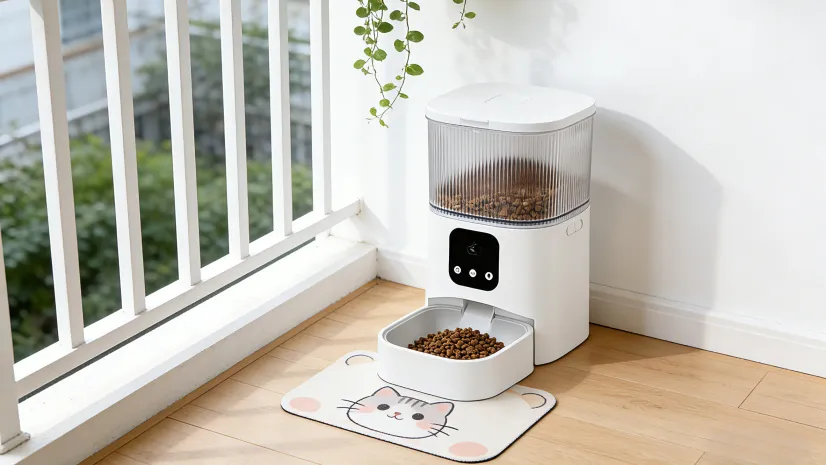
What Can Be Customized on a Private Label Smart Pet Feeder?
Logo and Brand Identity
Logo customization is usually the most direct and practical starting point. In many projects, the buyer’s logo can be added to the feeder body, bowl area, product labels, packaging, user manual, or outer cartons. This gives the product immediate brand visibility without changing the main structure.
For B2B buyers, logo customization is not only about appearance. It also supports stronger presentation across product listings, wholesale catalogs, retail packaging, and distributor offers. Even when starting with a small trial order, a clearly branded product can help improve perceived value and prepare the business for future expansion.
Before production begins, buyers should confirm logo placement, application method, durability, and visual consistency.
Product Color, Finish, and Housing Appearance
Depending on the existing product platform, buyers may be able to choose standard color options or request custom color matching for a more brand-specific look. Some projects may also support selected adjustments to finish or other visible details based on existing molds.
This kind of appearance customization is especially useful for buyers who want differentiation without taking on the cost of a completely new housing design. In many cases, customizing the look of a mature product platform is a more efficient route than starting from a new mechanical structure.
Packaging Customization
Packaging is often one of the most commercially valuable parts of private label customization. Buyers can usually customize the color box, inserts, barcode labels, shipping labels, carton marks, product images, and sales points printed on the packaging.
- For online sellers: good packaging can improve product presentation and customer experience.
- For wholesalers and distributors: it supports SKU management and channel readiness.
- For local brands: it helps build a more professional retail image.
In many real B2B projects, packaging customization is one of the best ways to create stronger differentiation while keeping the product platform unchanged.
User Manual and Instruction Materials
A customized user manual plays an important role in customer satisfaction and after-sales performance. Manuals can often be updated with the buyer’s logo, product instructions, troubleshooting guidance, brand identity, and multilingual content.
For importers, Amazon sellers, and local brands, clearer documentation can reduce customer confusion, support team workload, and avoid unnecessary complaints or returns. In private label business, a professional manual is not just part of the packaging. It is also part of the brand experience.
App and Smart Function Options
Many buyers ask whether the app can be customized for their brand. The answer depends on the hardware platform, software framework, and project scope. In some cases, buyers may use a mature smart solution and focus on product branding, packaging, and faster launch. In other cases, deeper app-related customization may be discussed, such as interface adjustments, language support, or selected feature arrangements.
However, deep app customization is not always the best starting point. For many small- to medium-volume projects, a stable existing smart solution is often more practical because it reduces technical risk, shortens development time, and helps improve after-sales stability.
Hardware and Accessory Options
Depending on the model, some hardware and accessory configurations may also be adjusted. These can include plug types, adapter specifications, bowl options, feature versions, Wi-Fi options, camera modules, or accessory bundles.
This is useful when buyers want to develop multiple SKUs from one product platform. One version may fit wholesale orders, while another may be better suited to premium retail channels. This modular approach can help keep sourcing and production more manageable.
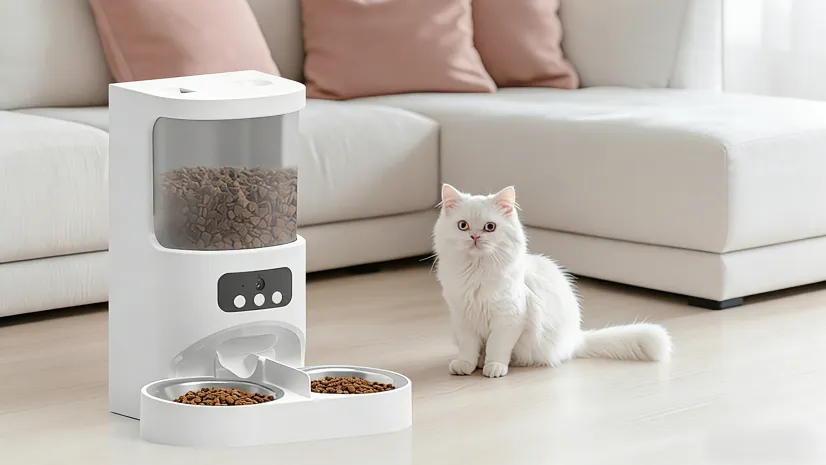
Which Customization Options Are More Flexible for Small Trial Orders?
For many buyers, especially new brands or first-time importers, the most important question is not what is technically possible, but what is practical at a lower order volume.
In general, the most flexible customization options are usually logo application, custom packaging, user manual updates, barcode and carton label changes, plug or accessory adjustments based on existing models, and selected color options from mature product platforms.
These customization items are usually easier to implement because they do not require heavy engineering changes. They are generally more suitable for buyers who want to test the market, place small trial orders, or start quickly with controlled risks.
This is one reason many B2B buyers prefer to begin with a ready model plus light customization rather than move directly into full custom development.
What Usually Requires Higher MOQ, Longer Lead Time, or More Development Cost?
As customization goes deeper, project complexity usually increases. Compared with basic branding changes, new mold development, structural redesign, major housing changes, PCB or firmware modification, deeper app customization, and new function development often require more coordination and stronger order commitment.
These projects may be suitable for brands with stronger long-term planning, clearer demand forecasts, and more defined market positioning. For many buyers, however, it is more efficient to begin with a mature OEM model, validate demand, and then move step by step toward deeper customization.
In practical B2B sourcing, this phased approach is often a safer way to control risk, budget, and lead time.
How MOQ Affects Private Label Smart Pet Feeder Projects
MOQ is one of the most important issues in private label cooperation, but it should not be viewed as one fixed number. Different parts of the same project may involve different MOQ considerations.
For example, product branding, packaging printing, accessory configuration, and software-related work may follow different production logic. That is why professional suppliers usually discuss customization scope first, then match the buyer with a feasible solution based on order volume, target market, and launch plan.
For small-batch buyers, the most practical route is often to select an existing feeder platform, confirm logo and packaging direction, prepare samples or a pilot order, test market feedback, and then upgrade the customization level later if needed.
This model works well for Amazon sellers, startup brands, local distributors, and independent pet brands that want to control inventory risk while building their own product line.
How Customization Affects Lead Time and Development Planning
Lead time is not determined by production days alone. In private label projects, the timeline is also influenced by packaging confirmation, manual approval, artwork revisions, component availability, feature selection, sampling, and factory scheduling.
A typical private label smart pet feeder project may include requirement discussion, product selection, logo and packaging confirmation, sample preparation, manual or artwork review, order confirmation, bulk production, and shipping arrangement.
In many cases, clear communication at the beginning is one of the best ways to shorten total lead time. When the product direction, branding files, and customization priorities are aligned early, the project usually moves more smoothly.
For buyers working on seasonal sales plans, Amazon launches, or distributor replenishment schedules, early planning is especially important.
How Development Cost Should Be Evaluated in B2B Sourcing
Many buyers ask about customization cost early in the sourcing process, which is completely natural. But in B2B procurement, development cost should not be judged only by the first quotation. It should be evaluated together with launch speed, project complexity, repeat-order potential, and future supply stability.
A light private label project based on a mature model is usually more cost-efficient than a project that requires structural or software redevelopment. This is why many buyers choose to invest first in branding, packaging, and controlled differentiation rather than over-committing to deep customization too early.
This approach can help reduce early-stage budget pressure, shorten launch time, lower technical uncertainty, improve order flexibility, and create a more scalable sourcing path.
How Much Brand Control Do Buyers Really Have?
Private label buyers often want more control over how the product looks, how it is presented, and how it fits their brand strategy. In most cases, strong brand control can already be achieved through logo placement, packaging design, manual language and layout, selected appearance choices, SKU differentiation, and accessory planning.
For many B2B buyers, this level of control is enough to support a strong market identity without immediately requiring deep software or structural control.
That said, buyers should still ask the right questions before moving forward. Can the supplier support future packaging updates? Can product versions remain stable across repeat orders? What changes are feasible under existing molds? Can the supplier support both trial orders and larger OEM volumes later on?
Brand control is not only about the first order. It is about whether the cooperation model can support future scaling.
Why Compliance Readiness and Quality Stability Matter
In smart pet product sourcing, customization must be supported by stable execution. A product that looks attractive but has weak consistency can create bigger problems later through returns, complaints, or brand damage.
This is why serious B2B buyers usually evaluate not only visible customization options, but also the supplier’s ability to maintain consistent product quality, stable material and assembly standards, clear documentation, repeat-order consistency, dependable packaging execution, and export-oriented coordination.
Customization should also be aligned with the target market’s practical requirements, especially in packaging language, instruction content, plug selection, and product presentation.
A reliable supplier should be able to support customization while keeping the project operationally stable.
How to Reduce After-Sales Risk in a Private Label Project
After-sales risk is one of the biggest concerns for B2B buyers, especially those selling through Amazon, online marketplaces, local retail networks, or distributors. In many cases, after-sales issues do not begin after shipment. They begin earlier, during product selection and customization planning.
Common risk-reduction measures include choosing a mature product platform, using clear branded manuals, confirming realistic product positioning, avoiding unnecessary over-customization, using stable packaging for shipping protection, and keeping version control consistent across repeat orders.
For B2B buyers, stable supply and stable quality are often more important than chasing the lowest initial price. A lower quote may look attractive in the beginning, but if the product is unstable or repeat orders are inconsistent, the long-term cost becomes much higher.
Why Stable Supply Chain Support Is Critical for Growing Brands
For private label business, the supplier is not only a factory. The supplier becomes part of the buyer’s long-term execution chain. This is especially important when the buyer needs repeat orders, multi-channel replenishment, or seasonal inventory planning.
A good private label smart pet feeder supplier should ideally support small trial orders for market testing, in-stock wholesale for faster replenishment, flexible OEM/ODM cooperation, stable repeat-order execution, scalable production coordination, and clearer communication during project upgrades.
For growing brands, this kind of flexibility is very valuable. It helps them enter the market faster, reduce early-stage risk, and scale more confidently as demand becomes clearer.
Which Customization Strategy Fits Different Buyers Best?
For Amazon Sellers
A faster launch, light customization, manageable MOQ, and stable product quality are often more valuable than deep structural changes. Packaging, manuals, and product presentation usually play a bigger role in early-stage differentiation.
For Local Pet Brands
These buyers often need a stronger brand image, better packaging consistency, and more control over how the product is presented to the market. They may be more open to mid-level customization once the sales path is established.
For Wholesalers and Distributors
Supply continuity, packaging efficiency, ready-to-ship configurations, and repeat-order stability are often top priorities. Operational practicality may matter more than deep app customization.
For Emerging DTC Brands
Flexible starting conditions are often critical. Light private label customization based on a mature platform can help these buyers build a branded product line without taking on excessive development burden too early.
Conclusion
A private label smart pet feeder can usually be customized in more ways than many buyers first expect. Common options may include logo, packaging, manuals, selected color and appearance details, accessory configurations, and in some cases app- or function-related adjustments. But the right solution is not simply the one with the most customization.
For B2B buyers, the better solution is the one that matches the current business stage, market plan, order volume, and growth strategy. In many cases, the most effective approach is to start with a mature model, add the right level of branding and packaging, test the market with small trial orders, and then expand into deeper OEM or ODM cooperation over time.
At the sourcing level, successful private label business depends on more than product appearance. It depends on flexible customization, practical MOQ planning, manageable lead time, stable quality, lower after-sales risk, and dependable long-term supply support.
FAQ
What can usually be customized on a private label smart pet feeder?
Common options include logo, packaging, user manual, selected color choices, plug type, accessory bundle, and sometimes app-related or feature-related adjustments depending on the product platform.
Can I start with small trial orders first?
In many cases, yes. Many B2B buyers prefer to begin with light customization on mature models, then increase customization depth after market testing.
Does every customization option have the same MOQ?
No. MOQ usually depends on the type of customization involved. Packaging, branding, and deeper product changes may follow different production logic.
Is app customization always necessary?
Not always. For many buyers, using a stable existing smart solution can be a more efficient choice in the early stage, especially when launch speed and risk control matter more than deep software control.
How can I reduce risk when launching a private label smart pet feeder?
Start with a mature product platform, keep customization practical, use clear manuals and stable packaging, and work with a supplier that can support repeat-order consistency and flexible future upgrades.
What kind of supplier is better for long-term cooperation?
A supplier that can support small-batch trial orders, in-stock wholesale, flexible OEM/ODM, stable production, and clearer communication is usually better suited for growing pet brands and importers.
You may also be interested in: