


Pet Water Fountain Buying Guide for Retailers and Wholesalers
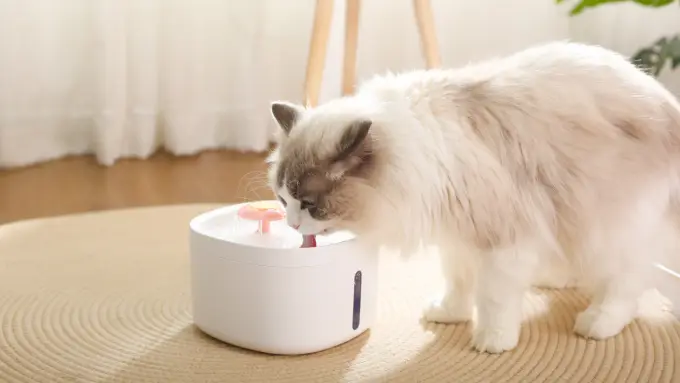
Pet water fountains can be attractive products for retailers, wholesalers and distributors because the customer need is easy to understand: pets need convenient access to drinking water, while owners want a cleaner and more manageable daily routine.
However, products that look similar in photos can perform very differently after several weeks of use. Pump stability, filter design, operating noise, cleaning effort and replacement-part availability all influence reviews, returns and repeat orders.
For B2B buyers, the best pet water fountain is therefore not simply the model with the largest tank or longest feature list. It is the model that fits the channel, target price, customer expectations and after-sales capability.
This guide explains how to compare standard and smart pet water fountains for Europe, North America, Japan and South Korea. In addition, it provides practical sample tests, supplier questions and accessory-planning steps for retail and wholesale programs.
- Start With Channel Positioning
- Entry-Level, Mid-Range and Smart Fountain Positioning
- 1. Pump Quality: The Core Component to Evaluate
- 2. Pump Endurance and Batch Consistency
- 3. Filtration System: Look Beyond the Number of Layers
- 4. Protect the Pump With Pre-Filtration
- 5. Noise: Measure the Complete Fountain
- 6. Cleaning Convenience: Test the Actual User Routine
- 7. Material and Surface Choices
- 8. Capacity and Pet Fit
- 9. Smart Features and Their Real Value
- 10. Leakage and Water-Electric Separation
- 11. Replacement Filters, Pumps and Accessory Revenue
- 12. Calculate the Full Channel Economics
- 13. Packaging for Retail and E-Commerce
- 14. Quality-Control Tests Buyers Should Request
- 15. Market and Channel Considerations
- 16. Sample Evaluation Scorecard
- Supplier Questions Before Placing an Order
- Build a Fountain Range, Not Just One SKU
Start With Channel Positioning
Before comparing pumps or filters, decide where the fountain will be sold and how much product education the channel can support.
A broad retail channel may prefer a straightforward fountain with simple assembly, clear packaging and an accessible price. By comparison, a pet specialty retailer or DTC-style distributor may support a rechargeable, sensor-controlled, stainless steel or premium-design model.
Wholesalers also need to consider downstream simplicity. If store staff or resellers cannot explain the difference between models, a large assortment can create slow-moving SKUs and replacement-filter confusion.
Therefore, begin with four questions:
- What retail price band is the channel targeting?
- Is the buyer looking for a volume product or a differentiated premium product?
- Can the channel support replacement-filter and spare-pump sales?
- How much customer education and after-sales service is available?
Once these points are clear, technical comparison becomes much more useful.
Entry-Level, Mid-Range and Smart Fountain Positioning
| Position | Typical Product Direction | Channel Strength | Main Buyer Risk |
|---|---|---|---|
| Entry-level | Basic continuous-flow fountain, simple filter and wired pump | Easy to explain and suitable for volume sales | Strong price competition and limited differentiation |
| Mid-range | Improved materials, quieter structure, larger capacity or easier cleaning | Balanced value for pet stores and online retail | Features must produce a visible user benefit |
| Smart or premium | Rechargeable operation, sensor modes, wireless pump, premium materials or other supported smart functions | Stronger differentiation and higher perceived value | More testing, customer education and after-sales responsibility |
The correct tier depends on the market and channel. For example, a wholesaler serving general pet shops may value a stable core model and standardized replacement filters. Meanwhile, a distributor building a premium assortment may prioritize design, cordless placement and modular cleaning.
Most importantly, “smart” should not mean adding functions without a clear purpose. Every sensor, battery, light, app or treatment feature should solve a real user problem and be supported by appropriate testing and documentation.
1. Pump Quality: The Core Component to Evaluate
The pump drives water circulation, so it is one of the most important components in a pet fountain. A weak or unstable pump can create low flow, intermittent operation, increased noise or early failure.
Consequently, buyers should evaluate more than the pump's rated power. The complete water path, installation position, filter resistance and minimum operating water level also affect performance.
Pump Questions to Ask
- Who manufactures the pump, and what is the exact model?
- Is the pump wired, detachable or magnetically coupled?
- What flow and head are specified under the intended setup?
- Does the pump include dry-run or abnormal-operation protection, if claimed?
- Can the pump be opened for cleaning?
- Is the impeller easy to access?
- Can customers replace the pump without replacing the whole fountain?
- Is a spare pump available for repeat orders?
- Has the pump been tested with the final filter and water path?
- What production checks are performed before packing?
A supplier may describe a pump as “quiet” or “long-life.” However, buyers should request the test conditions behind those claims. Results from a pump tested alone may not represent the assembled fountain.
Wired Pump vs Wireless or Magnetic Pump
A wired pump can support a simple and familiar structure. Nevertheless, the cable path may make cleaning or disassembly less convenient if it passes through the tank.
Wireless or magnetically coupled pump designs can improve separation between removable water-contact parts and the powered base. In addition, they may make cleaning more convenient. Yet buyers still need to test alignment, stable power transfer, flow consistency and replacement-part availability.
Neither structure is automatically better for every channel. Instead, compare the total user experience, cost and service plan.
2. Pump Endurance and Batch Consistency
A sample that runs for a short demonstration does not prove long-term stability. For this reason, buyers should agree on repeated-running or endurance checks appropriate to the product and project.
The test plan can monitor:
- Startup reliability
- Flow consistency
- Noise change over time
- Temperature rise
- Pump stoppage or restart behavior
- Performance at different water levels
- Response to a blocked or dirty filter
- Leakage around pump connections
- Cable, connector or charging-base stability
Meanwhile, mass-production inspection should verify that the same approved pump and relevant components are used. A model change after sample approval can alter flow, noise, reliability and existing documentation.
For retail programs, it is also useful to retain golden samples and pump identification records. As a result, complaint units can be compared with the approved version more efficiently.
3. Filtration System: Look Beyond the Number of Layers
Filter marketing often focuses on the number of layers. However, more layers do not automatically mean better performance.
A useful filtration system should match the fountain's water path, flow rate and intended maintenance routine. Depending on the model, a cartridge may use mesh, foam, activated carbon, ion-exchange material or other media. Each material should have a defined purpose and be supported by accurate product information.
Filtration Questions for Suppliers
- What materials are used in the filter?
- What is each layer intended to do?
- Does the filter reduce hair and visible debris before water reaches the pump?
- How does the filter affect flow as it becomes loaded?
- Can users install it in the wrong direction?
- Does the filter fit securely without bypass gaps?
- What replacement interval is recommended, and under which use conditions?
- Are filter materials and claims supported by relevant records?
- Will the same filter size remain available for future orders?
- Can the filter be private labeled or packed as a replacement set?
Avoid broad health claims that the supplier cannot substantiate. For example, wording such as “removes all bacteria” or “purifies every contaminant” may create regulatory, marketplace and customer-expectation risk.
Instead, describe the filter's verified construction and intended function accurately.
4. Protect the Pump With Pre-Filtration
Hair and debris can increase pump load or obstruct the impeller. Therefore, the product should be evaluated as one system rather than as a tank plus a separate cartridge.
Look for:
- A pre-filter or intake screen where appropriate
- A water path that limits large debris entering the pump
- Easy access to the intake area
- Clear pump-cleaning instructions
- No narrow hidden passage that is difficult to flush
- Stable flow with the approved replacement filter
In addition, test the fountain after simulated normal contamination, not only with a new filter and clean laboratory water. This helps the buyer understand how maintenance affects noise and flow.
5. Noise: Measure the Complete Fountain
Noise is a major purchase and return factor, especially for fountains used in bedrooms, small apartments or quiet indoor spaces. Still, one noise number without test conditions provides limited value.
Sound may come from:
- Pump vibration
- Impeller wear or debris
- Water falling onto a tray
- Low water level
- Air entering the pump
- Loose covers or accessories
- Contact between the fountain and a hard surface
- Filter restriction
Consequently, buyers should request or conduct a complete-unit noise test.
Define the Test Conditions
Record:
- Distance between the meter and fountain
- Background noise level
- Water level
- Surface under the product
- Flow mode
- Filter condition
- Pump age or running time
- Whether the cover and accessories are installed
For example, a fountain may sound quiet when full but become noticeably louder near the minimum water level. By comparison, another model may have stable pump noise but create more audible water splash.
Rather than relying only on a stated decibel value, listen for tonal vibration, rattling and intermittent sounds. These characteristics can be more annoying to users than a steady water-flow sound.
6. Cleaning Convenience: Test the Actual User Routine
A fountain can have an attractive design and still be difficult to maintain. If cleaning takes too long or requires tools, users may clean less frequently and then blame the product for odor, buildup or reduced flow.
Therefore, ask someone unfamiliar with the sample to complete the full cleaning process using only the supplied instructions.
Evaluate:
- Number of parts to remove
- Whether parts can be removed without tools
- Access to corners, seams and water channels
- Ease of removing and opening the pump
- Cable or charging-base separation
- Ability to empty the tank without spilling
- Visibility of residue and water level
- Reassembly errors
- Time required for normal cleaning
- Drying and storage convenience
In addition, confirm which parts are washable and whether any dishwasher-safe claim has been validated for the specified part and conditions. Do not assume that stainless steel or removable construction makes every component dishwasher safe.
Avoid Hidden Maintenance Problems
Common maintenance risks include:
- Narrow grooves that trap residue
- Pump covers that are difficult to open
- Decorative parts with inaccessible undersides
- Long internal tubes that are hard to brush
- Cables permanently attached to the tank
- Filters that drip during removal
- Similar-looking parts that can be assembled incorrectly
For this reason, cleaning design should be reviewed before color, lighting or app functions.
7. Material and Surface Choices
Pet water fountains may use plastic, stainless steel or a combination of materials. Each choice affects cost, appearance, weight, cleaning and product positioning.
Plastic Structures
Plastic can support lightweight construction, transparent water-level areas, color options and accessible price positioning. However, surface quality, odor, scratch resistance, mold consistency and documentation for water-contact materials should be reviewed.
Stainless Steel Structures
Stainless steel can support a more premium appearance and may be attractive for buyers emphasizing cleaning and durability. Nevertheless, buyers should confirm the actual grade, thickness, finish, edges, welds or formed areas and corrosion-related test conditions where claims are made.
Mixed-Material Designs
Many fountains combine a plastic tank or base with a stainless steel drinking tray. This can balance cost and appearance. Meanwhile, the interfaces between materials should be checked for fit, leakage, trapped water and cleaning access.
Ultimately, material claims must match the supplied model and supporting documents. A stainless steel top does not mean the entire water-contact path is stainless steel.
8. Capacity and Pet Fit
Tank capacity is easy to compare, but the largest number is not always the best option. Capacity affects footprint, shipping carton size, filled weight, refill routine and shelf positioning.
Buyers should consider:
- Target pet type and size
- Single-pet or multi-pet household
- Usable water volume rather than only external tank volume
- Minimum water level for stable pumping
- Width and height of the drinking area
- Access for cats, small dogs or other intended pets
- Visibility of the remaining water
- Stability against tipping or movement
For compact retail environments, a smaller footprint may be more important than maximum capacity. In contrast, premium online channels may support larger or cordless models if packaging and logistics remain practical.
9. Smart Features and Their Real Value
Depending on the model, smart pet water fountains may include sensor activation, timed flow, battery operation, charging bases, indicator lights, app functions, water-level reminders, heating or treatment features.
However, each feature adds components, test points and customer-service questions. Therefore, buyers should separate useful functions from decorative complexity.
Sensor Operation
Check detection range, activation consistency, false triggering and the effect of product placement. In addition, confirm how long water runs after activation and whether the behavior can be changed.
Rechargeable or Cordless Operation
Verify battery specifications, charging method, operating modes and endurance under defined conditions. Moreover, confirm whether battery performance claims are based on sensor, timed or continuous mode.
Indicator and Reminder Functions
Low-water, filter or charging indicators can improve usability. Nevertheless, buyers should understand what physically triggers each reminder and how the user resets it.
App-Connected Functions
If an app is included, review pairing, supported alerts, language, maintenance ownership and privacy information. A basic fountain should not become dependent on an unstable app simply to appear premium.
UVC, Heating or Other Treatment Features
These features require careful claim review, safety evaluation and instructions for the exact product. Consequently, do not use sterilization, temperature or health claims copied from a component brochure without complete-product evidence.
10. Leakage and Water-Electric Separation
Any product that combines water and electrical components needs careful structural review. Even low-voltage fountains can create returns, damage or poor reviews if connectors, bases or surrounding surfaces become wet.
Buyers should test:
- Tank seams and joints
- Pump and tube connections
- Charging or powered base interfaces
- Overflow behavior
- Splash outside the drinking area
- Product stability on uneven surfaces
- Behavior after incorrect reassembly
- Cable exits and connector placement
- Water movement during carrying or refilling
Meanwhile, instructions should show which parts must remain dry and how to handle the product before charging or reconnecting power.
Claims such as “water-electric separation” should be tied to the actual construction and validated use conditions. They should not be treated as proof that every misuse scenario is safe.
11. Replacement Filters, Pumps and Accessory Revenue
Replacement parts can create repeat sales, but only when the supply program is managed well.
A retailer may sell filter multipacks beside the fountain. Similarly, an online seller can offer scheduled replenishment or bundles. Distributors can also improve account retention by supplying filters and pumps to downstream stores.
Build an Accessory Plan Before Launch
Confirm:
- Filter model and dimensions
- Filters included with the fountain
- Recommended replacement guidance
- Replacement pack quantities
- Filter packaging and barcode
- Wholesale and retail pricing structure
- Spare-pump model and compatibility
- Brush, tube, adapter or charging-cable availability
- Compatibility across current and future fountain models
- Minimum order quantity and replenishment lead time
For example, one shared filter across several fountain models can simplify inventory. On the other hand, a unique premium cartridge can support differentiation but requires stronger forecasting.
Avoid Accessory Compatibility Confusion
Assign clear accessory SKUs and show compatible fountain models on the package. In addition, use product photos or dimensions that help customers select the correct item.
If a fountain is updated, the supplier should disclose whether the filter or pump has changed. Otherwise, an apparently small revision can generate customer complaints and obsolete stock.
12. Calculate the Full Channel Economics
Unit price alone does not show the commercial value of a fountain program. Retailers and wholesalers should also consider:
- Freight and carton efficiency
- Packaging damage rate
- Replacement filters included in the opening package
- Cost of spare pumps and warranty replacements
- Return handling
- Marketplace fees
- Retail display or sample units
- Product and accessory margin
- Reorder frequency
- Slow-moving color or capacity variants
Therefore, compare the landed cost of the product family, not only the opening order quotation.
A slightly higher-priced fountain may be commercially stronger if it uses compact packaging, has stable pump quality and supports profitable filter reorders. Conversely, an inexpensive unit can become costly when returns, replacement pumps and customer support are included.
13. Packaging for Retail and E-Commerce
Pet fountains contain tanks, covers, pumps, filters, cables and sometimes charging bases or stainless steel parts. Packaging should prevent movement, scratches and part loss.
Retail Packaging Priorities
- Clear product size and capacity
- Visible material and power configuration
- Simple feature hierarchy
- Replacement-filter identification
- Multilingual information where required
- Barcode and SKU accuracy
- Easy shelf or display recognition
E-Commerce Packaging Priorities
- Protection during parcel delivery
- Secure pump and accessory placement
- Surface protection for stainless steel or transparent parts
- Clear unboxing sequence
- Accurate included-parts list
- Compact size without compressing fragile parts
In addition, the manual should explain assembly, first cleaning, filter preparation, pump cleaning and minimum water level. Clear instructions can prevent returns that are caused by setup rather than defects.
14. Quality-Control Tests Buyers Should Request
A practical fountain inspection plan may include:
- Incoming pump and material inspection
- First-article assembly confirmation
- Water flow test
- Pump startup and restart test
- Noise test under defined conditions
- Leakage and overflow checks
- Sensor test for applicable models
- Charging and battery checks for rechargeable models
- Repeated-running or endurance test
- Filter fit and water-path inspection
- Assembly and disassembly check
- Product appearance and cleanliness
- Accessory and manual verification
- Packaging and transport-protection review
For this reason, the inspection standard should be agreed before production. A final visual inspection alone cannot identify intermittent pump, sensor, leakage or noise problems.
15. Market and Channel Considerations
Europe
For European programs, confirm the exact electrical configuration, adapter or charging arrangement, product documentation, material claims, label artwork and language plan. Moreover, the final compliance route depends on the model and included functions.
North America
North American online and retail programs should evaluate packaging durability, electrical configuration, replacement-filter availability and marketplace documentation. In addition, clear capacity and included-accessory information can reduce listing confusion.
Japan
For Japan-focused selection, compare footprint, operating sound, visual simplicity, cleaning steps, plug or charging configuration and Japanese instructions. Rather than assuming one “Asia version” is sufficient, review the exact local channel brief.
South Korea
For South Korea, evaluate design, smart-function relevance, localized documentation, adapter or charging configuration and after-sales parts. Meanwhile, verify product and labeling requirements for the precise sales route.
Across all four markets, avoid copying one set of claims and artwork without review. Product configuration, language, compliance and channel expectations should be confirmed separately.
16. Sample Evaluation Scorecard
| Evaluation Area | Questions | Suggested Decision |
|---|---|---|
| Pump | Stable flow, startup, noise and easy cleaning? | Approve only with identified pump and test conditions |
| Filter | Clear function, secure fit and repeat supply? | Confirm filter SKU, pack and lead time |
| Cleaning | Can a first-time user disassemble and reassemble it? | Simplify design or instructions if errors occur |
| Leakage | Stable at full, low and normal operating levels? | Investigate any seepage, splash or wet connector |
| Smart functions | Do sensors, battery and alerts work as described? | Remove unsupported complexity or validate it |
| Accessories | Are pumps, filters and cables available? | Build opening and replenishment inventory |
| Packaging | Protected for the intended delivery channel? | Revise internal support before mass production |
| Documentation | Do labels, manual and claims match the model? | Freeze files with the approved configuration |
The scorecard should be completed by product, purchasing and after-sales teams when possible. As a result, the final decision reflects more than appearance and unit price.
Supplier Questions Before Placing an Order
Ask the supplier:
- Which fountain models fit our target price and channel?
- What pump model is used in each version?
- How are pump noise and endurance tested?
- Is the pump replaceable and available separately?
- What filter materials are used?
- Which filter SKU fits each fountain?
- Can replacement filters be private labeled?
- Which parts are removable and washable?
- Are any dishwasher-safe claims validated?
- What material and surface options are available?
- Which sensor, battery or smart functions are supported by each model?
- How are leakage and water-electric interfaces tested?
- What accessories and spare parts are available?
- What MOQ applies by model, color and packaging version?
- What is the replenishment lead time for products and filters?
- Which product documents are available for the destination market?
- How are component changes controlled after sample approval?
Most importantly, request answers for the exact model and configuration. A general catalog statement does not replace model-level confirmation.
Build a Fountain Range, Not Just One SKU
For many retailers and wholesalers, a small, structured assortment works better than many overlapping models.
A practical range may include:
- One accessible core fountain for volume sales
- One upgraded material or easier-cleaning model
- One sensor, rechargeable or premium smart model
- One replacement-filter multipack
- One spare-pump or maintenance option
This structure gives customers clear choices while keeping inventory understandable. Furthermore, it allows the channel to test premium demand without abandoning the core volume segment.
Ultimately, the strongest fountain program combines dependable pump performance, practical filtration, quiet operation, easy cleaning and reliable accessory supply. Smart features should support that foundation rather than distract from it.
CKX Pet supplies standard and smart pet water fountain options for global B2B buyers, including retail, wholesale, distribution, private label and OEM/ODM projects. Available materials, pump structures, filtration, sensor functions, battery configurations, colors, packaging, MOQ, documents and spare parts depend on the selected model and project requirements.
Share: