

How to Choose a Litter Box Manufacturer: Avoid Mass Production Disasters (OEM Guide 2026)
By Petoking Team
A sleek smart litter box sits in a modern living room—this is the sample you approved, and it checks all boxes. The motor works quietly, the plastic feels strong, and the factory team promises on-time delivery. You’re ready to launch your brand’s new product.
Then mass production starts—and everything falls apart.
Motors break after a few uses, causing 18% returns in the first month. Sensors stop working randomly, pushing your launch back a month. Plastic parts bend when exposed to daily use. The factory says it’s “normal,” but your customers start doubting your brand.
Here’s the hard truth: The problem isn’t the litter box design. It’s the manufacturer you chose.

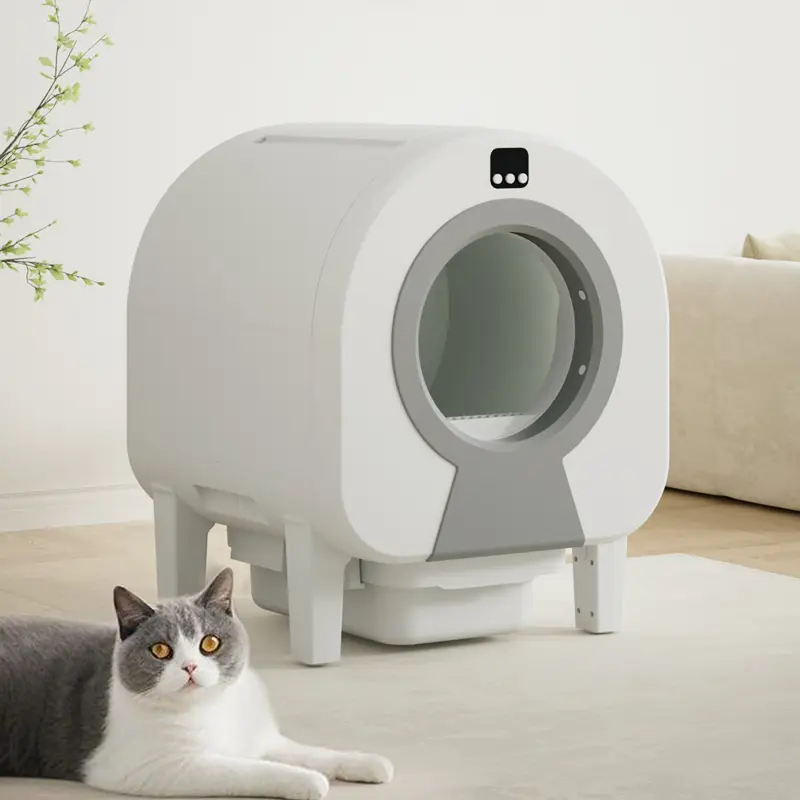
This guide isn’t a list of random suppliers. It’s a step-by-step risk-avoidance plan for global OEM importers. You’ll learn how to spot hidden traps, keep quality consistent, meet global rules, and build a stable long-term partnership—all to protect your brand, delivery dates, and profits. And we’ll show you how Petoking, a leading smart pet product manufacturer, helps brands avoid these disasters.
- 1 Why Choosing a Litter Box Manufacturer Is Riskier Than You Think
- 2 Common “Trust Signals” That Mislead You
- 3 What Most Buyers Miss When Choosing a Manufacturer
- 4 How to Evaluate a Litter Box Manufacturer (Before Talking Price)
- 5 Critical Checks Before Paying a Deposit
- 6 Compliance for US and EU Importing: What You Need to Know
- 7 From Supplier to Partner: Grow With Petoking
- 8 Petoking’s Practical Scorecard for Comparing Manufacturers
- Conclusion
1 Why Choosing a Litter Box Manufacturer Is Riskier Than You Think
On paper, finding a litter box manufacturer is easy. But global importing hides risks that even experienced buyers miss—risks that only show up after production starts.
Every brand wants smooth production, consistent quality, and on-time shipping. But hidden problems often ruin these goals. The first step to safety is knowing where these risks hide.
1.1 Why Mass Production Fails After Sample Approval
Samples rarely tell you the whole story of mass production. Factories often use their best technicians, hand-tune parts, or even use better materials for samples to win your order.
Once production scales up, these shortcuts end. The cheap motors, low-quality sensors, or thin plastic they switch to cause big problems—problems that never showed up in the sample.
Recent supply chain studies show this gap between samples and mass production is the top cause of OEM failures. It’s why motors work in samples but break in real homes, and sensors perform well in tests but fail in daily use.
1.2 The Hidden Costs of Choosing the Wrong Manufacturer
Visible costs like reworking parts or scrapping bad units are just the start. The hidden costs hurt more:
- Missed launch dates and lost sales
- Penalties from distributors for late deliveries
- Lost customer trust that’s hard to win back
- Expensive emergency air shipments to fix delays
Many importers find their costs jump 20% or more because of these hidden issues. Choosing the right manufacturer isn’t just about saving money—it’s about avoiding these costly surprises.
2 Common “Trust Signals” That Mislead You
Many buyers fall for surface-level promises that don’t mean anything for long-term quality. Here are the most common traps:
2.1 “10+ Years of Experience” Doesn’t Mean Reliability
Years in business don’t equal good manufacturing. A factory can sell litter boxes for 10 years but still cut corners in mass production.
A reliable manufacturer like Petoking shows proof of consistent processes: how they test parts, fix problems, and keep production steady—not just how long they’ve been in business.
2.2 “CE/FCC Ready” Isn’t Enough for Global Importing
Certificates on paper don’t guarantee compliance. If a factory swaps a cheap sensor or updates firmware without testing, the original CE/FCC certificate becomes useless.
Rules change, and parts change. Static paperwork can’t protect you from fines or product recalls in the US or EU.
2.3 Low MOQ: Convenience or Risk?
Low minimum order quantities (MOQ) seem like a safe bet for small brands. But they often mean the factory hasn’t invested in good tools, testing, or long-term support.
These factories cut corners to meet low MOQs, leading to quality issues mid-project and delays that cost you more than you saved.
3 What Most Buyers Miss When Choosing a Manufacturer
Most guides talk about price or production capacity. But experienced importers know the real value is in a factory’s systems, not numbers. Here’s what you’re probably overlooking:
3.1 Trust Is a System, Not a Promise
Trust isn’t built on nice words—it’s built on repeatable processes. A good manufacturer has clear systems for sales, engineering, quality control (QC), and after-sales support.
At Petoking, for example, every step from sample to mass production is documented. We test every batch of motors and sensors, and our QC team checks parts at every stage—no shortcuts, no surprises.
3.2 Where Trust Is Really Made: Sales, Engineering, QC, After-Sales
A mature manufacturer like Petoking keeps these teams aligned but independent. Everyone knows their role: Sales doesn’t over-promised, Engineering fixes design flaws early, QC stops bad parts from shipping, and After-Sales resolves issues fast.
This alignment means problems are fixed before they reach your customers—not after.
4 How to Evaluate a Litter Box Manufacturer (Before Talking Price)
Evaluate first, talk price later. This helps you spot risks before you commit. Here’s how to do it:
4.1 Key Questions to Ask Every Manufacturer
Ask these hard questions to separate good manufacturers from bad ones:
- Who owns the tools if the project stops?
- How do you test firmware updates?
- What’s your real motor and sensor failure rate in mass production?
- Can you guarantee consistent supply of spare parts?
Petoking answers these questions openly. We own our tools, test every firmware update with real users, and share our failure rate data (it’s less than 2% for all parts).
4.2 Early Red Flags to Watch For
Warning signs show up in the first conversations. Avoid factories that:
- Give vague answers to your questions
- Say “it’s no problem” to every request (no factory is perfect)
- Refuse to show you their production line or QC processes
5 Critical Checks Before Paying a Deposit
This is your last chance to avoid risk before spending money. Don’t skip these steps:
5.1 Compare Sample and Mass Production Data
Promises mean nothing—ask for data. Compare the parts list (BOM) of your sample to what the factory uses in mass production. Check their history of motor and sensor defects.
Petoking shares full BOMs for samples and mass production, and we let you audit our defect records. We want you to see that our samples match our mass production quality.
5.2 Factory Audit vs. Factory Visit: What Matters Most
A factory visit is nice, but a real audit protects you. Focus on:
- Traceability: Can they track every part to its supplier?
- Tool ownership: Do they own their tools (not rent them)?
- Corrective actions: How do they fix past mistakes?
Petoking welcomes audits and shows you every part of our production process—no hidden areas, no staged demos.
6 Compliance for US and EU Importing: What You Need to Know
Compliance issues rarely show up at customs. They hit months later, when your products are in stores and your brand is on the line.
6.1 Certificates Alone Won’t Protect You
Rules change, and factories often swap parts to cut costs. A CE/FCC certificate from 6 months ago won’t help if the factory changed sensors without testing.
Petoking manages compliance dynamically. We update our certifications when rules change, and we never swap parts without re-testing and re-certifying.
6.2 Who’s Responsible If Compliance Fails?
Recalls are costly—and disputes over responsibility make them worse. Clear contracts that define liability, testing rules, and warranty terms are a must.
Petoking includes clear compliance clauses in every OEM contract. If a compliance issue arises from our production, we take full responsibility and fix it fast.
7 From Supplier to Partner: Grow With Petoking
When your brand scales, your manufacturer should scale with you. A good partner does more than fill orders—they help you grow.
7.1 Choose a Manufacturer That Scales With Your Brand
Petoking invests in your growth. We help with product upgrades, manage multiple SKU, and ensure consistent quality as your orders get bigger. We don’t just make litter boxes—we help you build a reliable product line.
7.2 Supplier vs. Manufacturer: The Big Difference
Suppliers coordinate parts—manufacturers like Petoking take ownership. We control every step of production, from sourcing motors to final QC. We’re responsible for quality, compliance, and on-time delivery—not just passing orders along.
8 Petoking’s Practical Scorecard for Comparing Manufacturers
Intuition isn’t enough. Use this simple scorecard to compare manufacturers objectively:
- Motor and sensor reliability (ask for real data)
- Consistency between sample and mass production
- Compliance management (not just certificates)
- After-sales support speed
Conclusion
Two importers approve the same great sample. One chooses a factory for speed and low price. The other chooses Petoking for systems, consistency, and trust.
The first importer faces delays, returns, and a damaged brand. The second builds a loyal customer base, scales their business, and sleeps easy knowing their production is stable.
Successful importers don’t chase the cheapest or fastest manufacturer. They choose partners who avoid mass production disasters. With Petoking, you get consistent quality, full compliance, and a team that grows with your brand—long after the first shipment.
Ready to avoid mass production disasters and protect your brand? Contact Petoking for a free OEM consultation today.