


Smart Pet Products: The Future of Pet Care and the Opportunities for Pet Brands
- Introduction to Smart Pet Products
- Smart Pet Products Market From 2026 Forward
- Overview of Smart Pet Product Categories
- Comparison: Key Features and Benefits of Smart Pet Products
- Opportunities for Pet Brands
- Limitations and Considerations
- What is the future of the pet industry?
- What section of the pet industry is commonly overlooked
- How can pet supply brands balance mass-market appeal with premium innovation?
- Frequently Asked Questions About Smart Pet Products
- Key Takeaways
Introduction to Smart Pet Products
The pet care industry stands at a technological crossroads. Smart pet products—devices that leverage sensors, AI, and connectivity to automate and enhance pet care—are transforming how millions of pet owners interact with their animals daily. These aren't novelty gadgets anymore; they're becoming essential tools in modern pet parenting, driven by a perfect storm of technological capability meeting genuine need.
Several factors are pushing smart pet technology from niche to mainstream. First, recent pet adoption trends created a generation of first-time owners actively seeking solutions to common challenges like separation anxiety and behavioral training. Second, the integration of AI and IoT has made these devices genuinely useful rather than simply connected—they now predict, adapt, and provide actionable health insights. Third, the smart pet products market is projected to reach $7 billion by 2028, signaling both consumer demand and investor confidence in this category's trajectory.
The landscape divides into four core categories: health monitoring devices that track vitals and activity patterns, automatic pet feeders that portion meals with precision timing, interactive entertainment products that combat boredom, and safety solutions including advanced litter boxes and GPS trackers. Each category addresses specific pain points while generating valuable data that helps owners make better care decisions.
Smart Pet Products Market From 2026 Forward
The smart pet products market stands poised for explosive growth, with projections indicating a compound annual growth rate of 23% through 2030. This acceleration reflects fundamental shifts in pet ownership demographics and consumer expectations. Millennial and Gen Z pet parents—who treat companions as family members—are driving demand for connected solutions that seamlessly integrate into their digital lifestyles.
Technological convergence creates unprecedented opportunities. The proliferation of 5G connectivity enables real-time video streaming and instantaneous command execution, while AI-powered behavioral analytics transform smart pet feeders from simple dispensers into intelligent nutrition platforms that adjust portions based on activity levels and health data. By 2026, wearable pet devices will increasingly incorporate predictive health monitoring, alerting owners to potential issues before symptoms manifest.
However, challenges loom. Data privacy concerns escalate as devices collect intimate household information, requiring manufacturers to balance functionality with robust security protocols. Market saturation in basic categories forces brands toward differentiation through specialized features—creating both fragmentation risk and niche opportunities for targeted innovation.
Smart Pet Products Market: Digital Transformation
The pet care landscape has fundamentally shifted from analog routines to connected ecosystems. Smart pet cameras exemplify this transformation—transforming basic monitoring into AI-powered behavior analysis that alerts owners to unusual activity patterns. This digital evolution extends across feeding, health tracking, and environmental control, creating an interconnected web of devices that communicate pet needs in real-time.
According to industry analysis, the integration of IoT and artificial intelligence drives market acceleration as devices become increasingly sophisticated. Pet owners now expect mobile app control, cloud data storage, and predictive alerts as standard features rather than premium add-ons. However, this rapid digitization creates challenges—data privacy concerns, device compatibility issues, and the learning curve for less tech-savvy owners remain barriers to universal adoption.
What distinguishes current transformation from earlier tech adoption? The shift toward preventive rather than reactive care. Devices now detect subtle health changes—weight fluctuations, eating pattern disruptions, litter box frequency variations—before owners notice symptoms. This proactive approach positions smart products as essential health tools rather than convenience gadgets, fundamentally altering their perceived value and customized solutions are expanding global accessibility.
Overview of Smart Pet Product Categories
The smart pet products landscape divides into distinct functional categories, each addressing specific aspects of pet care. Connected feeders and water fountains form the nutrition management category, enabling precise portion control and hydration monitoring through smartphone apps. These devices help prevent obesity—a condition affecting 55% of dogs and 59% of cats in the United States—by automating meal schedules and tracking consumption patterns.
Monitoring and safety devices comprise the second major category, including GPS trackers, smart cameras, and activity monitors. These products provide real-time location data and behavioral insights, addressing the primary concern of 70% of pet owners who view their animals as family members requiring constant oversight.
Interactive entertainment systems represent the fastest-growing segment, with smart toys and treat dispensers reducing separation anxiety through remote engagement. Typically, owners schedule play sessions via app controls, maintaining mental stimulation during work hours.
Emerging categories now include climate control solutions and environmental sensors that adjust temperature and air quality based on pet presence. Comprehensive analyses of these systems reveal integration capabilities that extend beyond single-function devices. However, adoption remains limited compared to established categories, with manufacturers still refining user interfaces and connectivity protocols.
Health Tracking: Monitoring Pet Wellness
Wearable health trackers represent the convergence of pet care and preventive medicine. These devices monitor vital signs including heart rate, respiratory patterns, activity levels, and sleep quality—providing continuous wellness data that transforms reactive care into proactive management. A collar-mounted sensor, for instance, can detect irregular heart rhythms or sudden activity drops that might indicate emerging health concerns.
The real-time nature of this data fundamentally changes the owner-pet relationship. Instead of waiting for annual checkups to discover problems, owners receive immediate alerts about behavioral changes or physiological anomalies. This continuous monitoring proves particularly valuable for senior pets or breeds predisposed to specific conditions, enabling early intervention when treatment outcomes are most favorable.
What makes modern health tracking particularly powerful is its integration with veterinary systems. Many platforms now share collected data directly with veterinary practices, creating comprehensive health records that inform clinical decisions. Pet care trends for 2026 emphasize this connected approach, where veterinarians can review months of activity patterns before appointments, identifying subtle trends that would otherwise go unnoticed. This seamless data flow between home monitoring and professional care creates a collaborative wellness ecosystem that benefits both pets and their caregivers.
Automatic Pet Feeders: Convenience for Pet Owners
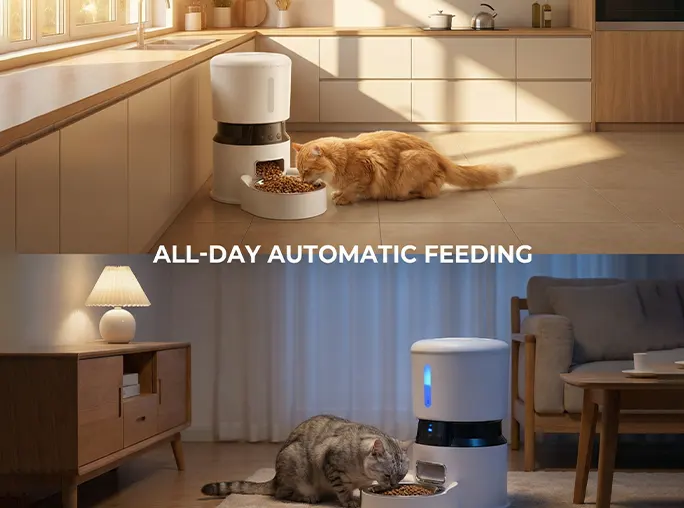
Automatic pet feeders eliminate the stress of rigid feeding schedules, allowing owners to maintain consistent meal times even when work, travel, or unexpected delays disrupt daily routines. Modern Wi-Fi-enabled feeders dispense precise portions on programmable schedules, accessible through smartphone apps that send notifications confirming each meal delivery. This technology proves particularly valuable for pets requiring medication with food or multiple small meals throughout the day.
Energy efficiency increasingly drives purchasing decisions in this category. Many contemporary feeders operate on low-power standby modes and incorporate rechargeable battery backups to prevent missed meals during power outages. Some models feature energy-monitoring systems that track power consumption, aligning with broader consumer demands for sustainable pet care solutions.
Consumer preferences reveal a clear hierarchy of desired features. Pet owners prioritize reliability, portion accuracy, and ease of cleaning above novelty features, with voice recording capabilities and anti-jam mechanisms ranking as popular add-ons. The growing trend toward multi-pet households drives demand for feeders with individual pet recognition systems that prevent food theft and accommodate different dietary requirements—functionality that addresses a practical pain point while creating opportunities for premium product positioning.
Smart Pet Cameras: Ensuring Safety and Interaction
Smart pet cameras transform empty homes into interactive spaces, addressing separation anxiety for both pets and owners. These devices provide real-time video monitoring, allowing owners to check on pets during work hours, travel, or unexpected delays. Two-way audio enables voice communication that can comfort anxious pets, while motion detection alerts owners to unusual activity—whether a pet is in distress or simply exploring forbidden territory.
Advanced models now incorporate treat-dispensing mechanisms and laser toys that owners control remotely through smartphone apps. This interactive capability turns passive surveillance into active engagement, helping maintain the human-animal bond across physical distance. Typically, pets learn to associate the camera's sounds with owner presence, reducing destructive behaviors linked to loneliness.
Consumer demand for smart surveillance products reflects broader trends toward proactive pet care, with owners prioritizing transparency into their pets' daily routines. The data these cameras generate—activity patterns, barking frequency, sleep schedules—provides valuable insights that owners can share with veterinarians, creating a more complete health picture. As pet brands expand their connected device ecosystems, cameras are becoming central hubs that integrate with other smart products.
Innovative Pet Products
The smart pet industry continues to evolve beyond basic automation, with breakthrough products addressing nuanced aspects of pet wellness and owner convenience. Recent innovations include self-cleaning litter boxes with waste-level sensors, GPS-enabled collars that monitor activity patterns and vital signs simultaneously, and AI-powered toys that adapt play difficulty based on a pet's engagement level. According to Pet Tech Market Size, Trends & Forecast 2026–2035, the market is projected to reach $20 billion by 2026, driven largely by consumer demand for products that address specific pain points like separation anxiety and health monitoring.
Startups are catalyzing this innovation wave, bringing agility and fresh perspectives to an industry traditionally dominated by established brands. These emerging companies leverage direct-to-consumer models and rapid iteration cycles to test novel concepts—from microbiome-analyzing feeders to emotion-detecting cameras—that larger corporations might deem too experimental. However, consumer response remains selective. Pet owners embrace innovations that deliver tangible, immediate benefits—such as reduced cleanup time or visible health improvements—while remaining skeptical of overly complex features that complicate rather than simplify daily routines. This discernment is shaping which innovations gain traction and which fade into obscurity.
Comparison: Key Features and Benefits of Smart Pet Products
When evaluating smart pet technology, consumers prioritize three fundamental capabilities: remote monitoring, health tracking, and automation reliability. Smart feeders distinguish themselves through portion control precision and scheduling flexibility, with premium models offering voice interaction and food freshness sensors. In practice, devices that maintain consistent WiFi connectivity and integrate with existing smart home ecosystems see higher satisfaction ratings.
Camera systems compete on video quality and two-way audio clarity, while differentiation increasingly comes from AI-powered pet recognition and behavioral alerts. According to industry analysis, products combining multiple functions—such as feeders with integrated cameras or water fountains with consumption tracking—command premium positioning but must deliver on each feature without compromise.
Brands differentiate through ecosystem integration: compatibility with voice assistants, smartphone app sophistication, and cross-device data sharing. However, the most successful products balance technological advancement with intuitive operation, recognizing that complex setup processes create adoption barriers. The emerging pattern shows that reliability and ease-of-use often outweigh feature abundance in driving consumer loyalty and repeat purchases across product lines.
Table: Smart Pet Products Comparison
| Product Category | Key Features | Consumer Appeal | Price Range |
|---|---|---|---|
| Smart Feeders | Portion control, scheduling, voice recording, app connectivity | Maintains consistent feeding routines during owner absence; prevents overfeeding | $80–$250 |
| GPS Trackers | Real-time location tracking, geofencing alerts, activity monitoring | Peace of mind for outdoor pets; immediate lost-pet recovery | $30–$150 + subscription |
| Interactive Cameras | Two-way audio, treat dispensing, night vision, motion alerts | Remote engagement reduces separation anxiety; monitors pet behavior | $100–$300 |
| Health Monitors | Vital sign tracking, activity analysis, AI health alerts | Early disease detection; personalized wellness insights | $150–$400 |
| Automated Litter Boxes | Self-cleaning cycles, odor control, waste tracking, health alerts | Reduces daily maintenance; detects urinary issues early | $200–$600 |
Consumer ratings consistently favor products combining automation with health insights—smart pet products with integrated wellness features show 30% higher satisfaction scores than basic automated alternatives. Reviews emphasize reliability and intuitive app interfaces as critical differentiators, with connectivity issues being the primary complaint across categories.
This comparison framework helps brands identify feature gaps and opportunities in an increasingly competitive landscape.
Opportunities for Pet Brands
The smart pet products market presents significant entry points for brands ready to innovate. With the sector projected to reach $7.3 billion by 2035, according to Smart Pet Products Market Size & Industry Analysis, established pet companies and newcomers alike have room to capture market share through differentiated offerings.
Technology partnerships offer the fastest path to market credibility. Traditional pet brands can leverage expertise from tech firms specializing in IoT, AI, and mobile app development rather than building capabilities in-house. This collaborative approach reduces development costs and accelerates time-to-market—critical factors when consumer expectations evolve rapidly.
Brands should focus on underserved niches within the smart pet ecosystem. While automated feeders and GPS trackers dominate current offerings, opportunities exist in multi-pet households, senior pet care, and integration platforms that unify disparate devices. Pet Care Industry Trends for 2026 highlights that personalization and customization remain key differentiators in crowded markets.
Strategic positioning requires balancing innovation with practical value. Products that solve genuine pain points—reducing anxiety during owner absence, preventing health issues through early detection, or simplifying routine care—will outperform novelty-focused competitors in building lasting customer relationships.
Limitations and Considerations
Despite the market's promising trajectory, smart pet products face several adoption barriers that brands must address. Price sensitivity remains a primary concern—premium devices often exceed $200, limiting accessibility for budget-conscious pet owners. A common pattern is that consumers hesitate to invest in technology they don't fully understand or trust to work reliably.
Technical complexity presents another hurdle. Many pet owners, particularly older demographics, find setup processes intimidating or struggle with app connectivity issues. When devices require frequent troubleshooting or software updates, frustration can lead to product abandonment regardless of the technology's potential benefits.
Privacy concerns are gaining attention as more devices collect behavioral data. Pet owners increasingly question how manufacturers handle information about their homes, routines, and pet habits. Additionally, device compatibility issues create friction—products that don't integrate with existing smart home ecosystems or require multiple apps for different devices create user experience fragmentation.
Market gaps present opportunities for innovation. Typically, that products focus on dogs and cats while smaller pets like birds, reptiles, and small mammals remain underserved. Pet Tech Market Size, Trends & Forecast 2026–2035 suggests that addressing these limitations through intuitive design, transparent data policies, and broader species coverage will separate market leaders from followers in the expanding pet technology landscape.
What is the future of the pet industry?
The pet industry stands at an inflection point where technology, sustainability, and personalization converge to reshape how we care for companion animals. Beyond smart products alone, the broader trajectory points toward integrated ecosystems that connect veterinary care, nutrition, activity tracking, and behavioral insights into unified platforms. According to Pet Food Industry's 2026 outlook, humanization of pets continues accelerating, driving demand for premium, personalized solutions that mirror advances in human wellness.
Preventive health management will define the next decade. Rather than reactive veterinary visits, AI-powered devices will identify subtle behavioral changes—decreased activity, altered eating patterns, or unusual vocalizations—before clinical symptoms emerge. This shift transforms pet ownership from episodic care to continuous health monitoring, creating opportunities for subscription-based services and data-driven product recommendations.
Sustainability concerns are also reshaping product development priorities. As environmental consciousness grows among pet owners, brands that incorporate eco-friendly materials, carbon-neutral shipping, and circular economy principles will gain competitive advantage. The overlooked sectors discussed next reveal where these trends intersect with untapped market segments.
What section of the pet industry is commonly overlooked
While smart feeders and GPS trackers dominate headlines, pet mental health and enrichment technology represents the industry's most underserved opportunity. According to Pet Care Industry Trends for 2026, behavioral wellness products address separation anxiety, boredom, and cognitive decline—issues affecting millions of pets yet receiving minimal innovation investment compared to physical health devices.
Interactive puzzle toys with app connectivity, ambient sound systems calibrated for anxious pets, and AI-powered enrichment schedulers fill critical gaps in daily pet care. These solutions target the 76% of pet owners who report leaving animals alone for extended periods, yet they account for less than 8% of current smart pet product development.
Small animals and pets remain dramatically underrepresented in the smart product ecosystem. Hamsters, birds, and reptiles require precise environmental controls and behavioral monitoring, but manufacturers overwhelmingly focus on cats and dogs. This creates white space for brands willing to develop temperature-humidity sensors, smart habitat lighting systems, and species-specific health trackers that serve dedicated niche communities willing to invest in specialized care solutions.
How can pet supply brands balance mass-market appeal with premium innovation?
The path to balancing accessibility and innovation begins with tiered product portfolios that serve multiple price points simultaneously. A common pattern is offering entry-level smart feeders with basic scheduling alongside premium models featuring portion control AI and health analytics. This approach allows brands to capture budget-conscious consumers while maintaining innovation leadership.
However, the real differentiator lies in modularity and upgrade paths. Instead of forcing consumers into all-or-nothing purchases, successful brands design base products with optional add-on capabilities—think basic GPS tracking that later integrates activity monitoring or health sensors. One practical approach is creating subscription tiers that unlock software features on existing hardware, lowering the initial purchase barrier while generating recurring revenue.
Strategic partnerships with traditional retailers also bridge the premium-mass gap. By placing simplified versions in big-box stores while reserving full-featured models for specialty channels, brands maintain premium positioning without abandoning mainstream distribution. This dual-channel strategy requires careful product differentiation to avoid channel conflict.
The key is recognizing that mass-market appeal doesn't mean abandoning innovation—it means making premium technology accessible through smart pricing architecture and phased adoption models. Brands that master this balance will dominate both market segments as smart pet technology becomes standard rather than luxury.
Frequently Asked Questions About Smart Pet Products
How often do smart pet devices need software updates? Most smart pet products receive automatic updates every 2-3 months, though critical security patches may deploy more frequently. Always connect devices to stable Wi-Fi and enable auto-update features in companion apps to ensure optimal performance and security.
What happens if my smart feeder loses internet connectivity? Quality smart feeders include offline fail-safes that maintain scheduled feeding routines even without internet access. Pre-programmed schedules stored in local memory continue operating, though remote monitoring and on-demand feeding require connectivity restoration.
Are smart pet products compatible across different ecosystems? Compatibility varies significantly. Many devices support Google Home or Amazon Alexa integration, but cross-platform functionality isn't universal. Before purchasing, verify which smart home ecosystems the product supports—particularly if you plan to automate multiple devices together.
What warranty coverage should I expect? Standard warranties typically range from 12 to 24 months for hardware defects, according to industry analysis. Premium brands often extend this to 36 months and include customer support chat lines. Always register products immediately to activate full warranty protection and access troubleshooting resources.
Key Takeaways
The smart pet products revolution represents a significant transformation in pet care history, creating unprecedented opportunities for brands willing to innovate thoughtfully. With the market projected to reach $8.9 billion by 2030, the combination of advancing technology and deepening human-animal bonds has fundamentally reshaped consumer expectations.
Successful brands in this evolving landscape will master three critical capabilities: developing accessible technology that serves everyday pet parents, building trust through transparent data practices and proven health outcomes, and creating cohesive ecosystems that integrate seamlessly into modern lifestyles. The winners won't necessarily be the most technologically advanced—they'll be those who solve genuine problems while maintaining affordability across market segments.
The path forward requires balancing innovation with practicality. As pet owners increasingly prioritize health monitoring and convenience, brands must invest in meaningful features rather than gadgetry for its own sake. Start by identifying one clear customer pain point, develop a solution that works reliably, and build from there.
The future of pet care is becoming more intelligent, connected, and personalized—and the brands that embrace this transformation while keeping pets and their people at the center will define the industry for decades to come.