


2026 Pet Feeder Manufacturer Pricing Guide: Decode OEM/ODM Costs for Global Brands & Importers
By Petoking Team
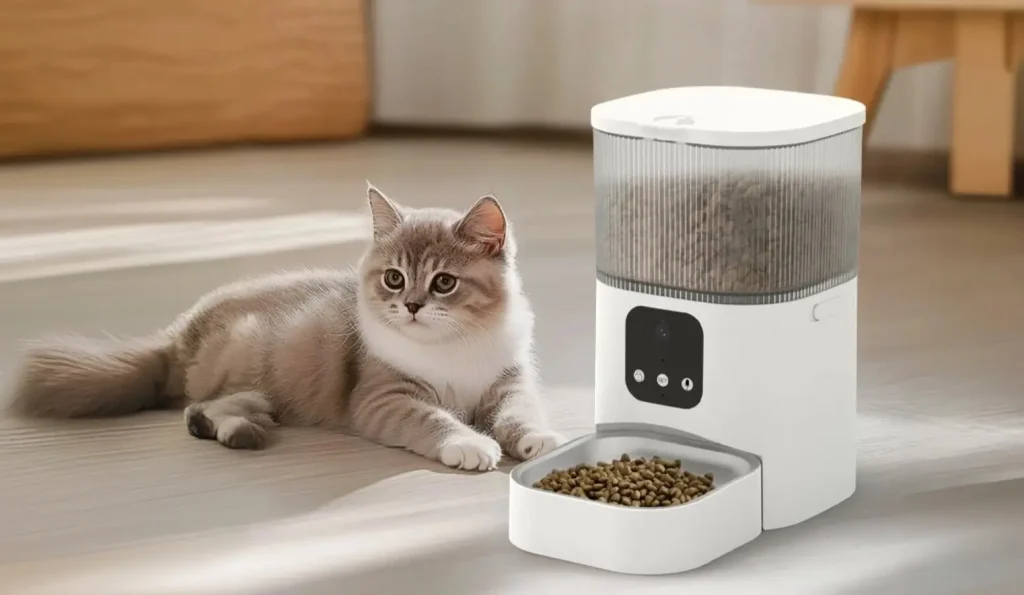
Why do two seemingly identical smart pet feeders carry a 30%+ price difference from different manufacturers? If you’re a global pet brand, wholesaler, or importer navigating OEM/ODM partnerships for pet feeders, this question has likely plagued your procurement process. Pricing is far more than a number—it’s a direct reflection of a manufacturer’s engineering capabilities, quality control systems, compliance investments, and supply chain resilience.
In 2026, amid rising electronic component costs, stricter global compliance mandates, and volatile logistics, understanding the true drivers of pet feeder pricing is more critical than ever. Crafted by Petoking—an industry-leading smart pet product manufacturer with 15+ years of OEM/ODM expertise—this guide demystifies complex pricing logic, helps you identify hidden costs and procurement pitfalls, and delivers actionable strategies to balance cost efficiency with product quality. By the end, you’ll be equipped to evaluate quotes accurately and understand why partnering with a trusted manufacturer like Petoking boosts profit margins and strengthens brand reputation.
- 1. The Core Logic of Pet Feeder OEM/ODM Pricing: It’s More Than Just "Cost + Profit"
- 2. Breakdown of 2026 Pet Feeder Production Costs: Where Your Money Goes
- 3. Key Factors Influencing Pricing: Customization, MOQ, and Beyond
- 4. China’s Manufacturing Advantage: How It Impacts Your Pricing Strategy
- 5. 2026 Industry Trends: Cost Volatility and Compliance Risks to Watch
- 6. Common Procurement Traps and How to Avoid Them
- 7. How to Compare Quotes Effectively: A B2B Buyer’s Checklist
- 8. FAQ: Answers to Your Most Pressing Pricing Questions
- 9. Conclusion: Partnering for Long-Term Pricing Stability and Quality
- 10. Petoking’s OEM/ODM Solutions: Your Trusted Partner for 2026 and Beyond
1. The Core Logic of Pet Feeder OEM/ODM Pricing: It’s More Than Just "Cost + Profit"
Many B2B buyers mistakenly simplify pet feeder pricing to a basic formula: Production Cost + Manufacturer’s Profit = Quoted Price. In reality, 2026 pricing models are far more nuanced. A reputable manufacturer’s quote includes three critical components that directly impact your total cost of ownership (TCO):
- Direct Production Costs: Raw materials, electronic components, labor, and assembly.
- Indirect Operational Costs: Mold amortization, R&D investments, quality control (QC) processes, and compliance certification fees.
- Risk Premiums: Buffers for supply chain volatility, currency fluctuations, and potential after-sales support.
For instance, a low-cost quote may cut corners on food-grade material testing or skip UL 60335-1 certification—saving the manufacturer upfront but exposing your brand to costly product recalls, customs detentions, or customer backlash. Petoking’s pricing philosophy is rooted in transparency: every quote includes a detailed cost breakdown, so you know exactly what you’re paying for and why.
2. Breakdown of 2026 Pet Feeder Production Costs: Where Your Money Goes
To evaluate quotes effectively, you need clarity on key cost drivers. Below is a detailed breakdown of 2026 production costs for smart pet feeders (the most in-demand category for global brands), based on Petoking’s manufacturing data and industry benchmarks.
2.1 Raw Materials: 35%-45% of Total Cost
Raw materials represent the largest cost component, with quality directly influencing both pricing and product safety. Critical materials include:
- Food-Grade Plastics (ABS/PP): Used for hoppers, bowls, and housings. In 2026, food-grade ABS costs $2.80-$3.50/kg, compared to $1.50-$2.00/kg for non-food-grade alternatives. Non-compliant plastics often fail EU 10/2011 or FDA 21 CFR 177.1520 testing, resulting in customs seizures.
- Stainless Steel: Used for food-contact parts (e.g., augers, bowls). 304 stainless steel costs $3.80-$4.50/kg, while 316L (for premium models) costs $5.20-$6.00/kg. It must meet FDA 177.2600 standards for chromium and nickel migration.
- Silicone: Used for seals and gaskets. Food-grade silicone costs $6.50-$7.80/kg and must be phthalate-free (DEHP ≤0.1mg/kg) to comply with EU REACH regulations.
Petoking exclusively uses food-grade materials with third-party test reports, ensuring compliance with global standards and eliminating the risks associated with low-cost, non-compliant alternatives.
2.2 Electronic Components: 25%-35% of Total Cost
Smart pet feeders depend on electronic components whose prices are subject to global supply chain volatility. Key components and 2026 price ranges are as follows:
- WiFi/Bluetooth Modules: $3.50-$5.00 per unit (FCC ID/CE RED certified). Non-certified modules ($1.50-$2.50) risk rejection at EU and US customs.
- Cameras: $8.00-$12.00 for 1080p HD modules with night vision—critical for app-controlled models popular in North American and European markets.
- PCBs/Chipsets: $4.50-$6.00 per unit. Shortages of high-performance chips are expected to drive costs up by 15%-20% in 2026.
- Motors: $2.80-$4.20 for durable DC motors (30,000+ hour lifespan). Cheap motors ($1.20-$1.80) typically fail within 5,000-8,000 hours, leading to high after-sales costs.
Petoking mitigates component cost volatility through long-term partnerships with top suppliers (e.g., Espressif for WiFi modules) and bulk purchasing, locking in stable prices for our OEM/ODM clients.
2.3 Mold Amortization: 10%-15% of Total Cost (for New Designs)
Injection molds represent a significant upfront investment. A single-cavity mold for a standard smart feeder costs $28,000-$35,000, while multi-cavity molds (for high-volume production) range from $50,000-$70,000. Beware of manufacturers quoting mold costs 50%+ below market—they often use low-quality steel that wears out after 10,000-20,000 units, requiring costly retooling.
Petoking offers flexible mold amortization plans: costs can be spread across production runs or offset with minimum order quantity (MOQ) commitments. For high-volume clients (10,000+ units/year), we often cover 50% of mold costs.
2.4 Other Costs: 10%-20% of
Total Cost
- Compliance & Certification: CE (EMC/LVD/RED), FCC ID, FDA, and UL 60335-1 certifications cost $8,000-$15,000 per model—non-negotiable for entry into EU and US markets.
- Quality Control: Inline testing, pre-shipment inspections (PSI), and material safety data sheets (MSDS) add 3%-5% to costs. Petoking’s 100% post-production testing keeps defect rates below 0.5%.
- Logistics: In 2026, ocean freight costs for 40ft containers from China to Los Angeles/New York range from $2,800-$3,500, with air freight at $5.50-$7.00/kg. Petoking optimizes logistics through bulk shipping and partnerships with leading freight forwarders.
3. Key Factors Influencing Pricing: Customization, MOQ, and Beyond
3.1 Customization Level
Customization directly impacts costs. Petoking categorizes customization into two tiers to help clients balance differentiation and budget:
- Low-Impact Customization (5%-10% Cost Increase): Logo printing, custom colorways, branded packaging, and minor firmware adjustments (e.g., app language settings).
- High-Cost Customization (20%-50% Cost Increase): Structural redesigns, unique hopper capacities, integrated AI cameras, custom app development, and eco-friendly material upgrades (e.g., recycled ABS).
Example: A basic OEM smart feeder (3L, WiFi, standard design) costs $32-$38/unit. Adding a custom logo and packaging increases the price to $34-$40/unit, while a full structural redesign with a 6L hopper raises it to $48-$55/unit.
3.2 Minimum Order Quantity (MOQ)
MOQ is a critical pricing lever—higher volumes reduce unit costs through economies of scale. Below are 2026 industry MOQ benchmarks and pricing for a standard smart feeder:
| MOQ | Unit Price (USD) | Mold Amortization per Unit (USD) |
| 500 units | $45-$50 | $60-$70 |
| 2,000 units | $38-$42 | $14-$17.50 |
| 5,000 units | $32-$36 | $5.60-$7 |
| 10,000+ units | $28-$32 | $2.80-$3.50 |
Petoking offers flexible MOQs starting at 500 units for standard models—lower than the industry average of 2,000 units—making OEM/ODM accessible to emerging brands.
4. China’s Manufacturing Advantage: How It Impacts Your Pricing Strategy
China remains the global hub for pet feeder manufacturing, with three key advantages that reduce costs for B2B buyers:
- Integrated Supply Chain: Concentrated suppliers of plastics, electronics, and molds in regions like Shenzhen and Ningbo reduce procurement and logistics costs by 15%-25% compared to other manufacturing hubs.
- Automated Production: Leading manufacturers like Petoking use automated assembly lines (e.g., AGV robots, AI quality inspection) to cut labor costs by 20%-30% and improve production consistency.
- Scale Economies: China’s massive production volume drives down component prices—for example, WiFi modules cost 10%-15% less than in Southeast Asia due to bulk purchasing power.
However, not all Chinese manufacturers deliver the same value. Low-cost factories often cut corners on materials (e.g., non-food-grade plastics) or skip compliance testing, leading to hidden long-term costs. Petoking leverages China’s manufacturing advantages while upholding strict quality and compliance standards.
5. 2026 Industry Trends: Cost Volatility and Compliance Risks to Watch
5.1 Cost Increase Trends
- Electronic Components: Ongoing shortages of high-performance chips are expected to keep prices 10%-15% above 2025 levels throughout 2026.
- Compliance Costs: The EU’s new CE marking requirements (QR codes linking to conformity statements) add $1,500-$3,000 per model. California’s Prop 65 now mandates additional lead and phthalate testing, increasing costs by 2%-3%.
- Energy Costs: Rising electricity prices in China (up 8%-10% in 2026) increase manufacturing costs for energy-intensive processes like injection molding.
5.2 Emerging Compliance Risks
- EU RAPEX Alerts: 23 pet feeder violations were reported in 2024, 74% of which stemmed from non-compliant materials (e.g., antimony migration, phthalate excess). Violations result in product destruction and severe brand reputational damage.
- Amazon’s UL Requirement: All electronic pet products sold on Amazon US must hold UL 60335-1 certification. Non-compliance leads to listing removal and inventory seizure.
6. Common Procurement Traps and How to Avoid Them
B2B buyers frequently fall victim to these pricing traps—here’s how to avoid them:
6.1 The "Too-Good-to-Be-True" Low Price
A quote 20%+ below market likely uses non-food-grade materials or skips certification. Example: A manufacturer quoting $25/unit for a smart feeder (vs. the industry average of $32-$38) may use industrial PP instead of food-grade ABS, leading to FDA rejection.
Avoidance Tip: Request third-party test reports (FDA/EU 10/2011) and certification copies upfront. Petoking provides full compliance documentation before production commences.
6.2 Hidden Mold Costs
Some manufacturers quote low unit prices but surprise buyers with "additional mold fees" after order confirmation. One seller reported a manufacturer inflating mold costs from $28k to $68k for a custom feeder.
Avoidance Tip: Secure a detailed quote that includes all mold costs, amortization terms, and mold ownership rights. Petoking’s quotes are all-inclusive with no hidden fees.
6.3 "Certified" But Not Verified
Fake or expired certifications are common in low-cost quotes. Customs authorities now verify certification validity via online databases (e.g., FCC ID Lookup, EU Nando Database).
Avoidance Tip: Cross-verify certification numbers on official databases. Petoking’s certifications are fully verifiable and up-to-date.
7. How to Compare Quotes Effectively: A B2B Buyer’s Checklist
When evaluating quotes from different manufacturers, use this checklist to ensure apples-to-apples comparisons:
- ✅ Detailed cost breakdown (materials, components, mold, compliance, logistics)
- ✅ Copy of valid certifications (CE, FCC, FDA, UL as applicable)
- ✅ Material specifications (food-grade certificates, test reports)
- ✅ MOQ requirements and volume discount tiers
- ✅ Mold ownership and amortization terms
- ✅ Quality control processes and defect rate guarantees
- ✅ Production lead times (standard: 45-60 days for OEM, 90-120 days for ODM)
- ✅ After-sales support (warranty terms, replacement parts availability)
Petoking provides a comprehensive quote package covering all these items, simplifying the comparison process for global buyers.
8. FAQ: Answers to Your Most Pressing Pricing Questions
Q1: Why is there a 30% price difference between manufacturers for similar pet feeders?
The gap stems from quality and compliance investments. Low-cost manufacturers cut corners on food-grade materials, skip certification, use cheap motors, and reduce QC efforts. Petoking’s higher (but transparent) pricing reflects premium materials, full compliance, durable components, and 100% testing—reducing your long-term TCO by avoiding recalls and returns.
Q2: Is a lower MOQ always better for my budget?
No. Lower MOQs (e.g., 500 units) result in higher unit costs due to less favorable economies of scale. If you’re confident in market demand, increasing MOQ to 2,000+ units can reduce unit costs by 15%-20%. Petoking helps clients forecast demand to optimize MOQ and balance cash flow.
Q3: How can I reduce costs without sacrificing quality?
Focus on low-impact customization (avoid full structural redesigns), optimize MOQ, and leverage Petoking’s supply chain advantages. We also offer cost-saving alternatives (e.g., 304 vs. 316L stainless steel) that maintain compliance and quality standards.
Q4: What’s the average lead time for OEM/ODM pet feeders in 2026?
Petoking’s lead times are 45-60 days for standard OEM models (with existing molds) and 90-120 days for ODM/custom designs (including mold development). We offer expedited production (30-45 days) for a 10%-15% premium.
9. Conclusion: Partnering for Long-Term Pricing Stability and Quality
2026 pet feeder pricing is complex, but transparency is key. A low quote may seem appealing upfront, but hidden costs—such as recalls, customs delays, and after-sales issues—will erode your profits and damage your brand. The right manufacturer acts as a partner, helping you understand cost drivers, navigate compliance requirements, and optimize pricing for your target market.
By focusing on total cost of ownership—not just unit price—and prioritizing compliance, quality, and supply chain stability, you’ll build a successful pet feeder line that resonates with consumers and drives long-term growth.
10. Petoking’s OEM/ODM Solutions: Your Trusted Partner for 2026 and Beyond
For 15+ years, Petoking has been a trusted OEM/ODM partner for global pet brands, wholesalers, and importers. Our 280,000㎡ state-of-the-art facility, automated production lines, and strict quality control systems enable us to deliver high-quality pet feeders at competitive prices—with full transparency and no hidden costs.
Our Pet Feeder OEM/ODM Advantages
- Transparent Pricing: Detailed cost breakdowns with no hidden fees. Our quotes include materials, components, mold amortization, compliance, and QC costs.
- Global Compliance Expertise: Full certification (CE EMC/LVD/RED, FCC ID, FDA, UL 60335-1, Prop 65) with verifiable documentation. We stay ahead of regulatory changes to keep your products market-ready.
- Flexible MOQs: Start at 500 units for standard models, with volume discounts for 2,000+ units. We support emerging brands and scale with established players.
- Cost Optimization: Long-term supplier partnerships and bulk purchasing reduce component costs. We help you balance customization and budget with low- and high-impact options.
- Proven Quality: A post-shipment defect rate below 0.5%, 30,000+ hour motor lifespan, and food-grade material guarantees. Our products are trusted by brands in 50+ countries.
- End-to-End Support: From R&D and prototype development to mass production, logistics, and after-sales support. We handle the entire manufacturing process so you can focus on growing your brand.
Our 2026 Pet Feeder Product Line (OEM/ODM Ready)
| Model | Capacity | Key Features | MOQ | Unit Price (5,000+ units) |
| PT08 Smart WiFi Feeder | 3L | App control, 1080p camera, voice recording, food-grade ABS | 500 units | $28-$36 |
| PT03 Automatic Feeder | 6L | Stainless steel bowl, APP control,Camera,Voice recording,Timed feeding, | 500 units | $32-$45 |
| PT07 Premium Feeder | 7L | Dual power supply, eco-friendly recycled ABS | 1,000 units | $48-$52 |
Petoking’s clients achieve 15%-25% higher profit margins compared to those working with low-cost manufacturers, thanks to our quality control, compliance expertise, and cost optimization. We’ve helped 200+ brands launch successful pet feeder lines—from emerging startups to Fortune 500 companies.
Ready to Get a Transparent Quote?
Contact Petoking’s B2B team today. Share your requirements (capacity, features, customization needs, MOQ), and we’ll provide a detailed, all-inclusive quote within 48 hours. Let’s build a high-quality, cost-effective pet feeder line that stands out in the global market.
Email: ckxpetoking@gmail.com
WhatsApp: +86 180 2701 1965
Factory Address: Dongguan, Guangdong, China