

OEM vs Ready Stock Smart Cat Litter Boxes: Which Supply Model Fits Your Business?
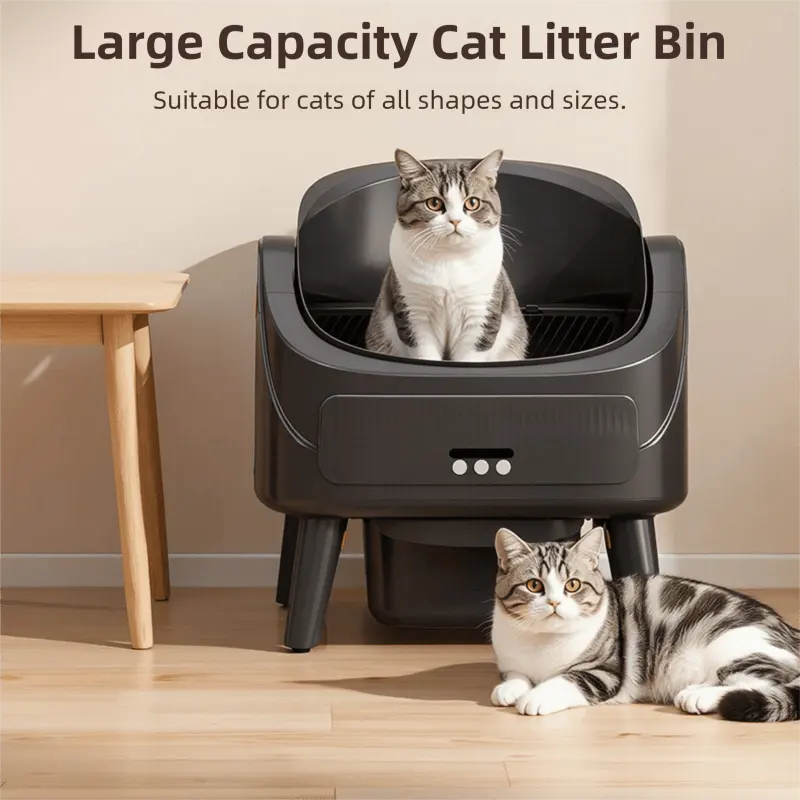
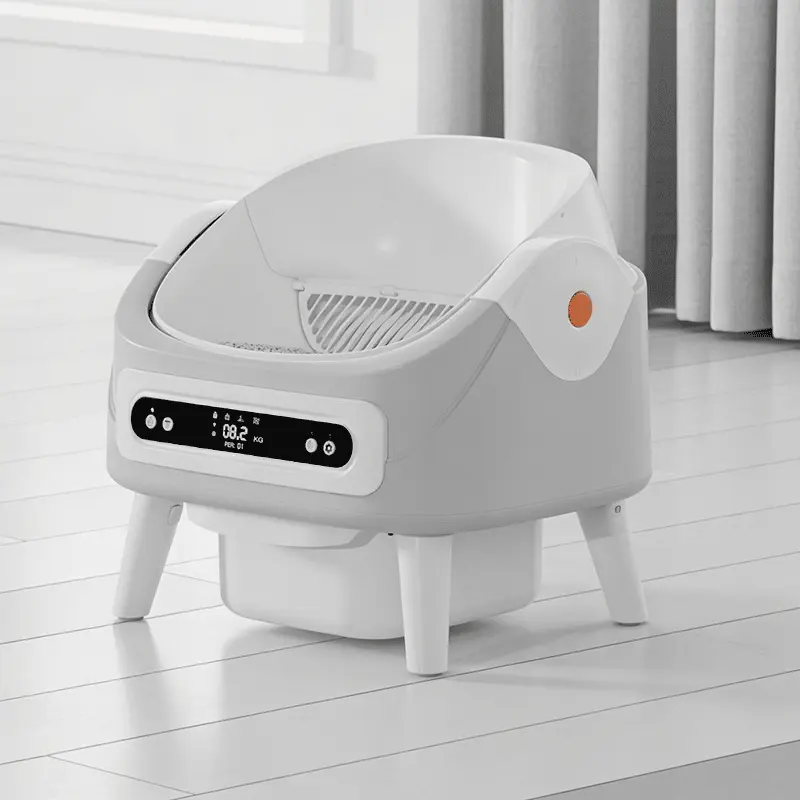
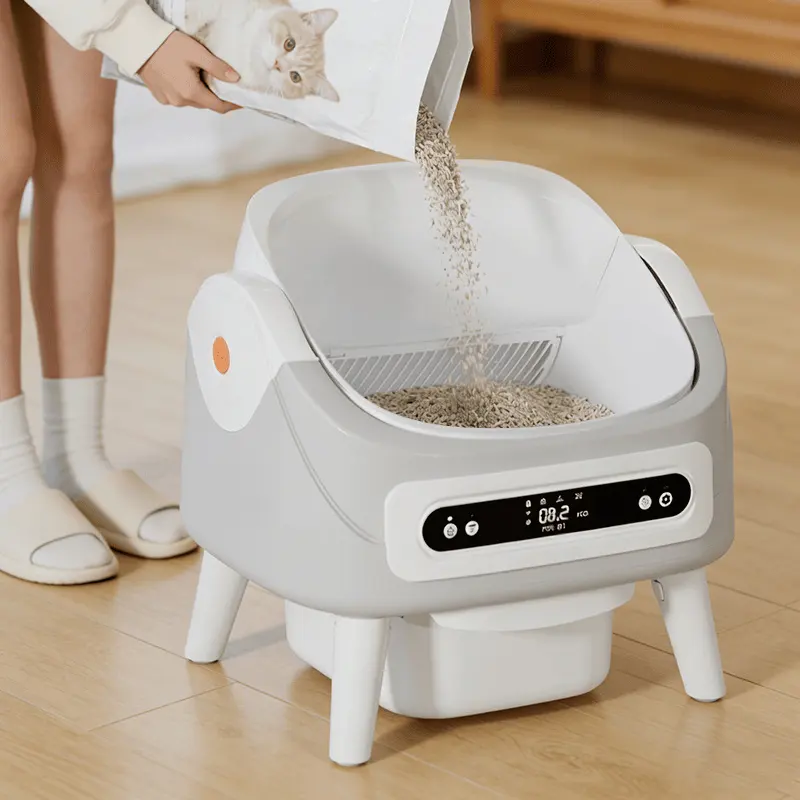
- What Is OEM Smart Cat Litter Box Manufacturing?
- What Is Ready Stock Sourcing?
- OEM vs Ready Stock: Key Differences for B2B Buyers
- OEM Advantages
- Ready Stock Limitations
- 5. Cost Structure and Risk Management
- Which Supply Model Fits Your Business?
- How to Evaluate a Reliable Smart Cat Litter Box Supplier
- FAQ
- Final Thoughts
The global demand for smart pet products continues to grow, especially in North America, Europe, Japan, and South Korea. Among these categories, smart cat litter boxes have become one of the fastest-growing segments for pet retailers, distributors, and private label brands.
For B2B buyers entering or expanding in this market, one sourcing decision often comes first:
Should you choose OEM manufacturing or buy ready stock smart cat litter boxes?
Both supply models offer advantages, but the right option depends on your business stage, order volume, branding strategy, target market, and inventory planning.
In this article, we compare OEM smart cat litter box production and ready stock sourcing from a practical B2B procurement perspective.
What Is OEM Smart Cat Litter Box Manufacturing?
OEM (Original Equipment Manufacturing) refers to producing smart cat litter boxes customized for your brand or business requirements.
Depending on the supplier’s capabilities, OEM projects may include:
- Logo printing
- Customized packaging
- App branding
- Product color customization
- Feature modifications
- Retail packaging localization
- User manual translation
- Regional compliance adaptation
- Structural or mold-level customization
OEM sourcing is commonly used by:
- Amazon private label sellers
- Pet product brands
- Regional distributors
- Retail chains
- DTC pet brands
- Crowdfunding startups launching new products
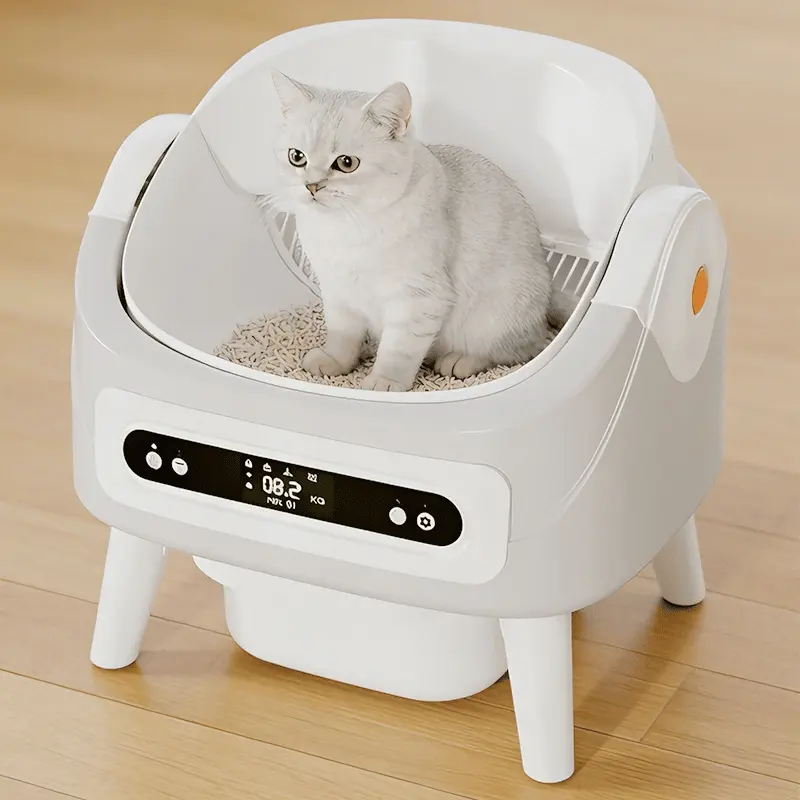
For buyers building long-term brand value, OEM manufacturing provides stronger product differentiation and higher control over positioning.
What Is Ready Stock Sourcing?
Ready stock sourcing means purchasing pre-manufactured smart cat litter boxes that are already available in inventory.
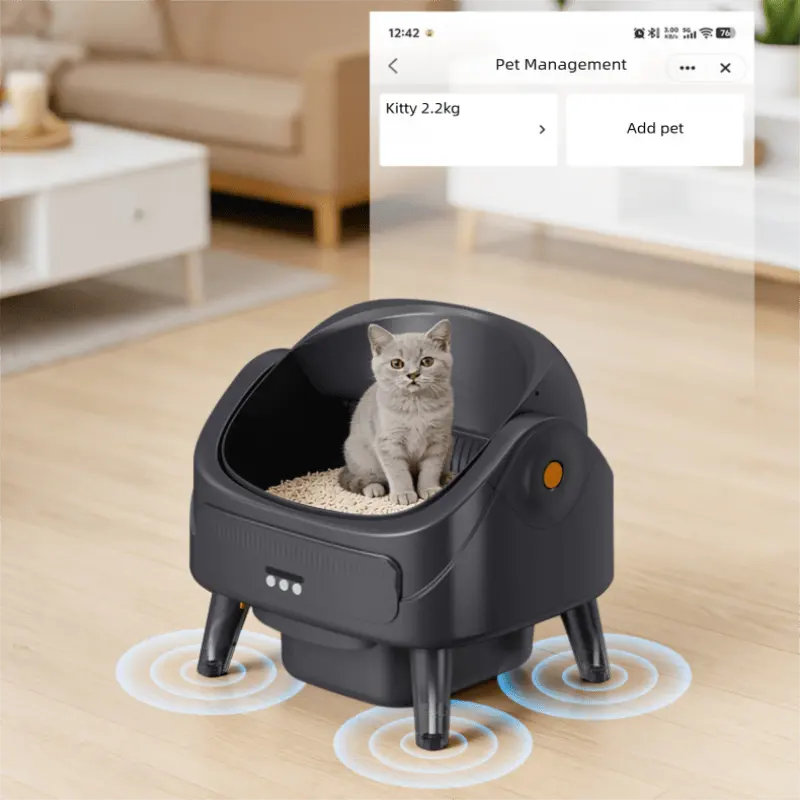
This model typically supports:
- Low MOQ orders
- Faster shipment
- Simplified procurement
- Shorter testing cycles
- Lower upfront investment
Many B2B buyers use ready stock supply for:
- Market testing
- Seasonal promotions
- Initial product validation
- Small-volume wholesale
- Fast replenishment
- Cross-border e-commerce launches
Some suppliers also provide light customization options for ready stock products, such as logo labels, carton stickers, or customized manuals.
For buyers prioritizing speed and flexibility, ready stock sourcing can significantly reduce operational risk.
OEM vs Ready Stock: Key Differences for B2B Buyers
1. MOQ Requirements
OEM Model
OEM smart cat litter box projects usually require higher MOQs because suppliers must allocate production resources for customized materials, packaging, firmware, or tooling.
Typical OEM MOQs may apply to:
- Customized packaging
- Printed logos
- Color changes
- App customization
- Mold adjustments
OEM is generally more suitable for buyers with predictable sales channels and medium-to-large purchasing plans.
Ready Stock Model
Ready stock suppliers usually offer much lower MOQs.
This helps buyers:
- Reduce inventory pressure
- Test new SKUs quickly
- Evaluate market feedback
- Lower initial sourcing risk
For startups or new product launches, ready stock often provides a safer entry point.
2. Lead Time and Supply Speed
OEM Lead Time
OEM production requires additional preparation, including:
- Packaging design confirmation
- Sample approval
- Compliance verification
- Production scheduling
- Firmware adjustment
- Branding setup
Typical lead times can range from several weeks to several months depending on customization depth and order size.
Ready Stock Lead Time
Ready stock products are usually available for immediate shipment or short-cycle dispatch.
This is especially valuable for:
- Peak season restocking
- Promotional campaigns
- Urgent procurement
- Fast-moving e-commerce operations
For buyers operating in highly competitive online marketplaces, speed can directly impact sales performance.
3. Product Differentiation and Brand Building
OEM Advantages
OEM manufacturing offers stronger brand differentiation.
You can customize:
- Product appearance
- Brand identity
- Retail packaging
- App ecosystem
- Feature combinations
- Market-specific configurations
This is important for brands competing in saturated pet product categories where visual identity and feature positioning matter.
OEM also helps reduce direct price competition because your product becomes less interchangeable with standard market inventory.
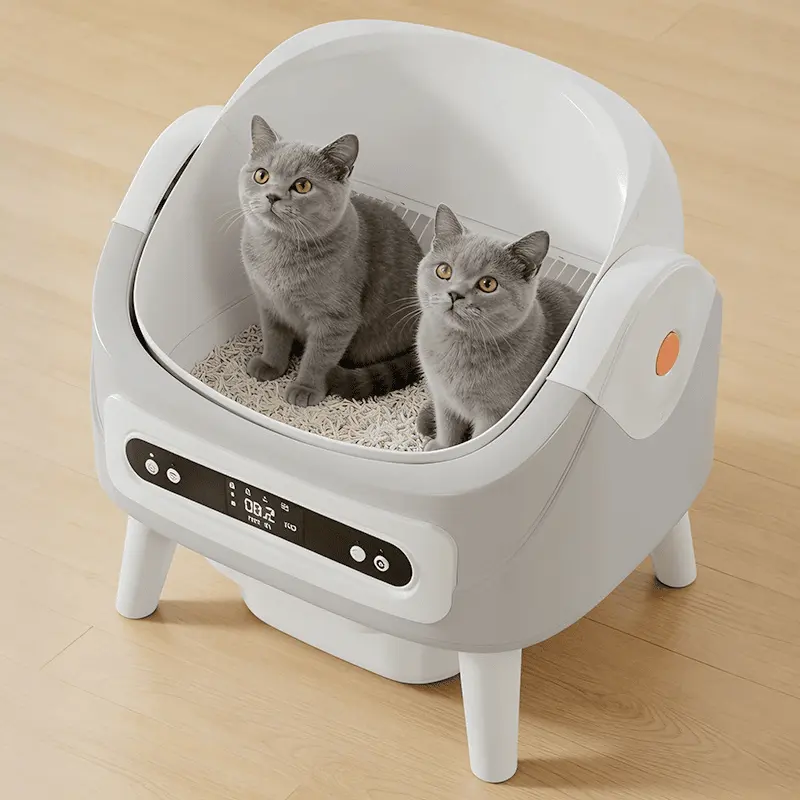
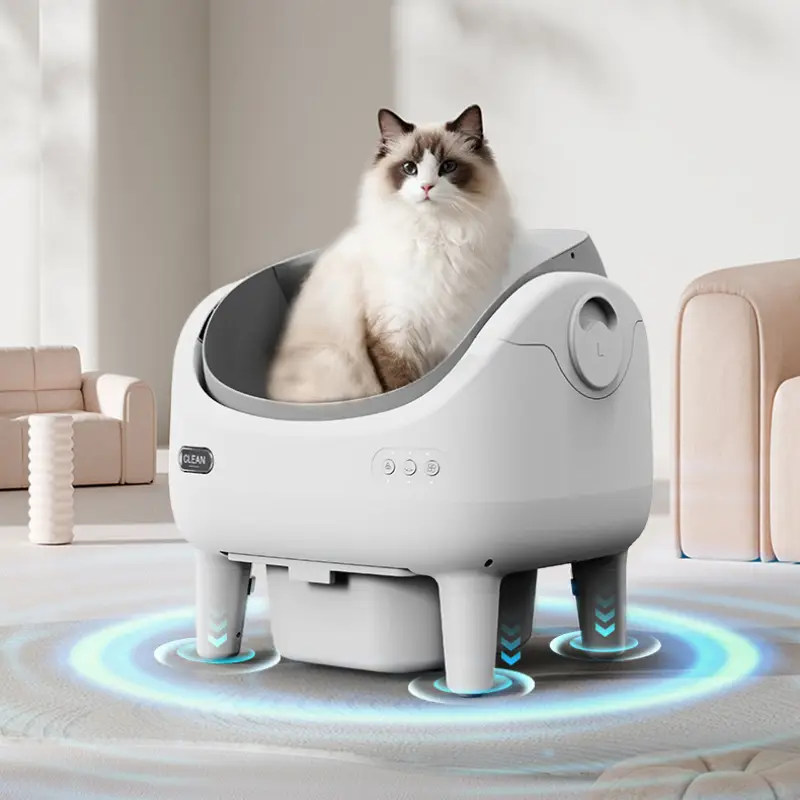
Ready Stock Limitations
Ready stock products are generally standardized.
This means:
- Multiple sellers may offer identical products
- Product uniqueness is limited
- Price competition can become aggressive
- Brand recognition may be weaker
However, for distributors prioritizing operational efficiency over branding, ready stock can still be commercially effective.
4. Compliance and Market Adaptation
For smart cat litter boxes sold in Europe, North America, Japan, and Korea, compliance requirements are increasingly important.
Depending on the market, buyers may require:
- CE certification
- FCC certification
- RoHS compliance
- PSE certification
- KC certification
- Battery transportation compliance
- App privacy considerations
- Multilingual packaging
OEM Flexibility
OEM projects allow buyers to adapt products for specific regional requirements.
For example:
- EU plug standards
- Japanese-language manuals
- Retail barcode integration
- Country-specific packaging regulations
This flexibility is useful for established brands entering regulated retail channels.
Ready Stock Considerations
When sourcing ready stock products, buyers should confirm whether existing certifications match their destination market requirements.
Not all ready stock inventory is prepared for every regional compliance standard.
5. Cost Structure and Risk Management
OEM Cost Structure
OEM projects usually involve:
- Higher upfront investment
- Packaging setup costs
- Sampling costs
- Longer capital cycles
- Inventory planning commitments
However, OEM can improve long-term profitability through:
- Stronger brand value
- Better pricing control
- Reduced marketplace duplication
- Higher perceived product differentiation
Ready Stock Cost Structure
Ready stock sourcing lowers entry barriers because buyers can:
- Purchase smaller quantities
- Avoid tooling investment
- Reduce warehouse pressure
- Minimize unsold inventory risk
This model works particularly well for businesses validating product demand before scaling.
Which Supply Model Fits Your Business?
OEM May Be Better If You:
- Operate an established pet brand
- Need differentiated products
- Require private label packaging
- Sell through retail or distribution channels
- Want stronger pricing control
- Plan long-term market expansion
Ready Stock May Be Better If You:
- Are testing new product categories
- Need faster delivery
- Have smaller procurement budgets
- Want flexible inventory management
- Sell through fast-moving online channels
- Need quick replenishment capability
In practice, many successful buyers combine both models.
For example:
- Start with ready stock to validate demand
- Transition into OEM after sales stabilization
- Use ready stock for replenishment while OEM production is ongoing
This hybrid sourcing strategy is becoming increasingly common among cross-border e-commerce sellers and regional distributors.
How to Evaluate a Reliable Smart Cat Litter Box Supplier
Whether choosing OEM or ready stock sourcing, supplier evaluation remains critical.
B2B buyers should assess:
Manufacturing Capability
- Factory scale
- Production line stability
- QC processes
- Assembly consistency
Customization Support
- Packaging design capability
- Branding flexibility
- Firmware support
- App integration options
Export Experience
- Familiarity with EU/US compliance
- International logistics coordination
- OEM project management
- Documentation accuracy
Supply Stability
- Inventory management
- Production scheduling
- Component sourcing stability
- After-sales defect handling
A supplier experienced in both OEM manufacturing and ready stock fulfillment can usually provide more flexible procurement solutions.
FAQ
Q1: Is OEM sourcing always more expensive than ready stock?
Not necessarily. OEM projects usually require higher upfront investment, but they may provide better long-term margins through branding and product differentiation.
Q2: Can ready stock products support private labeling?
Many suppliers offer light customization for ready stock orders, such as logo printing, customized manuals, or packaging stickers. However, customization depth is usually more limited than full OEM production.
Q3: What is the typical MOQ for OEM smart cat litter boxes?
MOQ varies depending on the customization scope, packaging requirements, and hardware modifications. Projects involving app customization or structural changes usually require higher MOQs.
Q4: Which model is better for Amazon private label sellers?
Many Amazon sellers start with ready stock products to test demand and later transition to OEM models for stronger brand differentiation and reduced competition.
Q5: How important are certifications for smart cat litter boxes?
Compliance is increasingly important in regulated markets such as the EU, US, Japan, and Korea. Buyers should verify certification compatibility before importing products.
Final Thoughts
There is no universal answer between OEM manufacturing and ready stock sourcing for smart cat litter boxes.
The right model depends on:
- Your business stage
- Sales channel
- Branding strategy
- Inventory planning
- Market positioning
- Budget structure
For many B2B buyers, the most effective approach is not choosing one model exclusively, but building a sourcing strategy that balances flexibility, differentiation, speed, and long-term scalability.
If you are evaluating smart cat litter box suppliers for OEM projects, private label sourcing, or ready stock wholesale, working with an experienced manufacturing partner can help reduce procurement risk while improving supply chain efficiency.