

MOQ, Lead Time, and Sample Process for Rechargeable Waterless Lunch Box Orders
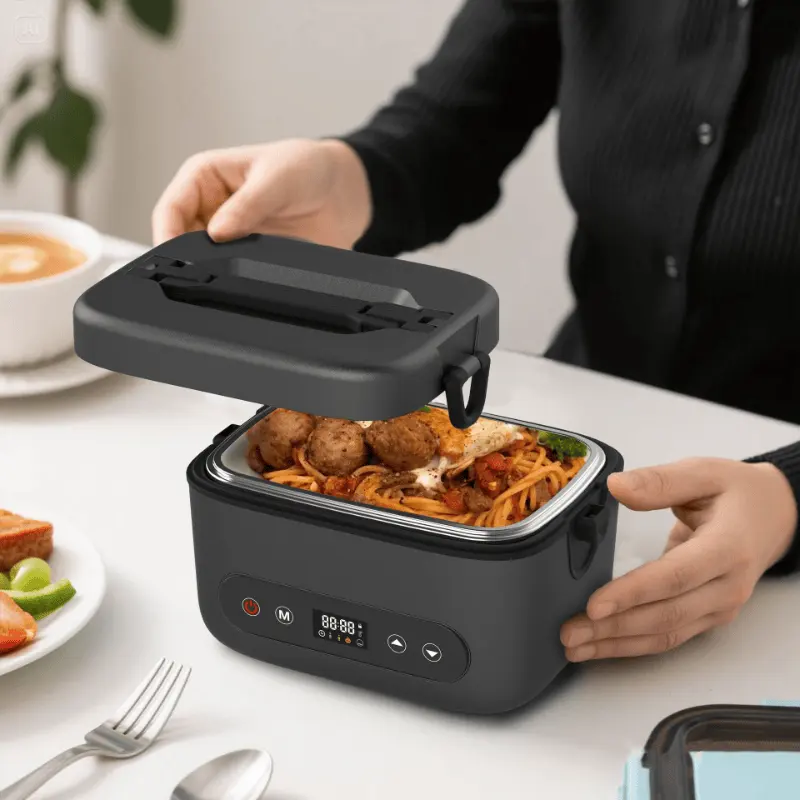
- Why MOQ Matters in Rechargeable Lunch Box Sourcing
- Understanding Lunch Box Lead Time for Different Order Types
- Typical Sample Order Process for Rechargeable Lunch Boxes
- Key Compliance Requirements Buyers Should Confirm
- Factors That Influence MOQ and Lead Time
- Why Many Buyers Start with Small Batch Trial Orders
- What to Ask a Supplier Before Placing an Order
- FAQ
- Final Thoughts
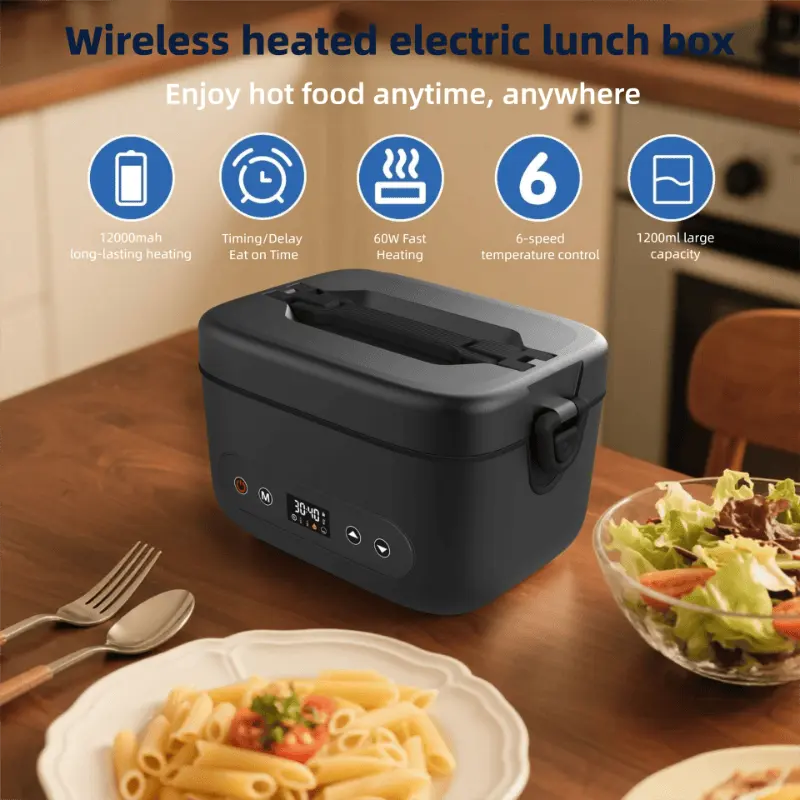
As demand for portable heating solutions continues to grow across North America, Europe, Japan, and Korea, many importers and private label brands are actively sourcing rechargeable waterless lunch boxes from China. For B2B buyers, however, product selection is only one part of the purchasing decision. MOQ flexibility, production lead time, and sample arrangement often determine whether a supplier is suitable for long-term cooperation.
This article outlines the typical ordering process for rechargeable waterless lunch box projects, including small batch trial orders, OEM production timelines, and key factors buyers should confirm before placing bulk orders.
Why MOQ Matters in Rechargeable Lunch Box Sourcing
For many distributors, Amazon sellers, and emerging brands, placing a large initial order carries unnecessary inventory and market validation risks. This is especially true for innovative products such as rechargeable waterless lunch boxes, where regional demand, charging standards, and certification requirements may vary.
A flexible rechargeable lunch box MOQ policy helps buyers:
- Test market response with lower inventory pressure
- Evaluate product quality and customer feedback
- Validate packaging and branding concepts
- Reduce cash flow risks during initial cooperation
- Launch seasonal or regional product pilots more efficiently
In practice, MOQ requirements usually depend on several factors:
| Order Type | Typical MOQ Range |
|---|---|
| Neutral stock order | 50–200 pcs |
| Logo customization | 300–500 pcs |
| Packaging customization | 500–1000 pcs |
| Full OEM/ODM development | 1000+ pcs |
For B2B buyers targeting Amazon FBA, local retail distribution, or DTC testing, suppliers that support small batch trial orders can significantly reduce sourcing barriers.
Understanding Lunch Box Lead Time for Different Order Types
Production lead time is another critical factor in purchasing planning, especially for buyers preparing for seasonal campaigns, retail launches, or container consolidation schedules.
The actual lunch box lead time depends on customization level, inventory status, and certification requirements.
1. Ready Stock Orders
For standard models already in production:
- Sample dispatch: 1–3 working days
- Bulk order preparation: 7–15 days
- Suitable for:
- Trial sales
- Urgent replenishment
- Market testing
- Amazon restocking
This option is often preferred by importers looking for fast turnover and lower upfront investment.
2. Semi-Custom Orders
For projects involving logo printing, color customization, or packaging adjustments:
- Sample confirmation: 5–10 days
- Mass production: 20–35 days
Semi-custom projects typically require packaging proof approval and production scheduling before assembly begins.
3. Full OEM/ODM Projects
For structural modifications, app integration, mold development, or exclusive product configurations:
- Prototype development: 15–30 days
- Tooling and engineering adjustments: additional timeline depending on complexity
- Mass production: 30–50 days after sample approval
Buyers planning private label expansion should allow extra time for certification testing and compliance verification.
Typical Sample Order Process for Rechargeable Lunch Boxes
Before committing to bulk production, most professional buyers arrange a sample order lunch box evaluation process.
This stage is important not only for product testing, but also for assessing supplier responsiveness, engineering capability, and quality consistency.
Standard Sample Workflow
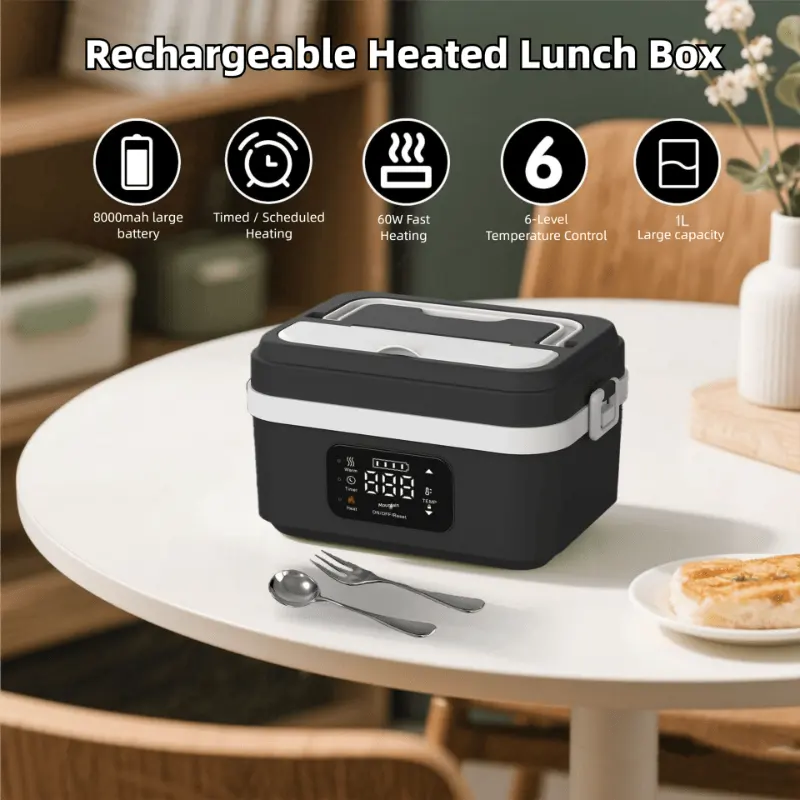
Step 1: Product Requirement Discussion
Buyers usually confirm:
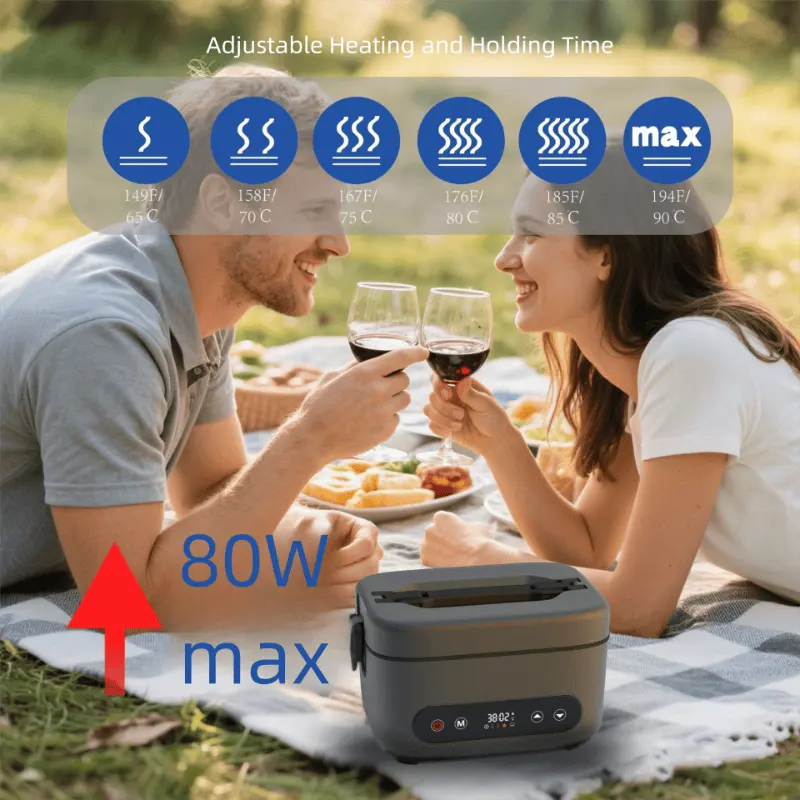
- Heating performance
- Battery capacity
- Charging interface
- Food-grade material requirements
- Capacity size
- Regional plug standards
- Packaging preferences
For European and North American markets, compliance requirements should be clarified early.
Step 2: Sample Preparation
Depending on the project type:
- Existing stock samples: 1–3 days
- Logo samples: 5–7 days
- Packaging mockups: 7–10 days
Some suppliers may refund sample costs after bulk order confirmation.
Step 3: Testing and Evaluation
Professional buyers generally evaluate:
- Heating efficiency
- Battery runtime
- Leakage prevention
- Material finishing
- Lid sealing performance
- Safety protection mechanisms
- Packaging durability
Retail buyers may also conduct preliminary consumer feedback tests before proceeding.
Step 4: Bulk Order Confirmation
Once samples are approved, the supplier typically issues:
- PI (Proforma Invoice)
- Production schedule
- Packaging files
- Compliance documentation
- QC process confirmation
Clear communication during this stage helps reduce production errors later.
Key Compliance Requirements Buyers Should Confirm
Rechargeable heating lunch boxes involve electronics, batteries, and food-contact materials. Compliance preparation is therefore essential for smooth customs clearance and retail entry.
Depending on the target market, buyers should verify whether suppliers can provide:
| Location | Required Certificates |
| Europe | CE certification RoHS compliance LFGB or food-contact testing Battery transport documentation |
| North America | FCC reports FDA food-contact compliance UN38.3 battery certification |
| Japan & Korea | PSE-related requirements (where applicable) KC certification considerations Local food-contact regulations |
Experienced suppliers typically understand regional certification differences and can help buyers reduce compliance risks during sourcing.
Factors That Influence MOQ and Lead Time
Buyers often assume MOQ and lead time are fixed numbers, but in manufacturing reality, they are influenced by multiple supply chain variables.
Material Availability
Battery cells, stainless steel containers, and PCB components can affect production schedules.
Packaging Complexity
Custom gift boxes, multilingual manuals, and barcode labeling increase preparation time.
Peak Production Season
Q3 and Q4 often experience longer lead times due to holiday retail demand.
Certification Requirements
Additional testing may delay shipment if compliance documents are incomplete.
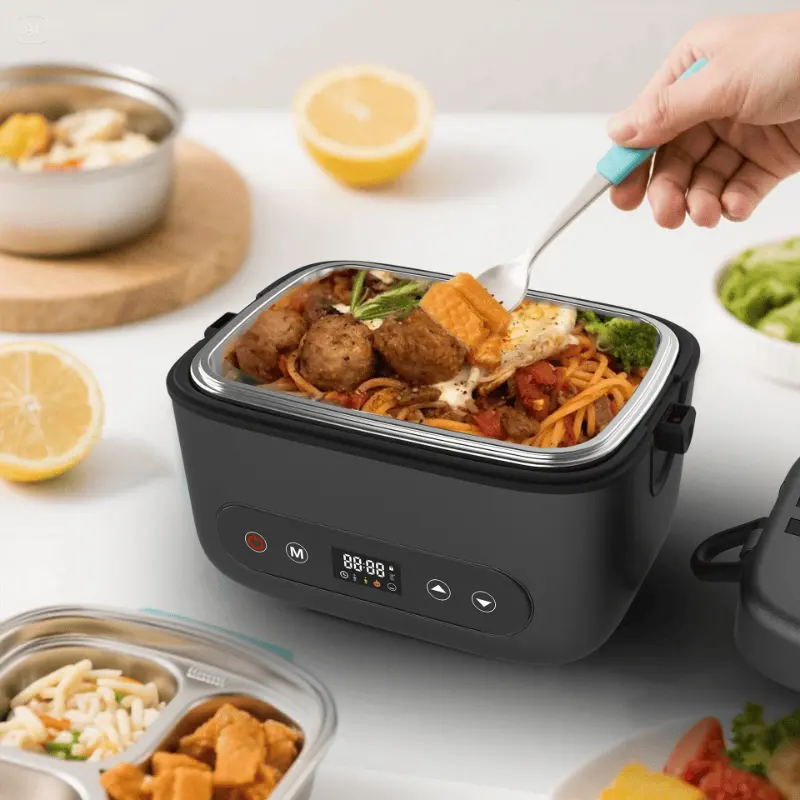
Early forecasting and transparent communication help both buyers and factories manage production expectations more effectively.
Why Many Buyers Start with Small Batch Trial Orders
For new product categories or unexplored markets, a small batch trial order strategy is increasingly common among:
- Amazon private label sellers
- Regional distributors
- Retail chain buyers
- DTC startup brands
- Influencer-driven product brands
Advantages include:
- Faster product validation
- Lower inventory exposure
- Reduced capital pressure
- More flexible SKU testing
- Easier packaging optimization
Suppliers that support flexible production arrangements are often better suited for long-term partnership development.
What to Ask a Supplier Before Placing an Order
Before confirming a rechargeable waterless lunch box order, buyers should request clear information on:
- Actual MOQ by customization level
- Standard production lead time
- Sample preparation schedule
- Available certifications
- Warranty and defect handling
- Packaging options
- Battery specifications
- QC inspection procedures
- Export experience in target markets
Reliable suppliers should be able to provide transparent documentation and stable communication throughout the sourcing process.
FAQ
What is the typical rechargeable lunch box MOQ?
For standard stock models, MOQ may start from 50–200 units. Customized logo or packaging projects usually require higher quantities.
How long does lunch box production usually take?
Stock orders may ship within 7–15 days, while customized orders generally require 20–35 days depending on production complexity.
Can suppliers support small batch trial orders?
Yes. Many experienced manufacturers now support small batch trial orders for Amazon sellers, distributors, and new brands testing market demand.
Are sample costs refundable?
Some suppliers deduct sample fees from future bulk orders, especially for long-term cooperation projects.
What certifications are commonly required?
CE, FCC, RoHS, LFGB, FDA, and UN38.3 are among the most common certifications depending on the target market.
Final Thoughts
When sourcing rechargeable waterless lunch boxes, MOQ flexibility, lead time reliability, and a professional sample process are often stronger indicators of supplier capability than price alone.
For importers and private label buyers, working with suppliers that support small batch trial orders, stable production scheduling, and international compliance preparation can help reduce sourcing risks and improve long-term scalability.
If you are evaluating rechargeable lunch box suppliers for OEM, wholesale, or private label projects, it is advisable to confirm production capacity, certification support, and customization processes early in the sourcing stage.