


How Quality Control Works In Smart Pet Feeder Manufacturing
Are you losing sales because buyers find faults in automatic pet feeders on Amazon or Walmart? We see this problem and studied it closely. Our research shows Petoking runs a 7,000-square-meter factory with more than 100 skilled staff to keep defect rates low.
This post explains smart pet feeder quality control, covering IoT sensors, portion-control tests, app-integration checks, and food-safety steps. Read on to protect your brand and boost reviews.
- What are Smart Pet Feeders and How Do They Work?
- Why is Quality Control Crucial in Smart Pet Feeder Manufacturing?
- Key Quality Control Processes in Manufacturing
- How Do IoT and Automation Improve Quality Assurance?
- Testing Functionalities of Smart Pet Feeders
- Environmental and Stress Testing
- User Feedback and Post-Market Surveillance
- Quality Control Management and Customized Processing in Smart Pet Feeder Manufacturing
- What Are the Latest Innovations in Quality Control for Smart Pet Feeders?
- Conclusion
- FAQs
What are Smart Pet Feeders and How Do They Work?
Key Takeaways:
- Smart pet feeders automate feeding with scheduling and portion control.
- They allow monitoring of food levels through a smartphone app.
- An OEM factory supplies smart pet feeding supplies for B2B customers.
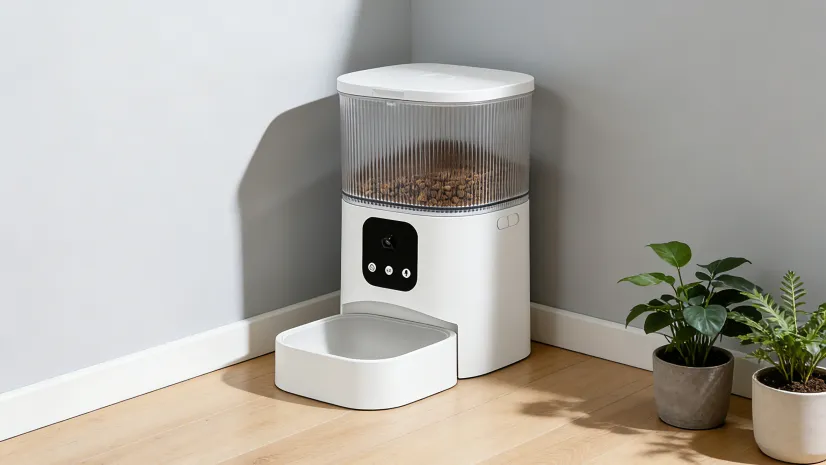
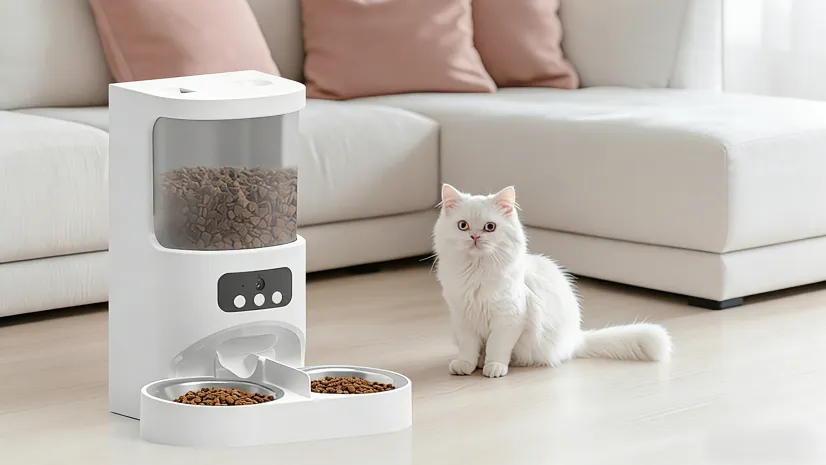
Smart pet feeders offer innovative solutions for feeding pets automatically. These devices allow owners to schedule meals, control portion sizes, and monitor food levels from a smartphone app.
Overview of smart pet feeding supplies
We make and supply smart pet feeding supplies from a 7,000 square meter OEM factory. Our team of over 100 skilled staff builds feeders, water dispensers, and intelligent litter boxes for B2B customers in Europe and North America.
We meet compliance needs and deliver stable supply with low defect rates and flexible ordering. Find our range here, https://www.ckxpet.com/smart-pet-feeding-supplies/.
We test IoT modules, sensors, and automation tools that enable automated feeding and provide retailer-compliant pet technology products for sellers on Chewy, Wayfair, Amazon, Walmart, and eBay.
Why is Quality Control Crucial in Smart Pet Feeder Manufacturing?
Key Takeaways:
- Quality control ensures compliance with product certifications.
- It maintains low defect rates and builds customer confidence.
- A mature production line supports rapid product launches.
Quality control ensures compliant product certifications for B2B customers across regions. We ensure low defect rates to meet customer expectations and build trust. Our mature production line and skilled staff catch issues before launch.
IoT sensors, calibration tools, and automation systems help us test models like the petlibro granary smart camera feeder and the pawsync smart pet feeder for reliability.
We support rapid product launches by meeting standards before market entry. We handle trial orders and customization while keeping defect rates low. Supply chain checks and compliant packaging speed international shipping to Europe and North America.
We test electronics, battery life, and portion control on feeders such as the surefeed microchip cat feeder and the petlibro polar wet food feeder.
Key Quality Control Processes in Manufacturing
Key Takeaways:
- Strict material selection and testing maintain product safety.
- Durability and reliability are assessed through multiple tests.
- Calibration and sensor checks ensure precise performance.
- Food safety standards are met with rigorous testing.
Quality control processes are essential for ensuring smart pet feeders meet high standards. Manufacturers implement strict evaluations of materials and components to guarantee durability and safety.
How Are Materials Selected and Tested for Smart Pet Feeders?
We choose materials that keep pets safe. We match parts to each product and market.
- We list candidate plastics, metals, and elastomers for papifeed smart automatic cat feeder and similar models.
- Suppliers send samples and we inspect certificates for CE, UL, and RoHS.
- Materials like ABS, stainless steel, and food-grade silicone enter chemical screening.
- We run migration and leach tests to meet food contact rules and to protect wet and dry food.
- Component firms deliver sensor modules and microcontrollers for pitpet smart automatic cat feeder and papifeed automatic cat feeder.
- We perform mechanical checks on gears and augers for wagging parts and timing systems.
- Tests include drop, vibration, and torque cycles to simulate years of use.
- We validate coatings and finishes against corrosion and stain resistance for items like cat mate c500 automatic pet feeder.
- Lab teams cycle heaters and dampers to check humidity and heat effects on petkit yumshare solo with camera type feeders.
- We audit battery cells and power modules for backup draw and discharge curves.
- Firmware and sensor suites get calibration using calibration rigs and signal analyzers.
- We run EMI and radio tests for WiFi and Bluetooth modules such as ipettie donut frost wifi 6 meal automatic wet food feeder.
- We set acceptance criteria for portion accuracy against scales and dispensers used by wopet automatic pet feeder.
- Field trials include 100 to 300 cycles per day over weeks to detect wear on moving parts.
- We capture traceability data and label lots for recall readiness, even though No Data.
- We compare results to market leaders like petsafe eatwell 5-meal pet feeder and petory timed 10s voice recorder automatic feeder.
- We record failures and feed findings into supplier agreements and customized processing plans.
- We use IoT diagnostics and cloud logs to watch in-market feeders for faults and to tune materials choices.
- We keep test reports for audits and for cross-border sellers on Amazon, Walmart, and eBay.
How Do Manufacturers Check Component Durability and Reliability?
Manufacturers take several steps to check the durability and reliability of components in smart pet feeders. This process ensures that our products meet high standards in the pet feeding solutions industry.
- They conduct material tests to assess resilience against wear and tear. Different materials undergo various stress tests to ensure they can withstand everyday use.
- Manufacturers perform cycle testing on moving parts. This method simulates years of operation in a short time, revealing how components hold up under repeated use.
- They implement environmental simulations. Components face extreme temperatures and humidity levels to determine their performance in diverse conditions related to smart pet feeder usage.
- Durability assessments include drop tests for electronics and sensors. Testing these devices helps guarantee they function properly even after accidental drops or impacts.
- Reliability assessments involve long-term testing for battery life. Manufacturers monitor how batteries perform over extended periods, ensuring efficient power management for features like the Pawsync automatic cat food feeder.
- Quality checks assess resistance to corrosion and other environmental factors as well. These evaluations ensure that components remain reliable despite exposure to moisture or varying climates.
- They align products with established food safety standards during manufacturing processes as well. This compliance builds consumer trust by ensuring our feeders deliver safe, healthy meals for pets.
- Finally, manufacturers gather data from real-world usage scenarios regularly through feedback loops with users on platforms like Amazon, Walmart, and eBay Europe and America, enhancing product reliability based on customer experiences.
These strategies help us maintain excellence in our smart pet feeder offerings while assuring customers about quality, durability, and safety.
What Food Safety Standards Must Smart Pet Feeders Meet?
Smart pet feeders must comply with various food safety standards to ensure pet health. These devices should be made from safe materials that do not leach harmful chemicals into the food.
Manufacturers often follow guidelines set by organizations such as the FDA and ISO. Meeting these requirements helps protect pets from contamination and illness.
Testing for hygiene is also crucial in smart feeder production. We need to ensure that all surfaces are easy to clean and resistant to bacteria buildup. The design of these feeders should facilitate quick maintenance, allowing users to keep their systems sanitary effortlessly.
Ensuring compliance with food safety standards leads us into discussing the key quality control processes in manufacturing smart pet feeders.
How Are Electronics and Sensors Calibrated for Quality?
Electronics and sensors in smart pet feeders play a crucial role in their performance. We focus on precise calibration to ensure quality.
- Accurate settings establish the baseline for each electronic component. This process involves using standard reference points to guide calibration efforts.
- We conduct tests under controlled conditions to assess sensor response. These tests help us evaluate how well sensors detect variables like weight and moisture.
- Calibration tools used include oscilloscopes, multimeters, and specialized software. These tools allow us to measure electrical signals accurately and adjust components accordingly.
- We run simulations that mimic real-life usage scenarios. This step ensures electronics function correctly in typical environments where pets are fed.
- Each component undergoes individual testing before installation in the feeders. This method allows us to identify defects early in the production process.
- Following assembly, we perform a final functionality test on the entire unit. This comprehensive assessment checks whether all electronics work seamlessly together.
- Feedback from initial product users informs our calibration adjustments. Real-world data helps us refine processes further for better accuracy.
- Regular review schedules for equipment ensure ongoing quality control measures remain effective and reliable over time.
- Implementation of Internet of Things (IoT) technology enhances sensor capabilities through software updates and enhanced analytics.
- Continuous improvement initiatives incorporate new findings into our calibration standards, leading to superior smart pet feeders.
These various approaches enable us to maintain high-quality standards throughout the manufacturing process of smart pet feeders while addressing consumer needs effectively in the marketplace, like those described by experts at Wirecutter and Cats.com.
How Do IoT and Automation Improve Quality Assurance?
Key Takeaways:
- IoT devices monitor production processes in real time.
- Automation streamlines repetitive quality control tasks.
- Real-time data helps detect issues early.
IoT and automation transform quality assurance in smart pet feeder manufacturing. These technologies monitor production processes in real time, allowing us to detect issues quickly.
Sensors collect data on each component's performance during assembly. This data-driven approach helps identify defects early, reducing waste and rework.
Automation streamlines repetitive tasks, ensuring consistency across products. Machines perform checks that are often too tedious for humans, increasing reliability in testing. We gain efficiency through automated inspections, freeing our team to focus on more complex problems.
With better tracking systems powered by IoT devices, we improve traceability throughout the supply chain, enhancing product safety and consumer confidence in our brand like Instachew Purechew Sight.
Testing Functionalities of Smart Pet Feeders
Key Takeaways:
- Portion control and scheduling features are accurately tested.
- App integration and connectivity are verified under varied conditions.
- Backup power and battery performance are evaluated.
Testing functionalities in smart pet feeders is vital for ensuring reliable performance. We assess accuracy in portion control through precise measurements and verify the effectiveness of scheduling features to maintain feeding routines.
How Is Portion Control Accuracy Tested?
Portion control accuracy is vital for smart pet feeders. We ensure that our devices dispense the correct amount of food for pets.
- We use calibrated scales to measure each portion accurately. These scales provide precise readings, allowing us to verify the amount dispensed.
- Our team conducts multiple tests with various food types. Different kibble sizes and shapes can affect how much food gets delivered.
- We compare the dispensed quantity against pre-set amounts. This comparison helps verify if the feeder meets its specifications.
- Repeated trials test consistency in portion sizes over time. Ensuring each serving remains uniform boosts user trust in our products.
- We simulate real-world feeding situations during testing. These scenarios help us assess how well the feeder performs throughout regular use.
- User feedback plays a role in refining our measurements. Customers share experiences that guide adjustments to improve accuracy further.
- Data from laboratory tests informs software updates for better performance. Upgrading software helps maintain quality control as technologies evolve.
- Our expert team reviews results to identify any inconsistencies or issues quickly. Rapid response ensures we address potential inaccuracies before reaching consumers.
We take pride in producing reliable smart pet feeders that meet consumer standards, especially on platforms like Amazon, Walmart, and eBay in both Europe and America.
How Reliable Are Scheduling and Programming Features?
Smart pet feeders rely on precise scheduling and programming features to function effectively. We understand how important it is for these devices to operate reliably.
- Reliable scheduling enables rapid product launches. Petoking's focus on quality control supports this effort, ensuring that our products meet compliance and certification requirements.
- Programmable settings allow pet owners to customize feeding schedules for their pets. This flexibility meets the diverse demands of our customers in the pet industry.
- Our use of advanced technology enhances durability and reliability in programming features. Over 100 skilled staff members contribute their expertise to maintain high standards.
- Low defect rates reflect the effectiveness of our quality control measures. These measures help ensure that our scheduling functions perform as intended.
- Stable supply chains reinforce reliable scheduling processes within Petoking's operations. Consistency in materials and sourcing promotes effective manufacturing practices.
- Feedback from users helps us refine scheduling capabilities continuously. We value real-world insights, which guide improvements to product functionality.
- Testing under various conditions confirms that the programming features work flawlessly in different environments. This diligence assures customers of dependable performance.
We actively engage with feedback from consumers to enhance these essential features continuously, ensuring a reliable experience across all smart pet feeders we manufacture.
How Is App Integration and Connectivity Tested?
Testing app integration and connectivity is essential for smart pet feeders. This process ensures that these devices work seamlessly with user smartphones.
- We connect the feeder to various operating systems, such as iOS and Android. Each system has unique requirements, so we test compatibility across different versions.
- We evaluate the mobile app's performance during connection attempts. Smooth connections boost user experience and increase functionality.
- Testing signal strength happens in multiple environments, including homes with various Wi-Fi strengths. We simulate real-world conditions to understand how well the device performs under stress.
- The communication between the feeder and app undergoes rigorous checks for latency issues. Quick response times enhance user satisfaction when using app features.
- We verify that data synchronization occurs without errors or delays. Proper synchronization keeps users informed about their pets' feeding schedules.
- User interface testing ensures that controls within the app function correctly after a connection is established. An intuitive design helps pet owners manage their feeders effectively.
- Security assessments focus on data protection during connectivity setup and usage. Ensuring secure connections protects users' personal information from unauthorized access.
- Finally, we gather feedback from test users to identify any potential bugs or issues related to connectivity and integration. Insights from real users often highlight areas needing improvement.
Next, we will explore how environmental factors affect smart pet feeders during rigorous testing procedures.
How Are Backup Power and Battery Efficiency Evaluated?
App integration and connectivity lead us to the evaluation of backup power and battery efficiency. Understanding how manufacturers test these elements helps us ensure smart pet feeders maintain reliable performance.
- Manufacturers conduct stress tests on batteries to gauge their capacity under various conditions. These tests simulate real-life usage scenarios, enabling them to identify potential failures.
- They measure the discharge rates of batteries over time. This measurement reveals how long a battery lasts during normal operation before needing a recharge.
- Engineers examine component compatibility for power systems. They assess whether battery types function well with the feeder's electronic components.
- Manufacturers evaluate the effectiveness of backup power solutions during outages. These evaluations ensure that feeders operate seamlessly even when primary power sources fail.
- They perform temperature tolerance tests on batteries and circuits. This ensures that performance remains stable in extreme heat or cold, which can affect functionality.
- Reliability assessments focus on battery life cycles through repeated charge and discharge processes. These help determine how many times a battery can be cycled before performance declines.
- Engineers also review safety features related to battery handling, ensuring they meet regulatory standards to prevent hazards such as overheating or leakage.
Testing all these aspects ensures our smart pet feeders remain dependable for pet owners everywhere, including sellers like Katelynn Sobus and Kate Barrington across platforms like Amazon, Walmart, and eBay.
Environmental and Stress Testing
Key Takeaways:
- Stress tests simulate extreme temperatures and humidity.
- Moving parts undergo extensive durability evaluations.
- Environmental factors are tested over extended periods.
Manufacturers conduct stress tests to ensure smart pet feeders can withstand temperature changes and high humidity. They simulate these conditions for extended periods to check product durability.
By doing so, they confirm that each unit operates effectively under various environmental factors. It's essential for creating products that last and meet customer expectations. Explore more about our testing processes!
How Are Temperature and Humidity Resistance Tested?
We focus on testing the temperature and humidity resistance of smart pet feeders to ensure they function well in varied environments. This process guarantees that our products meet quality standards.
- We place smart pet feeders in environmental chambers. These chambers simulate extreme temperatures and humidity levels.
- Feeders undergo a range of temperatures from freezing to high heat. Each feeder must operate correctly in these conditions.
- We expose feeders to humidity levels of 10% to 90%. This helps us assess their performance in humid climates.
- Specialized tools monitor temperature and moisture accurately during the tests. Reliable equipment ensures valid results.
- Our team visually inspects the feeders after testing for any signs of damage or malfunction, including cracks or faulty components.
- We conduct multiple test cycles over extended periods to observe long-term effects, ensuring durability against environmental factors.
- Data collected during testing informs us about component resilience, which is essential for product improvement and reliability.
- Feedback from real-world usage complements our lab results, revealing how well the feeders perform across different conditions.
These steps enhance our confidence in delivering quality smart pet feeders that withstand challenging situations and remain functional for users everywhere.
How Is Longevity Tested for Moving Parts?
To ensure the durability of moving parts in smart pet feeders, we conduct thorough testing. This process helps us confirm that these components withstand regular use over time.
- We expose moving parts to various cycles and repetitions. This method simulates real-life usage and identifies potential wear and tear.
- Engineers monitor parts for any signs of strain or fatigue. We carefully document changes to understand their resilience.
- Environmental conditions play a crucial role in testing. Parts undergo assessments in varying temperatures and humidity levels to reveal weaknesses.
- We implement stress tests on critical components like motors or gears. High-intensity simulations give insight into how they perform under pressure.
- During evaluations, we analyze lubrication effectiveness in moving parts. Proper lubrication can significantly enhance longevity and smooth operation.
- Inspections focus on material quality used for these parts. Higher-grade materials often show superior performance and longer lifespans.
- Real-world simulations provide valuable feedback from users about part reliability over time; this data informs our future designs.
- A dedicated team assesses failure rates of moving components under prolonged use scenarios; patterns help us address weak points promptly.
These steps reinforce our commitment to delivering high-quality, reliable products suited for both pets and their owners across e-commerce platforms like Amazon, Walmart, and eBay.
User Feedback and Post-Market Surveillance
Key Takeaways:
- Customer feedback is collected to improve product design.
- Defect tracking and quality assessments guide improvements.
- Continuous surveillance ensures product reliability.
We collect data from users to understand how smart pet feeders perform in real-life situations. This information helps us identify common issues and improve our products. Listening to customers ensures we meet their needs effectively.
To learn more about how user feedback shapes our development process, explore the details further.
How Is Data Collected from Real-World Use?
Data collection happens through various channels. We monitor user interactions and track performance metrics in real time. Smart pet feeders can gather information on feeding schedules, portion sizes, and connectivity stability.
Many devices use built-in sensors to assess functionality during regular usage.
User feedback plays a critical role in this process. We analyze comments and ratings from customers across platforms like Amazon, Walmart, and eBay. Social media also offers insights into consumer experiences with our products.
This combination of direct data monitoring and customer input enables us to understand how well smart pet feeders perform in everyday life.
How Are Common Consumer Complaints Addressed?
Following our discussion on how we collect data from real-world use, we turn to how we address common consumer complaints. Feedback plays a critical role in our process.
- We monitor user feedback actively to identify recurring issues with smart pet feeders. Insights from consumers help us pinpoint problems quickly.
- Our team analyzes complaints thoroughly to understand their root causes. This analysis leads to targeted solutions for each issue.
- We implement design changes based on customer suggestions and complaints. Making adjustments helps us improve product quality while meeting consumer expectations.
- Regular defect rate assessments allow us to maintain stable supply and product reliability. These assessments ensure we catch defects early in the manufacturing process.
- The production line is flexible, enabling quick adjustments in response to consumer feedback. This agility ensures we can correct issues without significant delays.
- Post-market surveillance focuses on monitoring product performance after launch. Continuous observation helps us understand how our feeders perform in various environments.
- Our customer service team addresses individual complaints promptly and effectively. They provide assistance directly, which boosts customer satisfaction.
- We conduct follow-up surveys with customers who reported issues, gathering additional insights for improvement efforts.
- Information gathered from these interactions informs future designs or updates to existing models, enhancing quality control.
We take pride in using effective measures to maintain high-quality standards in our smart pet feeders, ensuring consumer confidence every step of the way.
Quality Control Management and Customized Processing in Smart Pet Feeder Manufacturing
Key Takeaways:
- Quality control management monitors each production stage.
- Customized processing solutions meet diverse client needs.
- Flexible order options support both small-batch and wholesale demands.
Quality control management ensures that smart pet feeders meet high standards from start to finish. We assess materials, check components, and implement customized strategies to enhance quality across the manufacturing process.
By focusing on these areas, we increase product reliability and customer satisfaction. To explore more about how we achieve this excellence in production, visit our detailed pages on quality control management and customized processing solutions.
Overview of quality control management (internal link)
We prioritize quality control management in smart pet feeder manufacturing. Our team ensures each product meets high standards through various checks and processes. We operate a 7,000 square meter OEM factory that houses a mature production line.
This setup helps us maintain consistency and reliability.
Over 100 skilled staff members monitor every stage of the process. They focus on selecting materials, checking component durability, and assuring compliance with food safety standards.
By offering small-batch custom orders alongside ready-stock solutions, we adapt to our clients' needs effectively while emphasizing quality management throughout.
Customized processing solutions for smart pet feeders
Petoking provides customized processing solutions for smart pet feeders. We cater to diverse client needs, offering both small-batch custom orders and ready-stock wholesale options.
Our clients include Amazon boutique sellers, local pet brands, and influencer-led brands looking for unique products.
We focus on product compliance and stable supply. This approach aligns closely with our commitment to quality control. Each customized solution enhances efficiency in smart pet feeder manufacturing.
Our mature production line supports flexible order solutions that adapt to various customer demands while maintaining high standards of quality throughout the process.
What Are the Latest Innovations in Quality Control for Smart Pet Feeders?
Key Takeaways:
- AI-driven inspections increase quality control accuracy.
- Automation improves calibration and testing consistency.
- Real-world data collection supports continuous product improvement.
We see exciting advancements in quality control for smart pet feeders. Companies now use AI-driven inspections to enhance accuracy and efficiency. These innovations allow us to identify defects during production without human error.
Automation plays a central role in improving consistency. Automated systems manage the calibration of electronics and sensors, ensuring each feeder meets strict standards. We also monitor data from real-world usage to fine-tune our products continuously.
This innovative approach helps us adapt quickly to customer needs while maintaining high-quality standards.
Next, we will explore how IoT and automation improve quality assurance further in manufacturing processes.
Conclusion
Key Takeaways:
- Quality control is key to product safety and performance.
- Thorough testing builds consumer confidence in smart pet feeders.
- Continuous improvements drive high product standards.
Quality control plays a vital role in manufacturing smart pet feeders. We ensure that each component meets strict standards for safety and performance. Testing procedures guarantee reliability, accuracy, and durability.
By focusing on quality at every stage, we deliver products that our customers can trust. With continuous improvements and innovations in processes, we strive to enhance the user experience while keeping pets happy and healthy.
FAQs
Key Takeaways:
- Quality control starts with thorough materials and component inspections.
- Testing covers electronics, firmware, and mechanical functionality.
- Automated and human oversight work together to address issues.
1. What steps make up quality control in smart pet feeder manufacturing?
Quality control starts with incoming materials inspection. Staff check parts, components, and materials for defects. They test components and sensors, inspect assembly line work, flash and test firmware in the control unit, and calibrate feed mechanisms. They run performance testing, do a final inspection, pack the product, and record lot traceability.
2. How do manufacturers test electronics and firmware?
They use test stations that run standardized testing protocols. Each control unit gets functional checks, connectivity tests, and simulated feeding cycles. The line checks sensors and actuators for accuracy and calibrates mechanisms. Engineers log results in quality assurance records.
3. How is defect detection handled during production?
Manufacturers use visual inspection, automated vision systems, and inline testing to catch defects. Faulty units go to repair or reject. Teams run root cause analysis and change suppliers or the process when needed. Traceability links each unit back to its batch and materials.
4. Why keep human oversight with automated tests?
Automation finds many faults fast. Humans verify odd results and judge safety and usability. Staff review compliance with product standards and regulatory compliance. They make quality assurance decisions and handle customer issues.
Disclosure: This content is informational and not a substitute for professional advice. Data and production methods are based on internal research that adheres to industry standards. Petoking is a China-based manufacturer and exporter specializing in smart pet products. The company operates a 7,000㎡ OEM factory with a mature production line of over 100 skilled staff and offers both small-batch custom orders and ready-stock wholesale solutions. Petoking serves B2B customers from Europe and North America, including Amazon boutique sellers, local pet brands, regional pet retail chains, and influencer-led brands.