


Best Smart Cat Litter Box Types for Amazon Sellers, Retailers, and Pet Chains
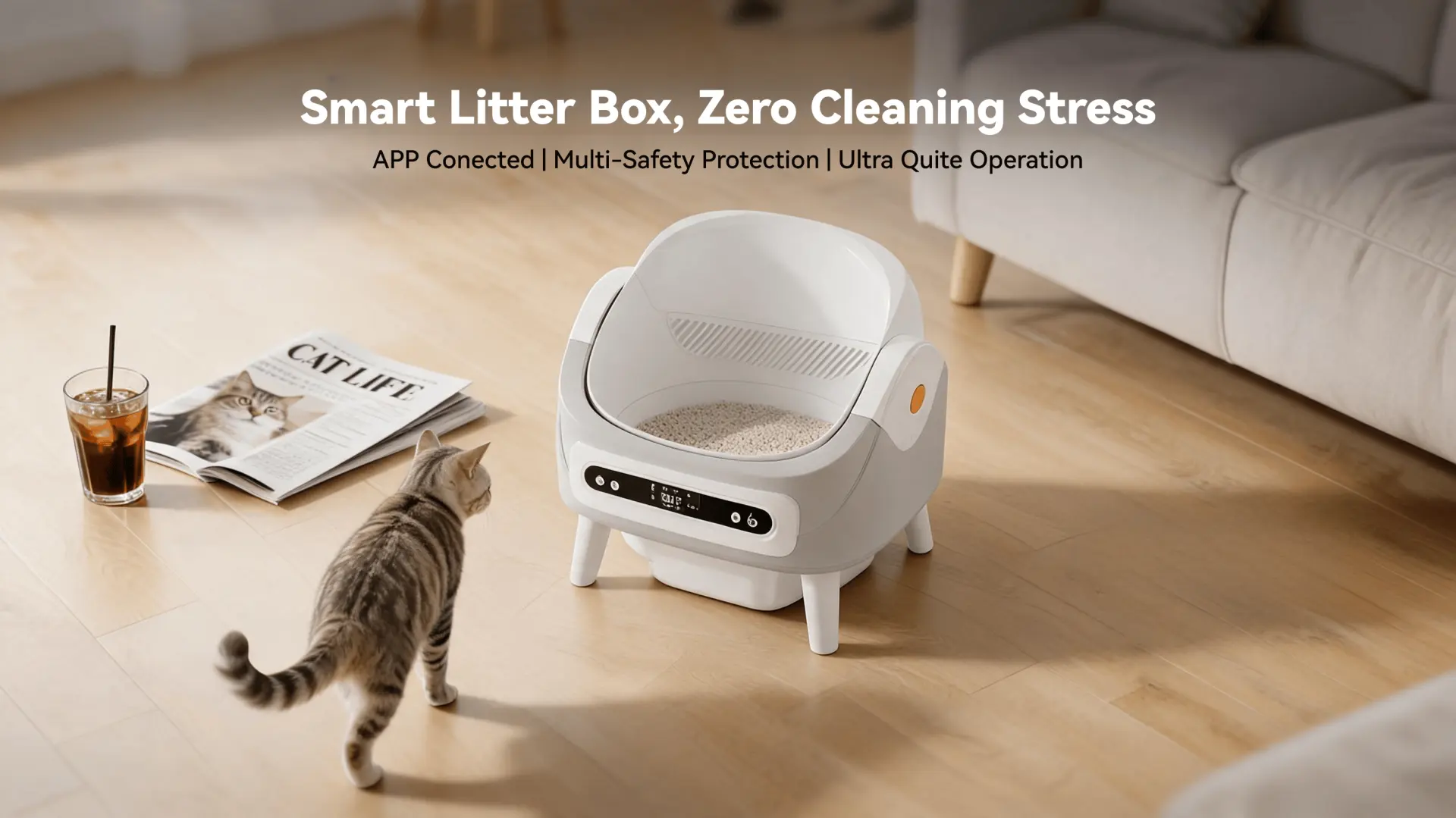
For B2B buyers entering or expanding in the smart pet category, choosing the right litter box is not only a product decision but also a sourcing and margin decision. The best smart cat litter box for retailers is rarely the one with the most features. It is usually the model that balances market demand, compliance readiness, stable supply, manageable after-sales risk, and flexible branding options.
For Amazon sellers, retail chains, wholesalers, and brand owners, smart litter boxes can create strong category value because they sit at the intersection of convenience, hygiene, and premium pet ownership. However, buying the wrong model can lead to high return rates, inconsistent reviews, difficult logistics, and weak sell-through. That is why product selection should start with buyer intent, channel fit, and supply chain practicality.
In this guide, we break down the main smart litter box types and explain how each one fits different B2B channels, including Amazon private label, pet chain sourcing, and multi-channel retail distribution.
- Why Smart Cat Litter Box Selection Matters for B2B Buyers
- Best Smart Cat Litter Box Types for Retailers and Resellers
- How to Choose the Best Smart Cat Litter Box for Amazon Private Label
- What Pet Chains and Offline Retailers Should Prioritize
- OEM/ODM Options That Matter for Smart Litter Box Buyers
- Supply Chain and Compliance Considerations for Importers
- Why Manufacturing Stability Matters for Smart Pet Products
- Recommended Smart Litter Box Portfolio Strategy
- FAQ:
- Conclusion
Why Smart Cat Litter Box Selection Matters for B2B Buyers
A smart litter box is not a single-product category. It includes multiple engineering approaches, enclosure styles, waste handling systems, and app-integrated functions. For B2B buyers, these differences affect:
- Target price band and margin structure
- Freight cost and packaging efficiency
- Failure rate and after-sales burden
- Required certifications and compliance documentation
- Brand positioning in marketplace or retail channels
- OEM/ODM customization potential
If you are building an Amazon private label line or sourcing for a pet chain, your best-selling model may be very different from the model that works best for a premium specialty retailer. The right decision depends on how the product will be sold, serviced, and replenished.
Best Smart Cat Litter Box Types for Retailers and Resellers
1. Fully Enclosed Automatic Self-Cleaning Litter Boxes
This is the most recognizable smart litter box format in the market. It typically features a sealed drum or rotating mechanism that separates waste after the cat exits. For retail buyers, this category is attractive because it offers strong perceived value and easy premium positioning.
Best for:
- Amazon private label launches
- Mid-to-high-end pet retailers
- DTC brands seeking a differentiated hero product
Why buyers choose it:
- Strong consumer appeal
- Easy to position as a premium solution
- Good for branding, app integration, and upgraded UX
- Suitable for visual merchandising in stores and online listings
What to watch:
- Higher unit cost than simpler models
- More complex components can increase service risk
- Requires strong quality control and testing
- Packaging and freight dimensions matter for landed cost
This is often the most commercially attractive option when the buyer wants a flagship product that can support a higher retail price.
2. Top-Entry or Front-Entry Semi-Automatic Smart Litter Boxes
These models are designed to simplify the user experience while keeping the structure relatively compact. They may include automatic waste separation, odor control, or app monitoring without the complexity of a full rotating drum system.
Best for:
- Retail chains looking for balanced price-performance
- Wholesalers seeking easier inventory turnover
- Buyers who want a lower-risk entry SKU
Why buyers choose it:
- Easier to price competitively
- Lower structural complexity
- More manageable shipping size
- Good entry point for new smart pet categories
What to watch:
- May not feel as “premium” as a fully enclosed rotating model
- Feature set must be clear in listings and sales materials
- Differentiation depends on design, materials, and UX details

For many pet chain sourcing programs, this category is a practical starting point because it reduces barriers for mainstream retail adoption.
3. App-Controlled Smart Litter Boxes with Monitoring Features
These models focus on connectivity rather than only mechanical self-cleaning. They may include usage tracking, cat activity monitoring, waste bin alerts, filter reminders, and multi-user app access.
Best for:
- Tech-forward Amazon sellers
- DTC brands with a smart-home positioning
- Premium brands targeting younger, data-driven buyers
Why buyers choose it:
- Strong product-story potential
- Supports premium brand content and listings
- Good for cross-selling into smart home or smart pet ecosystems
- Helps differentiate in a crowded marketplace
What to watch:
- App stability and firmware quality are critical
- Localization and language support may be required
- Buyers should request test reports and app demo access
- After-sales support needs to be clearly defined
This type performs well when the buyer wants a product that feels more connected, modern, and brandable.
4. Multi-Cat Capacity Smart Litter Boxes
For retailers and distributors selling into homes with multiple cats, capacity becomes a key selling factor. Larger waste bins, wider entry spaces, stronger motors, and more durable components can be important purchase criteria.
Best for:
- Specialty pet retailers
- Premium e-commerce sellers
- Brands targeting multi-cat households
Why buyers choose it:
- Clear user value
- Strong selling point in product listings
- Better suited to premium price positioning
- Can reduce complaints from end users with larger pets or multiple pets
What to watch:
- Bigger units may increase logistics costs
- Floor space and warehouse planning matter
- Stability and noise control must be tested carefully
This is a useful SKU for buyers who want to build a complete range, not just a single entry product.
5. Compact Smart Litter Boxes for Apartment and Urban Markets
Compact models are not always the most advanced, but they can be extremely effective in certain retail channels. Their strength is space efficiency, easier shipping, and lower price sensitivity.
Best for:
- Amazon sellers targeting urban consumers
- Pet chains with limited shelf or warehouse space
- Entry-level private label programs
Why buyers choose it:
- Easier to store and ship
- Lower barrier for first-time smart litter box buyers
- Fits smaller homes and apartments
- Can support faster inventory rotation
What to watch:
- Less room for large waste bins or advanced mechanisms
- Needs a clear market positioning strategy
- Not every compact product can support premium pricing
For buyers who value velocity and lower capital commitment, compact SKUs can be a strong addition to the portfolio.
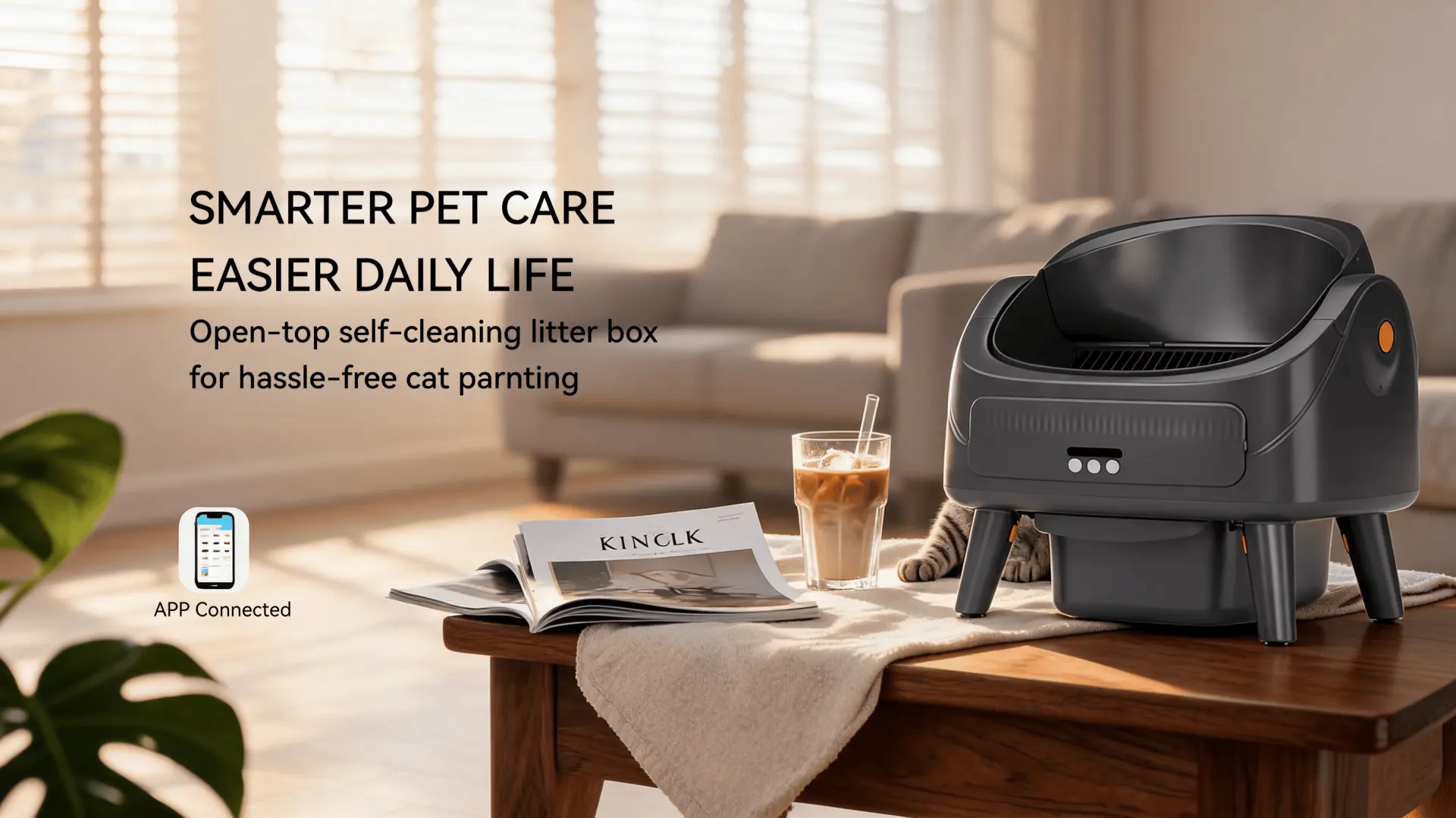
How to Choose the Best Smart Cat Litter Box for Amazon Private Label
When building an Amazon private label program, product selection should be driven by listing performance and return control, not only by feature count. The best smart cat litter box for retailers selling on Amazon usually has the following characteristics:
- Clear visual differentiation
- Easy-to-explain product benefits
- Reliable mechanical performance
- Strong packaging protection for FBA or 3PL fulfillment
- App functions that are stable and simple to explain
- Custom logo and branding opportunities
- Optional instruction manual localization and carton customization
For Amazon private label, it is often better to choose a model with a focused feature set and fewer failure points than a complex design with multiple non-essential functions. The goal is not only conversion, but also lower return rates and better review performance.
What Pet Chains and Offline Retailers Should Prioritize
Pet chain sourcing has a different logic from marketplace sourcing. Offline retail buyers typically care more about consistency, compliance, warranty handling, display readiness, and replenishment stability.
For pet chains, the most important decision factors are:
- Stable supply from a qualified manufacturer
- Consistent product quality across batches
- Clear certification and testing documentation
- Packaging suitable for shelf display and palletized shipping
- SKU planning for entry, mid-range, and premium tiers
- Low defect rate and predictable after-sales process
Pet chains usually perform best with a small, carefully built assortment rather than too many similar models. A clean portfolio makes planograms and staff training easier, and it also helps the chain manage inventory more efficiently.
OEM/ODM Options That Matter for Smart Litter Box Buyers
For B2B buyers, OEM/ODM capability is often the difference between a commodity product and a scalable brand asset. A capable supplier should support:
- Logo printing and brand packaging
- Color changes and cosmetic customization
- App UI and language customization
- Material or structure adjustments
- Sensor or module upgrades
- Packaging optimization for retail and e-commerce
- Instruction manual and compliance document support
If you are planning a long-term smart pet product line, your supplier should be able to handle both light customization and deeper ODM development. That flexibility is especially valuable for Amazon private label and emerging pet brands that want a recognizable product line without building everything from scratch.
Supply Chain and Compliance Considerations for Importers
Smart cat litter boxes are not simple plastic goods. They are electrical, mechanical, and often connected products. That means sourcing teams should confirm compliance readiness before placing an order.
Important checks include:
- Electrical safety and product testing
- EMC and radio-related requirements where applicable
- Material safety and restricted substance control
- Market-specific labeling and documentation
- Battery and adapter compliance, if included
- Carton and user manual language requirements
Buyers should also ask about production capacity, lead time, quality inspection procedures, spare parts availability, and service support. A supplier with a stable manufacturing base and mature production lines is more likely to support consistent replenishment, especially when the product moves from pilot orders into larger retail programs.
Why Manufacturing Stability Matters for Smart Pet Products
In the smart pet category, inconsistency is expensive. Even a small defect rate can create review problems, store-level complaints, or repeated warranty claims. That is why manufacturing depth matters.
A strong supplier should offer:
- Controlled production processes
- Batch consistency
- Component sourcing stability
- In-house testing and inspection
- Packaging verification
- After-sales support structure
For importers and brand owners, this reduces operational risk and protects channel reputation. It is especially important when launching across multiple regions or retail partners at the same time.
Recommended Smart Litter Box Portfolio Strategy
If you are building a scalable B2B assortment, a practical portfolio usually includes:
- A premium hero model for brand positioning
- A mid-range model for volume and retail flexibility
- A compact entry SKU for price-sensitive channels
- An app-enabled version for tech-forward buyers
This structure allows you to serve different buyer types without overextending inventory. It also supports better channel control if you are selling through Amazon, distributors, and brick-and-mortar partners at the same time.
FAQ:
Which smart litter box type is best for Amazon sellers?
The best model is usually a premium-looking, easy-to-explain unit with stable performance, lower return risk, and strong branding potential. For many Amazon private label sellers, a fully enclosed automatic model or an app-controlled model works well.
What should pet chains ask before placing an order?
Pet chains should confirm compliance documents, defect-rate expectations, packaging format, lead time, replenishment capacity, and warranty support. They should also evaluate whether the model fits their target shelf price and customer profile.
Can smart litter boxes be customized for private label brands?
Yes. Common OEM/ODM options include logo printing, carton design, color customization, app branding, manual localization, and structural adjustments depending on the project.
How do I reduce sourcing risk for this category?
Work with a supplier that has mature production lines, stable quality control, and documented compliance support. Request samples, test reports, and packaging validation before scaling.
Conclusion
The best smart cat litter box for retailers is the one that fits the channel, supports the target margin, and can be supplied consistently with manageable risk. Amazon private label sellers often need a product that converts well and keeps returns low. Pet chains usually need stable supply, compliance readiness, and straightforward merchandising. Wholesalers and brand owners may prioritize customization, portfolio breadth, and long-term scalability.
If you are evaluating smart cat litter box types for your next launch or retail program, it is worth comparing product structure, feature set, compliance requirements, and OEM/ODM flexibility before making a sourcing decision. Contact us to learn more, request a quotation, or discuss the right model for your market.
Share: