


Food Contact Safety for Stainless Steel Heated Lunch Boxes: 304 Material and Testing Basics
- Why Food Contact Compliance Matters in B2B Procurement
- Understanding 304 Stainless Steel in Food Applications
- Key Food Grade Testing Standards: LFGB and FDA
- What to Check in Supplier Test Reports
- Common Compliance Risks in Heated Lunch Box Sourcing
- OEM/ODM Considerations for Compliance
- FAQ: B2B Buyer Concerns
- Final Thoughts: Compliance as a Procurement Strategy
For B2B buyers sourcing stainless steel heated lunch boxes, food contact safety is not a marketing detail—it is a compliance gatekeeper. Whether you are importing into the EU, the U.S., or Japan, material selection and testing documentation directly impact customs clearance, platform approval, and downstream liability.
This guide outlines the essentials of 304 stainless steel, core food grade testing frameworks (LFGB, FDA), and how to evaluate suppliers from a compliance-first procurement perspective.
Why Food Contact Compliance Matters in B2B Procurement
Unlike general consumer goods, heated lunch boxes involve direct and repeated contact with food under elevated temperatures, which increases regulatory scrutiny.
For importers and private label brands, non-compliance can lead to:
- Shipment rejection or recalls
- Amazon or retail platform listing suspension
- Legal exposure and brand damage
- Increased testing and rework costs post-production
Key takeaway: Compliance should be validated before order confirmation, not after production.
Understanding 304 Stainless Steel in Food Applications
What Is 304 Stainless Steel?
304 stainless steel (also known as 18/8 stainless steel) is the most widely used material in food-contact containers due to its:
- High corrosion resistance
- Stability under heat
- Low migration risk
- Proven regulatory acceptance across major markets
Why 304 Is Preferred for Heated Lunch Boxes
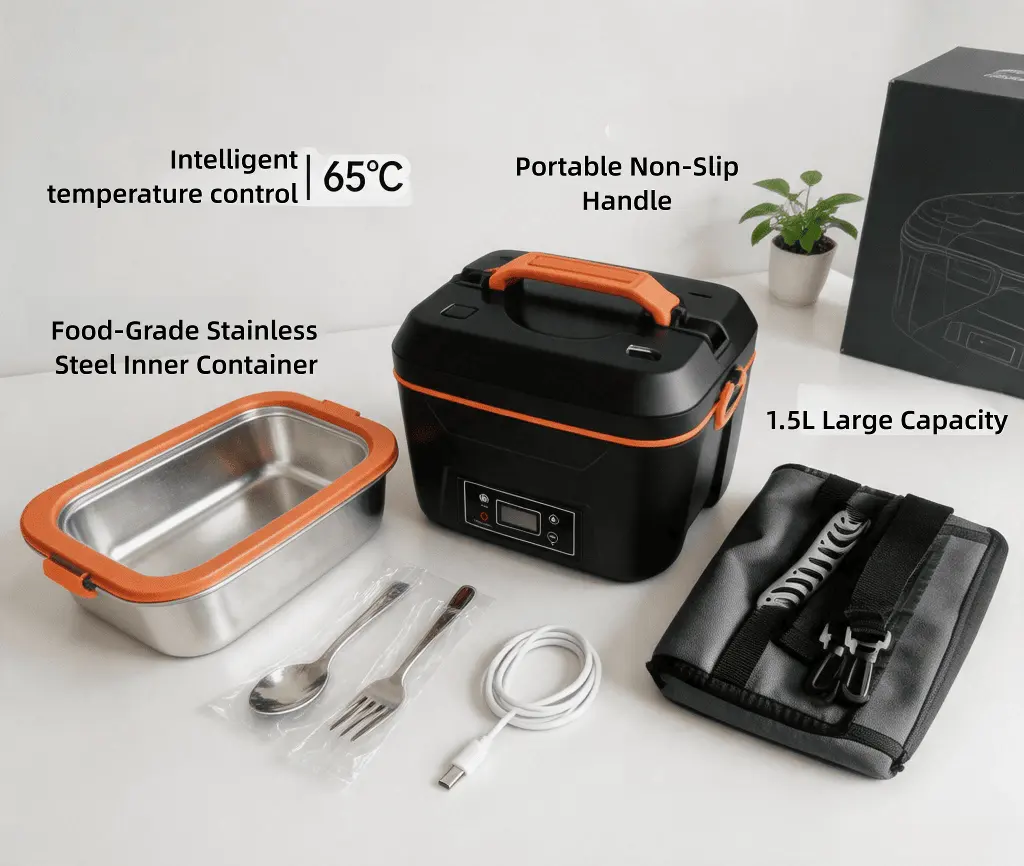
For stainless steel heated lunch boxes, the inner container is exposed to:
- Heat cycles (typically 50°C–100°C)
- Moisture, oils, and acidic food
- Repeated washing
304 stainless steel performs reliably under these conditions, making it the baseline material expectation for EU and US buyers.
⚠️ Procurement tip: Some suppliers may offer lower-cost alternatives (e.g., 201 stainless steel). These may not meet long-term corrosion or migration requirements—verify material grade through test reports.
Key Food Grade Testing Standards: LFGB and FDA
1. LFGB (EU Market)
LFGB is Germany’s food safety regulation and is widely recognized across Europe.
Key testing scope includes:
- Overall migration
- Sensory test (odor/taste transfer)
- Heavy metal release
Why it matters:
LFGB is often considered stricter than general EU requirements, especially for products in prolonged food contact.
2. FDA (U.S. Market)
For the U.S., food contact materials must comply with FDA regulations (21 CFR).
Typical testing focus:
- Material composition compliance
- Migration limits under specific conditions
- Documentation of food contact suitability
Important note:
FDA compliance is often self-declared, but supported by third-party lab testing.
LFGB vs FDA: What B2B Buyers Should Know
| Aspect | LFGB (EU) | FDA (USA) |
|---|---|---|
| Regulatory nature | Mandatory (EU framework) | Regulatory + self-declaration |
| Sensory testing | Required | Not required |
| Market expectation | High standard | Widely accepted baseline |
Procurement insight:
For cross-border distribution, many buyers request both LFGB and FDA reports to maximize market flexibility.
What to Check in Supplier Test Reports
When sourcing a 304 stainless steel lunch box, do not rely on claims alone. Request and verify:
1. Material Test Reports
- Confirmation of 304 grade (18/8 composition)
- Issued by accredited laboratories
2. Migration Testing
- Conducted under realistic temperature conditions
- Covers relevant food simulants
3. Test Validity
- Reports dated within the last 1–2 years
- Matching product structure (not generic reports)
4. Factory Consistency
- Ability to maintain batch-to-batch material consistency
- Internal QC processes
🔍 Advanced tip: Ask whether the supplier supports pre-shipment compliance testing for customized SKUs.
Common Compliance Risks in Heated Lunch Box Sourcing
Even with standard materials, risks often arise from:
- Mixing certified and non-certified components (e.g., lids, seals)
- Using non-food-grade plastics in outer housing
- Incomplete documentation for OEM products
- Reusing outdated or irrelevant test reports
Mitigation strategy:
Work with suppliers who can provide component-level compliance documentation, not just finished product claims.
OEM/ODM Considerations for Compliance
If you are developing a private label stainless steel heated lunch box, compliance must be integrated into product development:
- Material selection aligned with target market (EU/US/JP)
- Early-stage testing for customized structures
- Labeling and documentation tailored to regulations
- Packaging compliance (especially for EU markets)
Suppliers with OEM/ODM experience can help streamline this process and reduce time-to-market.
FAQ: B2B Buyer Concerns
Q1: Is 304 stainless steel always compliant for food contact?
Not automatically. While 304 is widely accepted, compliance depends on processing quality and testing results, not just material grade.
Q2: Do I need both LFGB and FDA reports?
If you sell in both EU and US markets, yes. Many distributors request dual compliance to reduce regulatory friction.
Q3: How often should products be tested?
Typically:
- Initial product validation
- After major design/material changes
- Periodic re-testing (every 1–2 years recommended)
Q4: Can suppliers customize compliance documents for my brand?
Experienced manufacturers can provide:
- Brand-specific test reports
- Declaration of conformity (DoC)
- Support for regulatory documentation
Final Thoughts: Compliance as a Procurement Strategy
For B2B buyers, food contact safety is not just a regulatory checkbox—it is a supply chain control point. Choosing the right stainless steel heated lunch box supplier means evaluating:
- Material integrity (304 stainless steel)
- Verified testing (LFGB, FDA)
- Documentation transparency
- OEM/ODM compliance capability
If you are evaluating suppliers or developing a new product line, aligning compliance requirements early can significantly reduce risk and accelerate market entry.
Share: