


Smart Pet Feeder vs Smart Cat Litter Box: Which Product Is Better for Your Market?
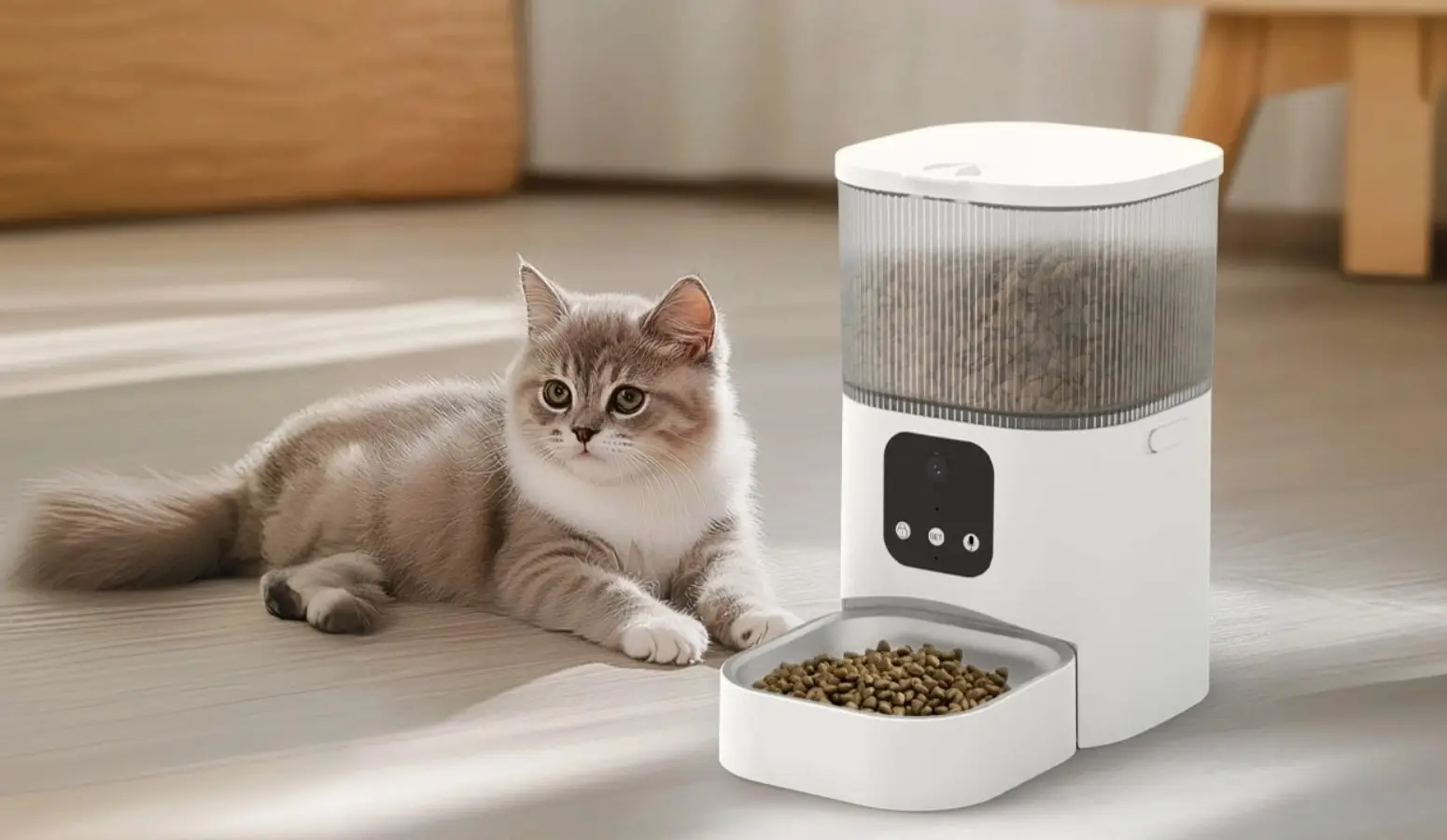
Smart pet feeders and smart cat litter boxes are two of the most important smart pet product categories for distributors, wholesalers, brand owners and retailers.
Both products solve real daily problems for pet owners. A smart pet feeder helps owners manage feeding schedules, portion control and convenience. A smart cat litter box reduces manual cleaning, improves hygiene and supports a more comfortable home environment for cat owners.
However, these two product categories are not the same from a B2B sourcing perspective. They have different target users, price ranges, logistics costs, margin potential, return risks, channel fit and after-sales requirements.
For buyers selling in Europe, North America, Japan and South Korea, the right choice depends on your market position, customer base and operational capability.
This guide compares smart pet feeders and smart cat litter boxes to help you decide which product is better for your market.
- Quick Comparison: Smart Pet Feeder vs Smart Cat Litter Box
- Market Demand: Which Product Has a Broader Audience?
- Price Range and Margin Potential
- Product Differentiation: Which Category Is Easier to Brand?
- User Needs by Market
- Channel Fit: Which Product Works Better for Your Sales Model?
- Repeat Purchase and Accessory Potential
- After-Sales Risk: What Buyers Should Consider
- Supply Stability and MOQ
- Which Product Is Better for Your Market?
- Suggested Product Strategy by Buyer Type
- Final Decision Checklist
- Work With a Smart Pet Product Supplier
Quick Comparison: Smart Pet Feeder vs Smart Cat Litter Box
| Comparison Point | Smart Pet Feeder | Smart Cat Litter Box |
|---|---|---|
| Main user demand | Scheduled feeding, portion control, travel convenience | Self-cleaning, odor control, hygiene, less manual work |
| Target pet owners | Cat and dog owners | Mainly cat owners |
| Typical price level | Entry to mid-range | Mid-range to premium |
| Product size | Smaller, easier to ship | Larger, higher shipping and storage cost |
| Sales volume potential | Higher volume, broader audience | Lower volume but higher unit value |
| Differentiation | Capacity, camera, app, anti-jam design, bowl material | Safety sensors, cleaning logic, odor control, structure, app alerts |
| After-sales risk | Moderate | Higher if quality control is weak |
| Best channels | Amazon, online stores, pet shops, distributors | Premium retail, DTC, Amazon, specialty pet channels |
| Trial order suitability | Easier to test | Better for buyers with stronger channel confidence |
| Brand positioning | Practical smart pet care | Premium smart home pet care |
In simple terms, smart pet feeders are usually easier to test and scale, while smart cat litter boxes offer stronger premium positioning but require more careful supplier evaluation.
Market Demand: Which Product Has a Broader Audience?
Smart pet feeders have a broader potential user base because they can serve both cat and dog owners. The core demand is easy to understand: pet owners want to feed pets on schedule, control portions and reduce daily feeding pressure when they are working, traveling or away from home.
This makes automatic pet feeders suitable for:
- First-time smart pet product buyers
- Amazon sellers testing a new category
- Wholesalers building a practical pet product line
- Retailers looking for a product that is easy to explain
- Brands targeting working pet owners
Smart cat litter boxes serve a narrower but highly motivated audience: cat owners who want to reduce manual scooping and improve home cleanliness. This demand can be strong, especially in markets where apartment living, indoor cats and convenience products are common.
Smart cat litter boxes are suitable for:
- Premium pet product retailers
- Brands targeting cat owners with higher spending power
- Distributors with established pet care channels
- DTC brands that can educate customers through content and video
- Retailers that can support demonstration or customer education
For broader market reach, smart pet feeders usually have an advantage. For stronger pain-point intensity among cat owners, smart cat litter boxes can be more attractive.
Price Range and Margin Potential
Price positioning is one of the biggest differences between these two categories.
Smart pet feeders are usually positioned from entry-level to mid-range, depending on capacity, camera function, Wi-Fi connection, bowl material, anti-jam design and app control. This gives buyers more flexibility to create different price tiers.
For example, a buyer may build a product line with:
- Basic automatic feeders
- App-controlled smart feeders
- Camera feeders
- Premium feeders with stainless steel bowls and better anti-jam design
This makes smart pet feeders useful for brands that want to test different customer segments.
Smart cat litter boxes usually sit in a higher price range because they involve larger structures, motors, sensors, waste systems and safety design. The retail price can support stronger gross margin, but the product also brings higher shipping cost, higher inventory cost and more after-sales responsibility.
For smart cat litter boxes, margin should be calculated after considering:
- Product cost
- Packaging volume
- Ocean or air freight cost
- Warehouse space
- Return handling
- Spare parts
- Customer support
- Warranty policy
- Platform fees
A premium product can look profitable on paper, but if quality is unstable or returns are high, real margin can quickly drop.
Product Differentiation: Which Category Is Easier to Brand?
Both categories can support private label and OEM/ODM customization, but the differentiation logic is different.
Smart Pet Feeder Differentiation
Smart feeders can be differentiated through:
- Food capacity
- Camera or non-camera version
- App control
- Feeding accuracy
- Anti-jam structure
- Dual power supply
- Stainless steel bowl
- Voice recording
- Easy-clean food tank
- Desiccant box
- Color and packaging
The advantage is that buyers can create multiple versions for different price points. A distributor can sell a basic model for volume and a camera model for premium buyers.
The challenge is competition. Because feeders are easier to understand and easier to source, buyers need clear selling points to avoid price competition.
Smart Cat Litter Box Differentiation
Smart cat litter boxes can be differentiated through:
- Safety sensor system
- Cleaning structure
- Waste bin capacity
- Odor control
- Entry height
- Interior space
- Motor stability
- Litter compatibility
- App alerts
- Design style
- Packaging and accessories
The advantage is stronger perceived value. A well-designed smart litter box can feel like a premium smart home product rather than a simple pet accessory.
The challenge is that product quality must be stable. Safety, odor control, cleaning performance and user setup experience directly affect reviews and returns.
User Needs by Market
Different markets may respond differently to these two categories.
North America
North America is a strong market for smart pet products because consumers are familiar with connected home devices, online shopping and premium pet care products.
Smart pet feeders can perform well because they fit busy lifestyles and multi-pet households. Smart cat litter boxes can also work well, especially for cat owners who value convenience and are willing to pay for automation.
For North American buyers, product reviews, return rate, app experience and customer support are very important.
Europe
European buyers often care about quality, safety, design, compliance and long-term reliability. Smart pet feeders can be a practical entry product for distributors and retailers, while smart cat litter boxes may fit premium pet channels and urban cat owners.
For Europe, buyers should pay close attention to CE, RoHS, packaging requirements, language support and product documentation.
Japan
Japan is a market where compact design, quiet operation, clean appearance and user-friendly details matter. Smart pet feeders can fit households that value precise scheduling and compact devices. Smart cat litter boxes may need careful product selection because size, noise and home space can affect acceptance.
For Japan-focused buyers, design details, quiet performance, manual quality and compact packaging can be important.
South Korea
South Korea has strong e-commerce, digital lifestyle adoption and interest in well-designed consumer electronics. Smart pet feeders and smart cat litter boxes can both be attractive, especially when products have clean design, app convenience and strong visual content.
For Korean channels, product presentation, online reviews, influencer content and fast customer education can affect performance.
Channel Fit: Which Product Works Better for Your Sales Model?
Amazon Sellers
Smart pet feeders are generally easier for Amazon sellers to test because they are smaller, easier to ship and easier for customers to understand. Product pages can focus on feeding schedules, portion control, app control and convenience.
Smart cat litter boxes can also work on Amazon, but buyers need stronger preparation. Product videos, clear instructions, safety explanation, packaging protection and after-sales support are more important.
Best choice for new Amazon sellers: smart pet feeder.
Best choice for experienced Amazon sellers with support capacity: smart cat litter box.
Distributors and Wholesalers
Distributors and wholesalers usually need stable products that can be sold across multiple channels. Smart pet feeders are easier to distribute broadly because they fit more pet owners and have lower shipping barriers.
Smart cat litter boxes can be a strong addition if the distributor already has premium pet shops, cat-focused retailers or online channels that can explain the product value.
Best choice for broad distribution: smart pet feeder.
Best choice for premium channel expansion: smart cat litter box.
Retail Chains
Retail chains often care about packaging, product education, return risk and shelf space. Smart pet feeders are easier to present in-store and require less customer education.
Smart cat litter boxes may need larger shelf space, demonstration videos or trained sales staff. They can work well in premium retail settings, but they are not always the best first smart pet product for every retailer.
Best choice for mass retail: smart pet feeder.
Best choice for premium pet retail: smart cat litter box.
DTC and Brand Owners
DTC brands can use content, videos, customer reviews and education to sell higher-value products. This makes smart cat litter boxes attractive for brands that can create strong storytelling around convenience, hygiene and smart home pet care.
Smart pet feeders are also useful for DTC brands because they support product line extension, bundles and repeat accessory sales.
Best choice for fast launch: smart pet feeder.
Best choice for premium brand positioning: smart cat litter box.
Repeat Purchase and Accessory Potential
Neither smart pet feeders nor smart cat litter boxes are fast repeat-purchase products in the same way as consumables. However, both can create repeat purchase opportunities through accessories and replacement parts.
Smart pet feeders may support repeat purchases through:
- Stainless steel bowls
- Desiccant packs
- Replacement lids
- Power adapters
- Food tanks
- Cleaning accessories
Smart cat litter boxes may support repeat purchases through:
- Waste bags
- Deodorizing accessories
- Replacement parts
- Filters
- Mats
- Maintenance accessories
From a B2B perspective, smart cat litter boxes may have stronger accessory potential if the ecosystem is designed well. However, feeders may create easier cross-selling opportunities with bowls, water fountains, mats and other daily pet products.
For distributors and retailers, accessory planning should be discussed with the supplier before launch. Spare parts availability can also reduce after-sales pressure.
After-Sales Risk: What Buyers Should Consider
After-sales risk is one of the biggest differences between these two categories.
Smart Pet Feeder After-Sales Risks
Common issues may include:
- Food jamming
- Inaccurate portions
- App connection problems
- Motor failure
- Battery or power issues
- Cleaning difficulty
- User setup confusion
These risks can be reduced through anti-jam design, stable motor performance, clear manuals, app testing and realistic product instructions.
Smart Cat Litter Box After-Sales Risks
Common issues may include:
- Sensor failure
- Motor or rotation issues
- Cat acceptance problems
- Odor control complaints
- Litter compatibility problems
- Waste bin leakage or cleaning complaints
- App alerts not working as expected
- Shipping damage due to larger packaging
Because smart cat litter boxes are larger and more complex, quality control is more important. Buyers should review safety sensors, running tests, packaging protection and spare parts support before placing orders.
For new buyers without a strong after-sales team, feeders may be easier to manage. For buyers with established customer service and a reliable factory partner, smart litter boxes can deliver stronger product value.
Supply Stability and MOQ
Smart pet feeders are often easier to start with because MOQ, packaging and shipping are more flexible. Many suppliers can support ready-stock wholesale or light customization for feeders, which makes them suitable for trial orders.
Smart cat litter boxes may require more planning because of larger components, higher product value, packaging volume and stricter quality control. Buyers should confirm production capacity, lead time, spare parts and packaging testing before scaling.
For both categories, buyers should ask:
- What is the MOQ for trial orders?
- Are ready-stock models available?
- What customization options are supported?
- What is the lead time for repeat orders?
- Are key components stable in supply?
- What quality control tests are performed?
- Are spare parts available?
Stable supply matters more than a very low first-order price. A product that sells well but cannot be replenished on time can damage channel relationships.
Which Product Is Better for Your Market?
There is no single answer. The better product depends on your channel, customer base and business stage.
Choose smart pet feeders if:
- You want a broader target audience
- You are testing a smart pet category for the first time
- You need lower shipping and storage risk
- You sell through Amazon, wholesale or general pet retail
- You want a product that is easy to explain
- You need flexible price tiers
- You prefer lower after-sales complexity
Choose smart cat litter boxes if:
- You want a premium product category
- Your customers are willing to pay for convenience
- You focus on cat owners
- You have strong content or retail education capability
- You can manage higher product value and larger packaging
- You want stronger differentiation
- You have reliable after-sales support
For many buyers, the best strategy is not choosing only one category forever. A smart pet feeder can be a practical entry product, while a smart cat litter box can become a premium product line once the buyer has stronger channel confidence.
Suggested Product Strategy by Buyer Type
For New Distributors
Start with smart pet feeders to test market demand, then add smart cat litter boxes after building customer feedback and channel confidence.
For Established Pet Product Wholesalers
Offer smart feeders as a volume product and smart cat litter boxes as a premium option for selected customers.
For Brand Owners
Use feeders to build daily-use product lines and use smart litter boxes to create premium brand positioning.
For Retailers
Choose feeders for wider shelf appeal and consider smart litter boxes for premium stores or online channels with strong product education.
For Markets With Smaller Living Spaces
Pay attention to product size, noise, design and packaging. Compact feeders may be easier to enter, while smart cat litter boxes should be selected carefully based on structure and space requirements.
Final Decision Checklist
Before choosing between smart pet feeders and smart cat litter boxes, review these questions:
- Who is your target customer?
- Is your market more price-sensitive or premium-oriented?
- Do you sell through Amazon, wholesale, retail or DTC?
- Can your channel explain a higher-value product?
- What price range fits your customers?
- How much after-sales support can you provide?
- Do you need small batch trial orders?
- Is shipping cost a major concern?
- Do you need private label or OEM customization?
- Can your supplier provide stable production and spare parts?
- What compliance documents are required for your market?
If your priority is fast testing, broad appeal and manageable risk, smart pet feeders may be the better starting point. If your priority is premium positioning, strong pain-point solving and category differentiation, smart cat litter boxes may offer greater long-term value.
Work With a Smart Pet Product Supplier
Smart pet feeders and smart cat litter boxes can both be strong product categories for Europe, North America, Japan and South Korea. The key is to choose the category that fits your market, sales channel, customer expectations and operational capacity.
Chongkexing supplies smart pet products for global B2B buyers, including automatic pet feeders, smart cat litter boxes, smart pet collars, pet water fountains, pet cameras and related smart pet care devices. We support small batch trial orders, ready-stock wholesale, OEM/ODM projects and light customization for distributors, wholesalers, brand owners and retailers.