

Private Label Smart Pet Products: Logo, Packaging, App and Feature Customization Guide
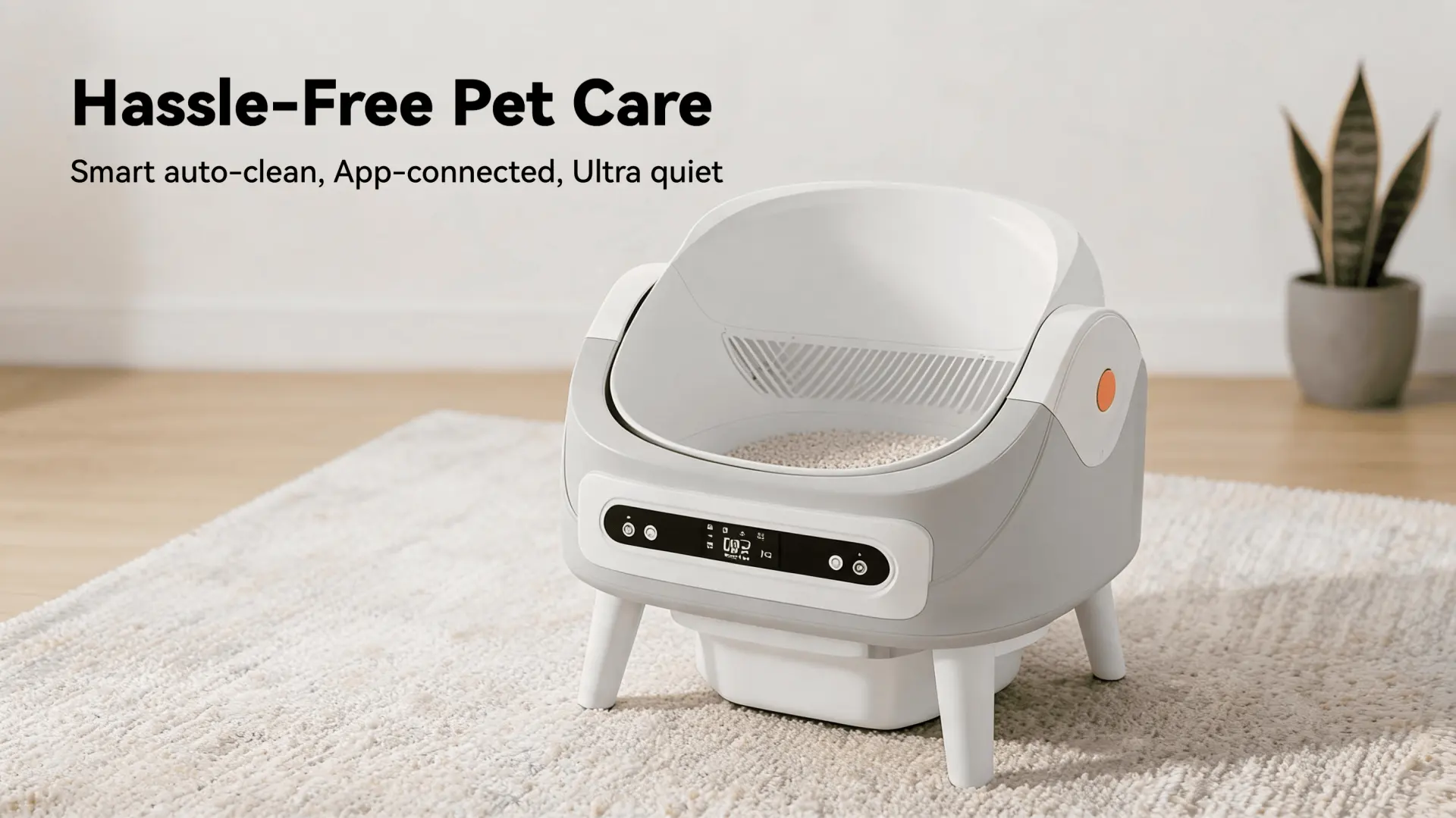
Private label smart pet products are becoming an attractive option for brand owners, Amazon sellers, DTC brands and influencer brands that want to build a differentiated product line without developing every device from zero.
Compared with traditional pet accessories, smart pet products offer more room for brand positioning. A smart cat litter box, automatic pet feeder or smart pet collar can be customized through logo, packaging, color, app functions, accessories, feature configuration and user experience. For buyers in the United States and Europe, this creates an opportunity to launch products that look and feel more aligned with their target customers.
However, private label customization also requires a clear plan. Not every customization request has the same cost, MOQ, development time or technical risk. A logo change may be simple, while app customization or structural changes may require deeper OEM/ODM cooperation.
This guide explains the main customization options for smart pet products and how B2B buyers can prepare before starting a private label or OEM project.
- Why Private Label Smart Pet Products Are Valuable for Brands
- OEM, ODM and Private Label: What Is the Difference?
- 1. Logo Customization
- 2. Packaging Customization
- 3. Color and Appearance Customization
- 4. App Function Customization
- 5. Feature and Component Customization
- 6. Manual, Label and Documentation Customization
- 7. Small Batch Trial Orders
- How to Prepare Before Starting a Private Label Project
- Common Mistakes to Avoid
- Private Label Customization Checklist
- Work With a Smart Pet Product OEM/ODM Manufacturer
Why Private Label Smart Pet Products Are Valuable for Brands
The smart pet product market is becoming more competitive. Many sellers can source similar products, but not every brand can create a clear identity, better user experience and stable quality.
Private label customization helps brands:
- Build stronger brand recognition
- Avoid competing only on price
- Match products with local market preferences
- Improve packaging presentation for e-commerce and retail
- Create product bundles for specific customer groups
- Adjust user experience based on customer feedback
- Develop a more consistent product line
For Amazon sellers and DTC brands, private label products can also support better product pages, branded images, unboxing content and influencer promotion. For retail-focused brands, customized packaging and documentation can help products look more professional on the shelf.
The key is to choose customization options that match your current business stage, budget and order volume.
OEM, ODM and Private Label: What Is the Difference?
Before starting a project, buyers should understand the difference between private label, OEM and ODM.
Private label usually means using an existing product model and adding your brand elements, such as logo, packaging, color or manual design. This is often the fastest way to test a product category.
OEM customization usually means the buyer has specific requirements and the factory produces or adjusts the product based on those requirements. This may involve function changes, component choices, packaging, app settings or accessory bundles.
ODM development usually means the factory already has product design and development capability, and buyers cooperate with the factory to modify or develop a product based on market needs. ODM can involve deeper design, structure, function or software changes.
In practice, many smart pet product projects combine these models. A buyer may start with private label packaging for a trial order, then move into OEM feature adjustments after market feedback.
1. Logo Customization
Logo customization is usually the simplest starting point for private label smart pet products.
Common logo options include:
- Logo printing on the product shell
- Logo printing on stainless steel bowls or accessories
- Logo on retail packaging
- Logo on user manuals
- Logo on product labels
- Logo on shipping cartons
- Logo display inside the app, if supported
For smart pet feeders and smart pet collars, logo placement should be visible but not interfere with sensors, buttons, screens or charging ports. For smart cat litter boxes, the logo should fit the product structure and not look oversized on large surfaces.
Before confirming logo customization, buyers should prepare:
- Vector logo file
- Brand color codes
- Clear logo placement instructions
- Preferred printing method, if any
- Approval sample before production
For small batch trial orders, simple logo printing or packaging logo customization is often more practical than complex mold changes.
2. Packaging Customization
Packaging is one of the most important private label elements, especially for Amazon sellers, DTC brands and retail buyers. Good packaging protects the product, explains the value and creates trust before the customer opens the box.
Smart pet product packaging can be customized in several ways:
- Retail box design
- Product images and selling points
- Brand story and visual identity
- Multi-language text
- User instructions
- Compliance marks
- Barcode and SKU labels
- Warning labels
- Inner protection structure
- Accessory layout
For smart pet products, packaging should be designed for both presentation and protection. Devices such as smart cat litter boxes and automatic feeders may include motors, bowls, sensors, lids, adapters or removable parts. Poor packaging can lead to shipping damage and higher return rates.
Amazon sellers should also consider packaging size, weight, FBA requirements and customer unboxing experience. Retail brands should pay attention to shelf visibility, product explanation and local language requirements.
Before packaging customization, buyers should confirm:
- Product dimensions and packing size
- Net weight and gross weight
- Carton quantity
- Packaging material
- Drop-test or shipping protection requirements
- Required compliance labels
- Manual language
- Barcode and SKU format
Customized packaging can improve brand value, but it should be practical and suitable for the target sales channel.
3. Color and Appearance Customization
Color and appearance are important for private label differentiation. Many smart pet products are used inside homes, so buyers in the United States and Europe often care about whether the product matches modern interior styles.
Common appearance customization options include:
- Product shell color
- Button or screen area color
- Bowl color or material
- Trim color
- Surface finish
- Packaging visual style
- Accessory color matching
For automatic pet feeders, color customization can help brands target different customer groups, such as minimalist home users, premium pet owners or younger online shoppers.
For smart cat litter boxes, appearance customization should balance brand identity with product size. Since the product is larger, neutral colors may work better for many home environments.
For smart pet collars, color, strap material, buckle design and comfort are especially important because the product is worn by pets every day.
Buyers should ask the factory:
- What standard colors are available?
- What MOQ is required for custom colors?
- Is color matching based on Pantone or physical samples?
- Will color customization affect lead time?
- Can the factory provide color samples before mass production?
Custom color can strengthen brand identity, but it may require higher MOQ or longer preparation time depending on the material and production process.
4. App Function Customization
App customization is one of the most valuable but also more complex areas of smart pet product OEM/ODM projects.
For smart pet products, app functions may include:
- Feeding schedule settings
- Portion control
- Device status alerts
- Low food reminders
- Waste bin alerts
- Cleaning cycle records
- Pet activity data
- Location tracking
- Battery status
- Multi-user sharing
- Push notifications
- Firmware updates
Depending on the product and system, buyers may ask for changes such as:
- Brand logo in the app
- App interface color adjustment
- Custom device name
- Notification wording
- Feature activation or removal
- Data display adjustments
- Language support
- Integration with existing app platforms
App customization should be discussed early because it may affect development time, testing requirements and compatibility. A simple logo or interface adjustment is very different from developing a fully customized app.
For Amazon sellers and DTC brands, the app experience can strongly influence reviews. If the app is difficult to connect, unstable or unclear, customers may return the product even if the hardware works well.
Before requesting app customization, buyers should define:
- Which app functions are necessary
- Which functions are optional
- Target languages
- Branding requirements
- Data display needs
- Device connection process
- User notification style
- Expected timeline
For first-time private label buyers, it is often safer to start with mature app functions and light branding before moving into deeper app development.
5. Feature and Component Customization
Feature customization can help brands create a stronger product-market fit. However, it should be guided by real customer needs, not only by adding more functions.
1.For automatic pet feeders, common feature options may include:
- Food capacity
- Camera or no camera
- Wi-Fi connection
- Dual power supply
- Stainless steel bowl
- Anti-jam feeding design
- Voice recording
- Portion accuracy
- Desiccant box
- Easy-clean food tank
2.For smart cat litter boxes, customization may include:
- Safety sensor configuration
- Waste bin capacity
- Odor control design
- Entry height
- App alert settings
- Cleaning mode
- Motor and rotation logic
- Litter compatibility
- Interior space
- Accessory bundle
3.For smart pet collars, customization may include:
- GPS or activity tracking functions
- Battery capacity
- Waterproof level
- Strap material
- Size range
- Charging method
- Comfort design
- App data display
- Alert functions
The best feature customization should improve user value or reduce after-sales risk. Adding too many advanced functions may increase cost, testing complexity and customer service pressure.
Buyers should ask the factory which features are already mature and which require new development. Mature options are usually more suitable for trial orders, while deeper changes may be better for established brands with clearer sales forecasts.
6. Manual, Label and Documentation Customization
Documentation is often underestimated, but it directly affects customer experience and compliance.
Private label smart pet products may need customized:
- User manuals
- Quick start guides
- Cleaning instructions
- Troubleshooting guides
- Warranty cards
- Product labels
- Compliance labels
- Safety warnings
- App setup instructions
For U.S. and European markets, clear instructions can reduce customer confusion and return rates. Multi-language documentation may be necessary for some European distribution channels.
For smart devices, the setup guide should be especially clear. Customers need to know how to connect the device, use the app, clean the product, replace accessories and troubleshoot common problems.
Buyers should prepare brand tone, language requirements and local compliance needs before finalizing documentation.
7. Small Batch Trial Orders
Small batch trial orders are a practical way to test a smart pet product category before placing larger OEM/ODM orders.
Trial orders help buyers evaluate:
- Market response
- Product page conversion
- Customer feedback
- Return reasons
- Packaging performance
- Logistics cost
- Review quality
- After-sales workload
- Real demand by channel
For new brands or Amazon sellers, a trial order can reduce inventory risk. For distributors, it can help test a product with selected dealers or regional customers before scaling.
However, buyers should understand that some customization options may not be available at very low quantities. For example, logo and packaging customization may be easier to support, while custom colors, structural changes or app development may require higher MOQ.
A good approach is:
- Start with mature product models
- Use light customization for the first batch
- Collect market feedback
- Improve packaging, documentation or features
- Scale into deeper OEM/ODM customization when demand is proven
This step-by-step model helps brands balance speed, cost and risk.
How to Prepare Before Starting a Private Label Project
Before contacting a smart pet product manufacturer, buyers should prepare a simple project brief.
Useful information includes:
- Target product category
- Target market
- Sales channel
- Expected order quantity
- Required customization items
- Logo files
- Packaging reference style
- Target retail price
- Required certifications
- Preferred launch timeline
- Special feature requests
- Sample requirements
The more specific the project brief, the easier it is for the factory to provide accurate suggestions, pricing and lead time.
For example, a DTC brand planning a premium smart feeder for the U.S. market may need different packaging, app features and pricing than a distributor sourcing ready-stock feeders for European wholesalers.
Common Mistakes to Avoid
Private label projects can move faster when buyers avoid common mistakes.
Choosing Too Many Customizations at the Start
New buyers sometimes request logo, color, packaging, app changes and feature changes all at once. This may increase cost and delay the first launch. It is often better to start with the most important brand elements first.
Ignoring Compliance Requirements
Smart pet products may involve electronics, wireless modules, batteries or power adapters. Buyers should confirm compliance documents before production, especially for the U.S. and European markets.
Focusing Only on Unit Price
A lower unit price does not always mean better profit. Packaging damage, high return rates, app complaints or unstable quality can increase the real cost after launch.
Customizing Without Market Feedback
Some brands invest in deep customization before testing demand. Small batch trial orders can help confirm whether the product category and positioning are suitable for the target market.
Using Unclear Artwork or Packaging Files
Logo, packaging and label files should be clear, editable and confirmed before production. Unclear files can lead to delays or mistakes.
Private Label Customization Checklist
Before starting your project, review this checklist:
- Have you chosen the target product category?
- Is the product suitable for your sales channel?
- Do you need logo customization?
- Do you need retail packaging customization?
- Are custom colors required?
- Do you need app branding or app function changes?
- Are feature or component changes necessary?
- What certifications are required for your market?
- What MOQ can you accept?
- Do you want a small batch trial order first?
- Have you prepared logo and packaging files?
- Do you have a target launch timeline?
This checklist can help buyers communicate more efficiently with the factory and avoid unnecessary delays.
Work With a Smart Pet Product OEM/ODM Manufacturer
Private label smart pet products can help brands build stronger differentiation in the U.S. and European markets. The best customization plan should match your brand stage, sales channel, budget and target customers.
For startups, a simple logo and customized packaging might be enough to test the market. And if growing Amazon sellers, DTC brands, and influencer brands, applying branding, feature configurations, and customized product portfolios can create a stronger market positioning. For established brands, deeper OEM/ODM development helps build a long-term product line.
Chongkexing supplies smart pet products for global B2B buyers, including smart cat litter boxes, automatic pet feeders, smart pet collars and related smart pet care devices. We support small batch trial orders, ready-stock wholesale, OEM/ODM projects and light customization for brands entering the U.S. and European markets.