

What Should a Factory Audit Checklist Cover for Waterless Electric Lunch Box Manufacturers in China?
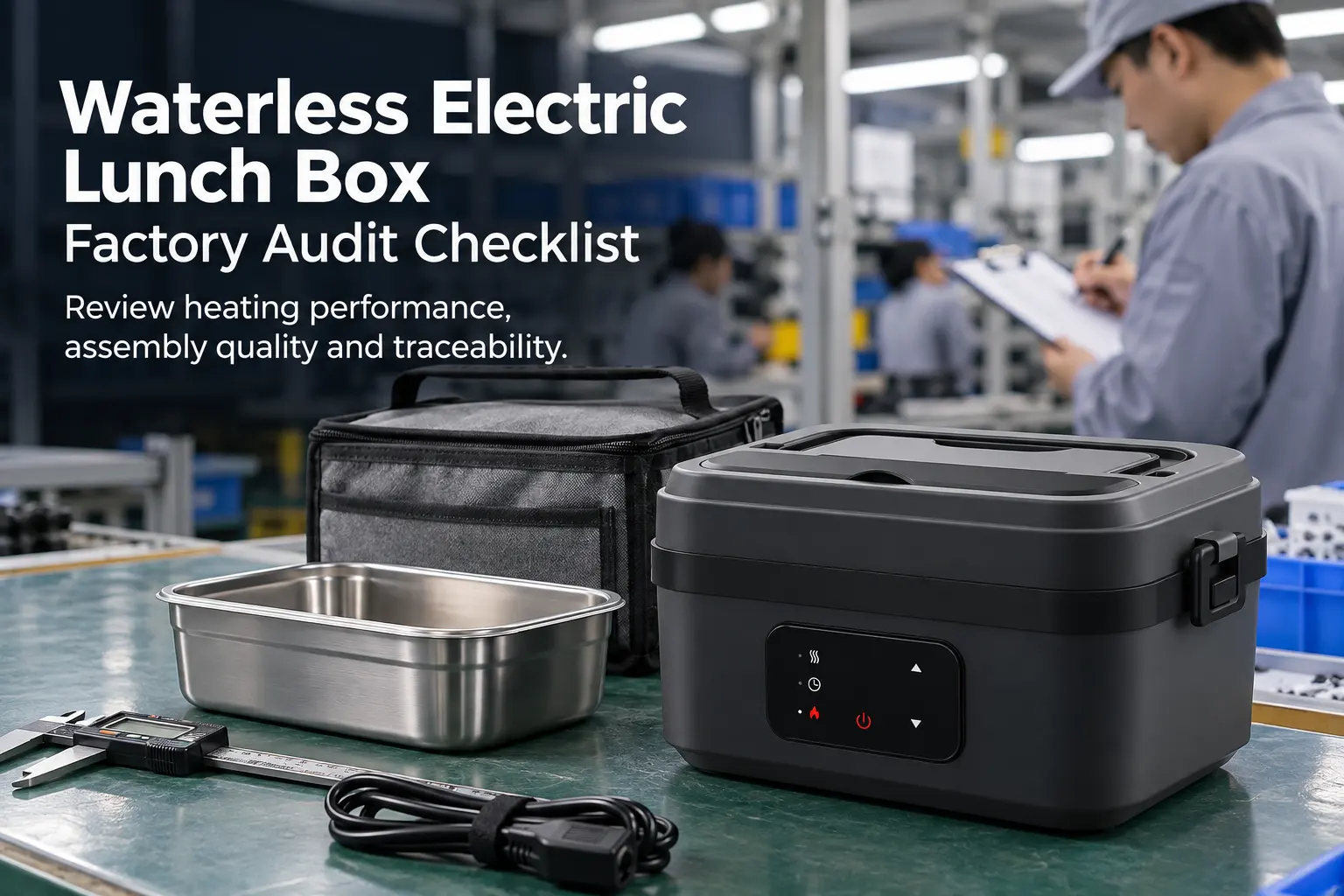
A factory audit should establish whether a supplier can consistently manufacture products to your approved design, identify defects before shipment, and trace problems to their source. In particular, for waterless electric lunch boxes—models that heat food without requiring users to add water to the heating base—the audit should pay particular attention to heat transfer interfaces, the placement of temperature control components, overheat protection, and the protection of electrical components from splashes and cleaning water.
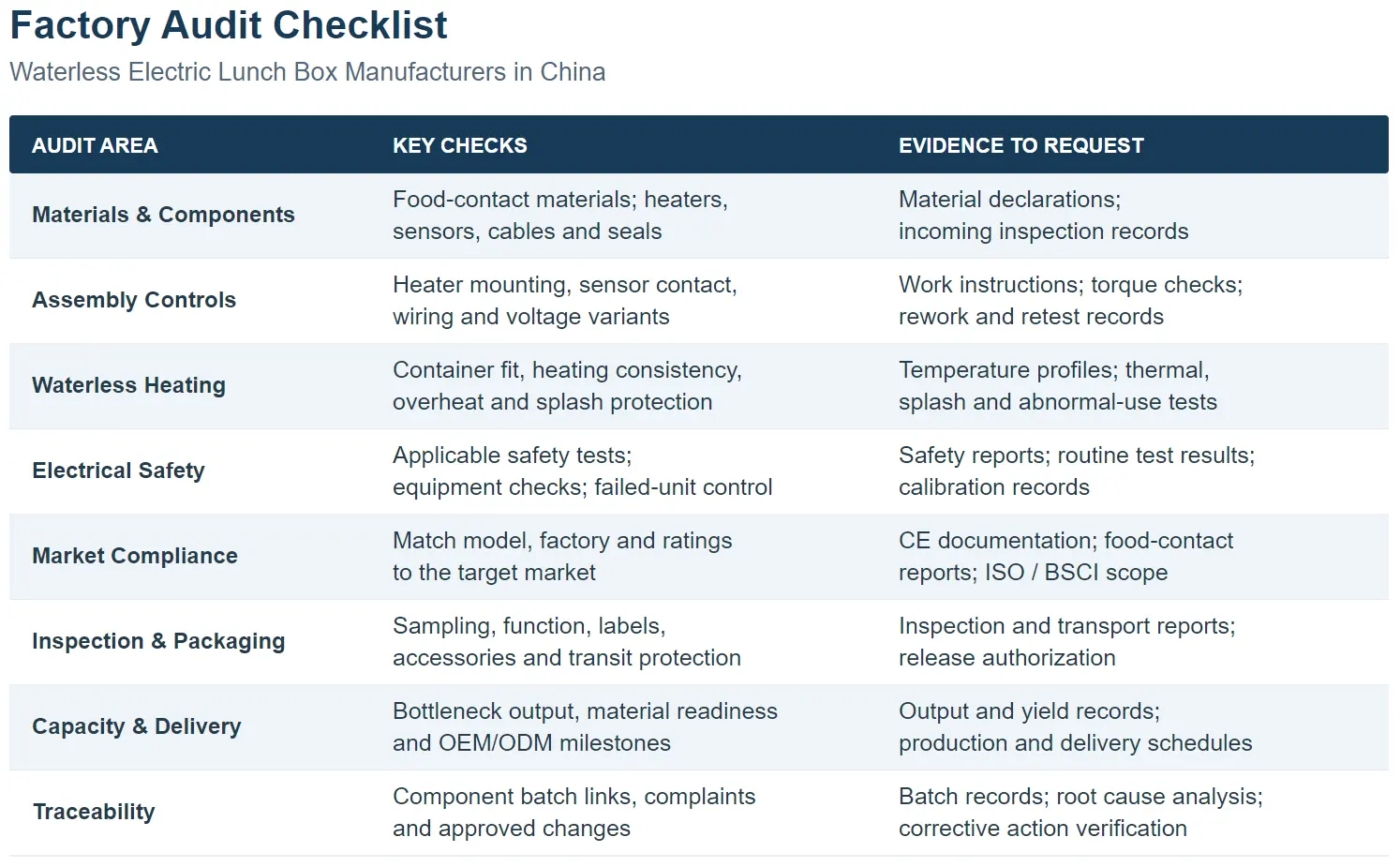
Accordingly, each audit finding should address three questions: what should the auditor check, how should the auditor verify it, and which records support the assessment.
ckxpetoking is a Guangzhou-based manufacturer with 12 years of experience in heated lunch box manufacturing, serving OEM/ODM export customers. However, buyers should assess its capabilities against the same model-specific evidence requirements applied throughout this checklist.
Before conducting an on-site or remote audit, confirm the manufacturing entity, factory address, product configuration, target market, rated power supply specifications, and any outsourced processes. For example, during a remote factory tour, select samples yourself from visible production stock and request live demonstrations.
- 1. What Should Incoming Quality Control Cover?
- 2. What Should an Assembly Line Audit Confirm?
- 3. How Should Heating Performance and Temperature Control Be Tested?
- 4. What Additional Design Checks Are Needed for Waterless Heating?
- 5. Which Electrical Safety Checks Should Be Reviewed?
- 6. What Should Pre-Shipment Inspection Cover?
- 7. Which Certification and Compliance Documents Should Be Checked?
- 8. What Should Packaging and Shipment Checks Include?
- 9. How Should Production Capacity and Lead Times Be Verified?
- 10. How Should Traceability and the Prevention of After-Sales Issues Be Assessed?
1. What Should Incoming Quality Control Cover?
Incoming quality control should verify that components meet requirements affecting electrical safety, heating performaIncoming quality control should verify that components meet requirements affecting electrical safety, heating performance, and food-contact safety before they enter production.
What to check
- Heating elements, thermostats, sensors, and thermal fuses against approved specifications.
- Food container materials, dimensions, flatness, and surface finish.
- Specifications and grades for cables, connectors, insulation materials, seals, and plastic resins.
- Segregation of accepted components, rejected components, and materials awaiting inspection.
How to verify
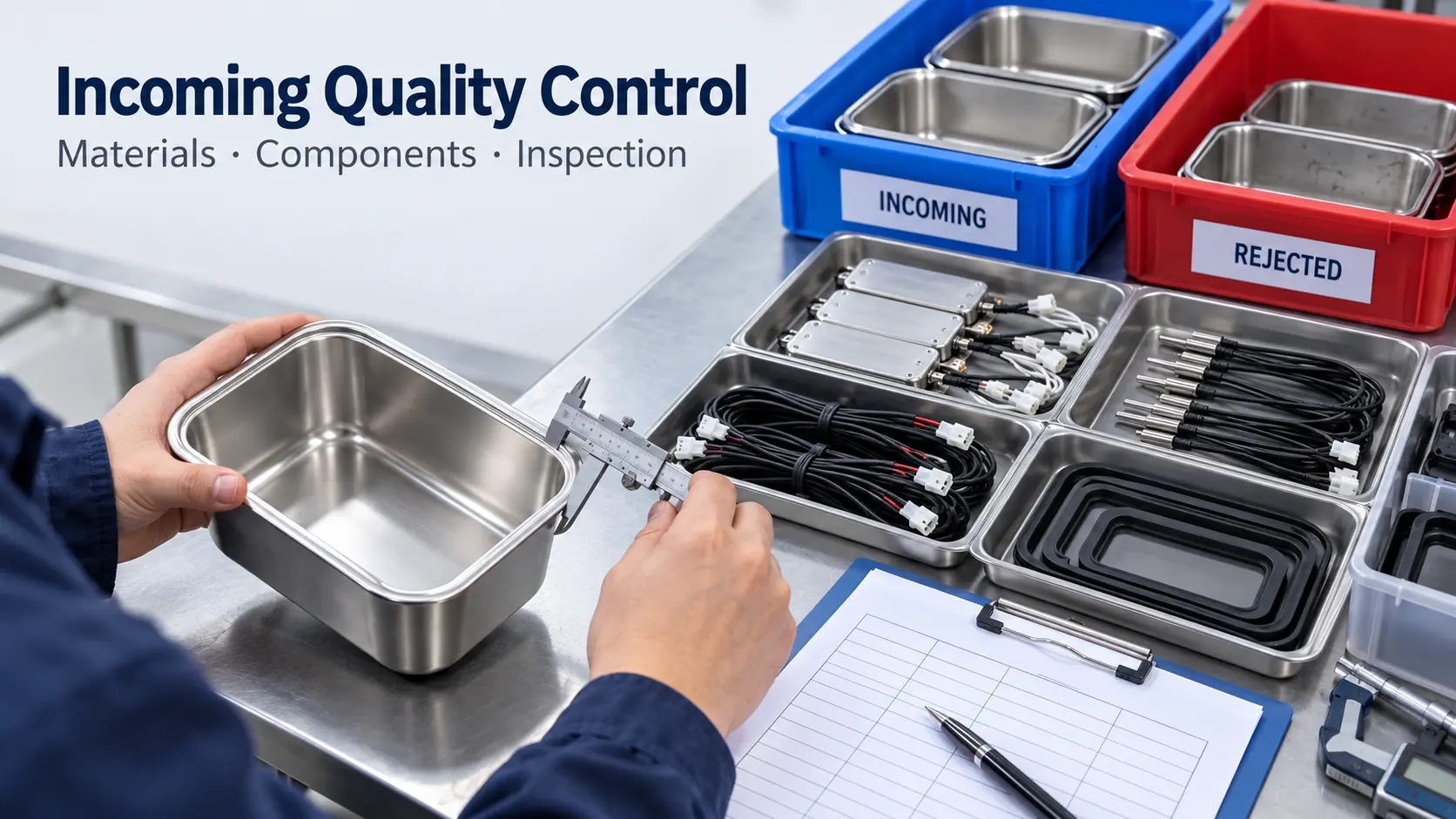
Select a batch of heating elements and a batch of food containers from the warehouse. Then, ask the inspector to demonstrate the required measurements, explain the acceptance limits, and provide the corresponding inspection results.
The factory should be able to produce incoming inspection records for the heating element batch allocated to your order and explain how inspection controls prevent nonconforming components from entering assembly.
Documents to request
Approved supplier list; component specifications; incoming inspection procedures and results; material declarations; nonconformance records; and supplier corrective action records.
2. What Should an Assembly Line Audit Confirm?
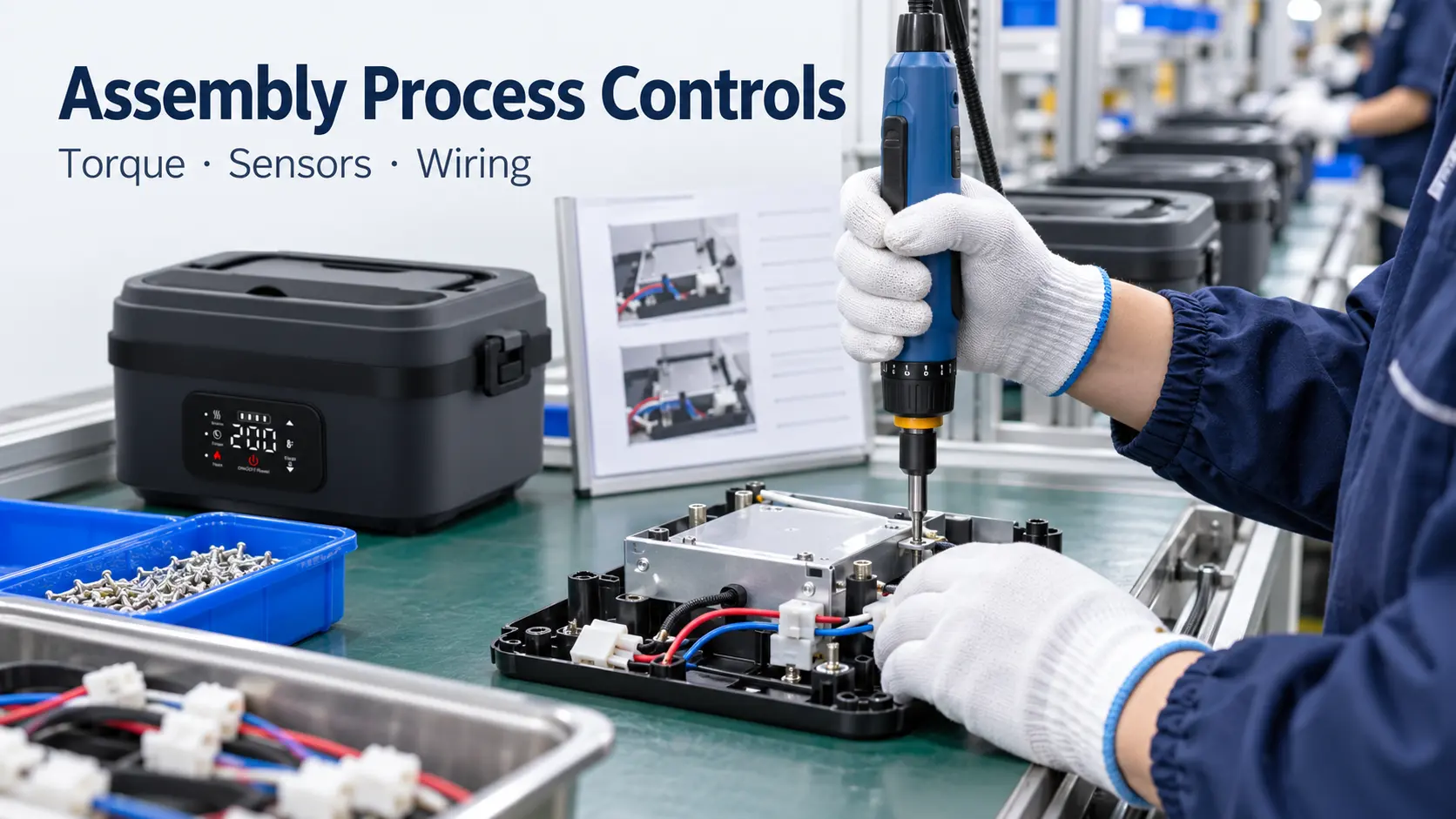
The assembly process should control the operations that determine heat transfer, electrical integrity, and consistency from one unit to the next.
What to check
- Heating element mounting methods and specified fastening torque.
- Sensor positioning, mounting, and thermal contact.
- Wiring routes, insulating sleeves, and strain relief.
- Controls that prevent components for different voltage variants from being mixed or substituted without authorization.
How to verify
Follow one unit through the assembly process and compare each critical operation with the current work instructions. In addition, observe how operators verify torque settings and identify the correct components.
Inspect the rework area and confirm that repaired units undergo the relevant inspections and tests again before release. Also, establish who is responsible for controlling any outsourced processes.
Documents to request
Process flowchart; illustrated work instructions; process control plan; operator training records; tool verification records; first-article approval records; and rework and retesting procedures.
3. How Should Heating Performance and Temperature Control Be Tested?
The factory should support heating performance claims with repeatable measurements. In particular, distinguish food temperature from heating element temperature.
What to check
- Heating time, temperature distribution, input power, and temperature control cycles.
- Sensor accuracy and thermostat switching behavior.
- Performance under each advertised power supply option.
- Overheat protection under the applicable abnormal operation test conditions.
How to verify
Witness a normal-use heating test using production samples. For comparison, use a consistent buyer-defined test protocol when comparing factories, adapting it to the product’s intended use. Where applicable, supplement this comparison with testing under the relevant product standards.
Maintain the same probe insertion depths and measurement locations across comparative tests. Also, agree on acceptance limits in advance. However, this comparison alone does not establish microbiological food safety.
Documents to request
Approved test protocol; raw temperature profiles; temperature probe calibration records; power measurement records; control component specifications; and abnormal operation test reports.
4. What Additional Design Checks Are Needed for Waterless Heating?
The product’s construction should maintain the intended heat transfer path, limit exposure to hot surfaces, and protect electrical areas against foreseeable liquid ingress.
What to check
- Food container seating, heater contact geometry, and dimensional tolerances.
- Heating module mounting and thermal insulation.
- Potential splash paths, connector locations, seals, and cleaning instructions.
- Risks associated with an empty or incorrectly seated food container.
How to verify
Compare a fully assembled unit with a disassembled sample that a qualified technician has disconnected and isolated from its power supply. Then, ask an engineer to identify the heat transfer path and demonstrate how dimensional inspections control the fit of the food container.
Review validation evidence for thermal cycling, deformation, and repeated connection and disconnection. However, only qualified personnel should perform abnormal operation testing under controlled procedures.
Documents to request
Cross-sectional drawings; dimensional specifications; thermal design assessments; splash and cleaning validation records; thermal cycling results; risk assessments; and approved instructions for use.
5. Which Electrical Safety Checks Should Be Reviewed?
Electrical safety checks should be appropriate to the power supply, electrical protection class, and standards applicable to the target market.
What to check
- The distinction between design or type testing and routine production testing.
- Applicable dielectric strength, leakage current or touch current, and protective earth continuity tests.
- Tester settings, calibration status, test fixture condition, and segregation of failed units.
- Coverage of power adapters and vehicle power accessories, where relevant.
How to verify
Ask a qualified technician to explain each applicable test and its documented acceptance limits. For example, protective earth continuity testing applies to relevant Class I constructions; it is not a requirement for every product.
Witness the approved procedure for verifying test equipment performance and, in addition, confirm that failed units cannot proceed to shipment.
Documents to request
Assessment of applicable standards; complete safety test reports; routine test procedures; calibration and equipment verification records; production test results; and records documenting the disposition of nonconforming products.
6. What Should Pre-Shipment Inspection Cover?
Pre-shipment inspection should assess randomly selected finished products against agreed acceptance criteria and document the release decision.
What to check
- Appearance, food container fit, lid operation, accessories, and labeling.
- Heating function and assembly defects.
- Packaging configuration and order-specific customization.
- Definitions of critical, major, and minor defects.
How to verify
Draw samples from multiple cartons within the finished production lot. Then, confirm that the lot size, sampling method, sample size, and acceptance and rejection numbers match the inspection report.
Agree on the sampling standard, inspection level, and acceptable quality limit (AQL) values before production. However, sampling supports lot acceptance decisions; it does not guarantee that every unit is free from defects. Therefore, any critical safety defect identified should trigger a shipment hold and an investigation.
Documents to request
Approved reference sample; defect catalogue; agreed sampling plan; pre-shipment inspection reports; nonconformance records; and release authorization.
7. Which Certification and Compliance Documents Should Be Checked?
Compliance evidence should correspond to the configuration you are purchasing, the manufacturing site, and the target market. Accordingly, assess each document according to its actual scope.
What to check
- Manufacturer identity, model coverage, electrical ratings, product photographs, and critical components.
- Applicable standards and editions, together with assessments of design changes.
- Food-contact materials and their intended conditions of use.
- The distinction between product compliance evidence, management system certification, and social compliance audit records.
How to verify
Compare a mass-produced unit with the photographs and component list in the relevant test reports. In addition, verify certification claims with the issuing bodies and confirm the scope of each document.ckxpetoking can provide product-specific documentation on request, including CE conformity documentation, RoHS compliance evidence, food-contact test reports, BSCI audit records, and ISO certificates. However, buyers should verify which products, materials, sites, and activities each document actually covers.
Documents to request
Declarations of conformity; complete test reports; relevant certification listings; food-contact compliance documentation; BSCI audit and corrective action records; ISO certificates; approved labels; and design change assessments.
8. What Should Packaging and Shipment Checks Include?
Packaging controls should preserve the approved product configuration and protect the product throughout the intended distribution process.
What to check
- Correct plugs, cables, adapters, food containers, instruction manuals, and printed materials.
- Secure positioning of loose accessories.
- Barcode readability, quantities per carton, product identification, and shipping marks.
- Transport validation appropriate to parcel delivery or palletized distribution.
How to verify
Open randomly selected cartons and compare their contents with the order specifications. Also, scan the barcodes to verify readability.
Review the documented drop heights, drop orientations, vibration conditions, packed weight, and acceptance criteria. After transport testing, check product functionality and inspect for concealed damage.
Documents to request
Packaging specifications; approved artwork; transport test reports; packaging inspection records; packing list; draft commercial invoice; and shipment release checklist.
9. How Should Production Capacity and Lead Times Be Verified?
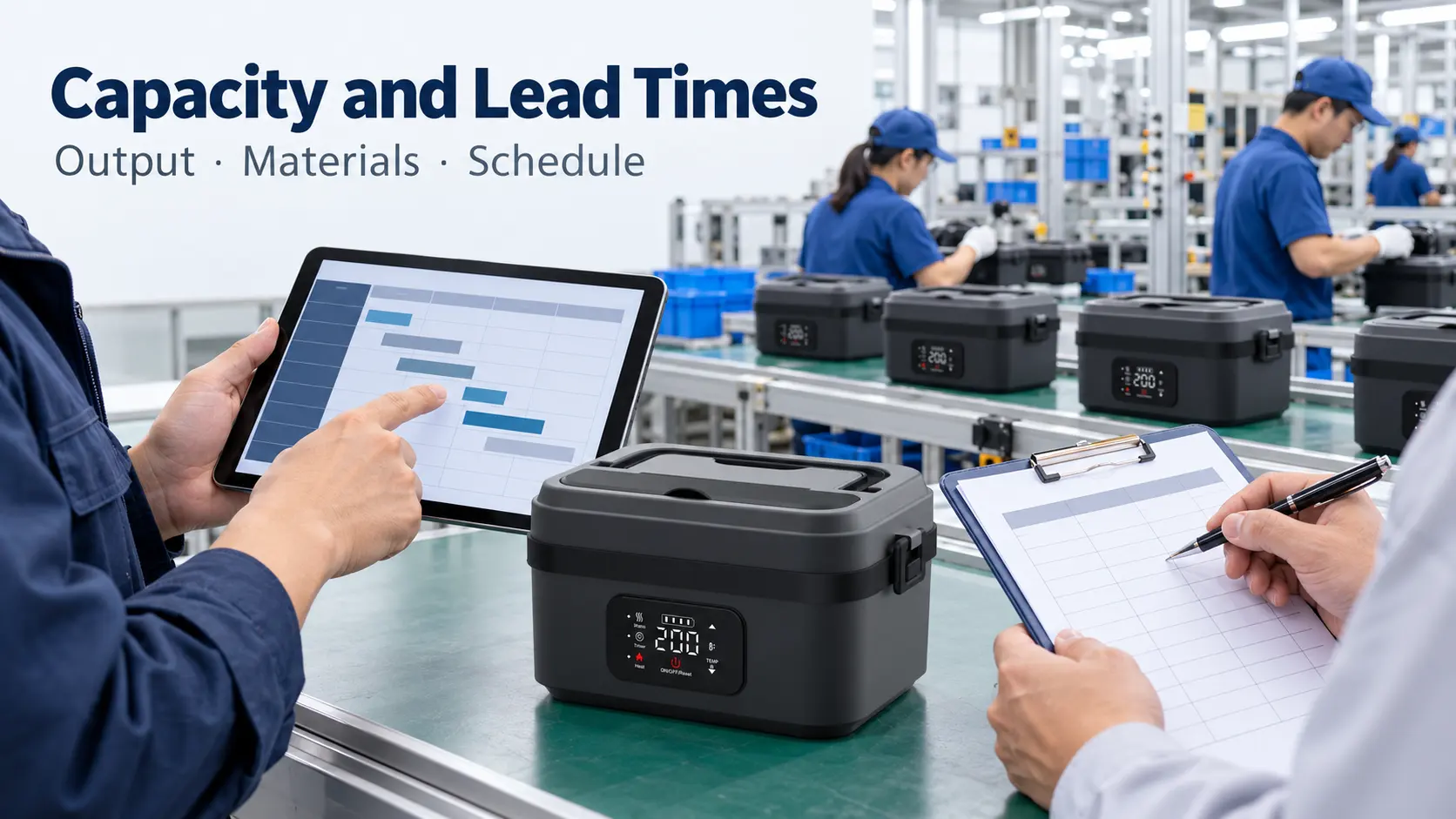
Production capacity and delivery commitments should be supported by demonstrated output, material readiness, staffing levels, and available production time.
What to check
- Bottlenecks in assembly, testing, and packaging.
- Supplier lead times and material availability.
- Existing order commitments, equipment maintenance, changeovers, and rework.
- Tooling and approval milestones for OEM/ODM projects.
How to verify
Compare recent production output with testing and packaging records. Then, estimate the output of conforming units using verified bottleneck cycle times, net operating time, and first-pass yield, taking care not to count the same losses twice.
When evaluating ckxpetoking, request current capacity, an available production window, and shipment milestones for the specific model. In addition, verify these commitments against recent production and inspection records.
Documents to request
Output and yield records; staffing plans; equipment availability records; material readiness reports; order schedules; and delivery commitments tied to defined milestones.
10. How Should Traceability and the Prevention of After-Sales Issues Be Assessed?
Traceability should link finished products to component sources, production history, inspection results, and corrective actions.
What to check
- Product and carton identification.
- Links between finished products and critical component batches.
- Complaint classification and monitoring of recurring failures.
- Approval controls for component substitutions and design changes.
How to verify
Select a packaged unit and ask the factory to trace it back through assembly and incoming inspection. Then select a component batch and identify the finished product batches in which it was used.
Review a closed complaint involving heating performance, electrical connections, or liquid ingress. Finally, confirm that the actions taken addressed the root cause and that follow-up checks demonstrated their effectiveness.
Documents to request
Traceability procedures; production genealogy records; complaint logs; root cause analysis reports; corrective action verification records; change approvals; and warranty and spare parts terms.
Share: